Close Menu
Illustrated Curiosity | Economics, History, Science, Space, Technology, Health, Physics, Earth
    Facebook X (Twitter) Instagram YouTube
    Illustrated Curiosity | Economics, History, Science, Space, Technology, Health, Physics, Earth
    • Earth
    • Economics
    • Environment
      • Environmental Tech
      • Pollution
      • Wildlife
    • Health
      • Health Tech
      • Medicine
      • Nutrition
      • Exercise
    • History
      • Prehistory
      • Ancient History
      • Postclassical Era
      • Modern History
    • Humans
      • Human Brain
      • Psychology
    • Life
      • Animals & Plants
      • Genetics
      • Paleontology
      • Evolution
      • Genetic Engineering
    • Physics
    • Space
      • Astrobiology
      • Astronomy
      • Extrasolar Planets
      • Space Tech
      • Spaceflight
    • Technology
      • Artificial Intelligence
      • Energy
      • Engineering
      • Materials
      • Robotics
      • Vehicles
    Illustrated Curiosity | Economics, History, Science, Space, Technology, Health, Physics, Earth
    Home » Aerosol Emissions from Ships Linked to Increased Oceanic Lightning
    Earth

    Aerosol Emissions from Ships Linked to Increased Oceanic Lightning

    September 20, 20172 Mins Read
    Illustration: Illustrated Curiosity
    Share
    Facebook Twitter LinkedIn Pinterest Email

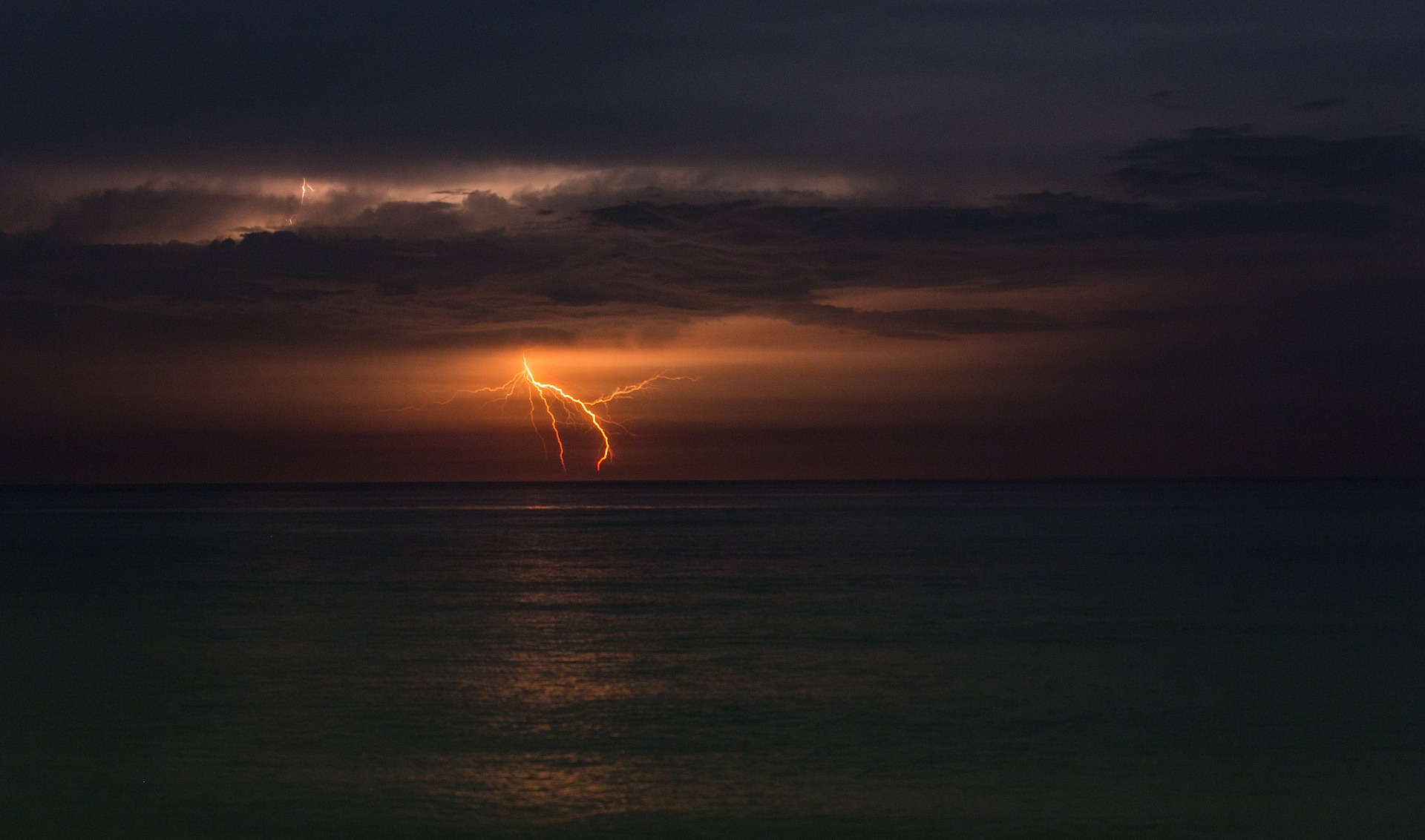
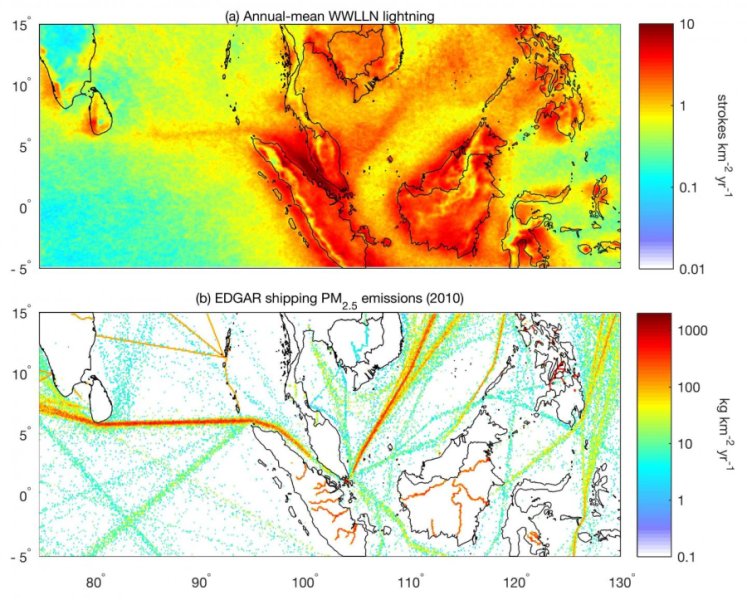
    Lightning occurs nearly twice as often along the world’s busiest shipping lanes compared to nearby ocean regions, according to research by American scientists.

    The study focused on heavily trafficked routes in the Indian Ocean and the South China Sea, where large numbers of cargo vessels travel continuously. By analyzing satellite data and atmospheric observations, the researchers identified a clear pattern: lightning activity is significantly higher along these shipping corridors than over surrounding waters.

    At first glance, one might assume that the increase is caused by lightning directly striking ships. However, the scientists rule out this explanation. The enhanced lightning activity is observed over a broad area surrounding the shipping lanes, not just along the narrow paths where vessels travel. This indicates that the effect is atmospheric rather than mechanical.

    Instead, the researchers attribute the phenomenon to emissions from ship exhaust. These emissions release tiny particles, known as aerosols, into the atmosphere. Aerosols play a crucial role in cloud formation because water vapor needs them as surfaces to condense into droplets.

    Over open oceans, aerosol concentrations are typically low, which limits cloud droplet formation. Ship exhaust changes this balance by introducing additional particles into the air. As a result, clouds forming in these regions contain a larger number of smaller droplets.

    These smaller droplets are more easily carried upward by atmospheric currents. As they rise higher into colder parts of the atmosphere, more of them reach freezing temperatures and turn into ice particles. This process enhances the electrical charge separation within clouds—a key condition for lightning formation—ultimately leading to more frequent lightning strikes.

    The continuous movement of cargo ships ensures a steady supply of aerosols along these routes, effectively creating persistent “tracks” of altered cloud behavior and increased storm activity. Because of this, shipping lanes provide scientists with a unique natural laboratory for studying how human-generated aerosols influence cloud dynamics, precipitation, and atmospheric electricity.

    Understanding these interactions is important not only for weather prediction but also for improving climate models, as aerosols remain one of the largest uncertainties in assessing human impact on the climate system.

    Reference:
    Joel A. Thornton et al., Lightning Enhancement Over Major Oceanic Shipping Lanes, 7 September 2017. DOI: 10.1002/2017GL074982

    Lightning
    Share. Facebook Twitter Pinterest LinkedIn Tumblr Email Copy Link

    Related Posts

    The Looming Giant: Grindavik’s Potential Volcanic Eruption and its Global Implications

    November 13, 2023

    Small Warning Signs Can Reveal Volcano Eruption – before the Disaster

    October 3, 2019

    Earth’s Core Is Actually Solid According to New Research

    October 22, 2018

    Tree Ring Dating Confirms Historical Accounts of ‘Blood Aurora’ as Extreme Cosmic Radiation

    October 18, 2018

    Scientists Offer Clues to What Caused the Mass Extinction 250 Million Years Ago

    October 12, 2018

    Geoengineering, to Combat Global Warming, May Harm Crop Production

    August 15, 2018
    Recent Posts
    • The Strait of Hormuz Dilemma: Power, Energy, and an Irreversible Turning Point
    • Eggs, Cholesterol, and Heart Disease: What the Science Actually Says in 2026
    • Oil Shocks, Policy Mistakes, and the Risk of a Second Inflation Wave (Part II)
    • Oil Shocks, Policy Mistakes, and the Risk of a Second Inflation Wave (Part I)
    • Microsoft Stored a Movie on Glass — And It Could Last Centuries
    • AI, Automatic Stabilizers & Inflation
    • Largest Battles in History: Cannae — Rome’s Darkest Day
    • The Day the Alliance Died
    • Evaluating Heart Disease: How Cumulative Diet Choices Compound Your Risk
    • What Would Happen If China Attacked Taiwan?
    © 2025 Illustrated Curiosity

    Type above and press Enter to search. Press Esc to cancel.