
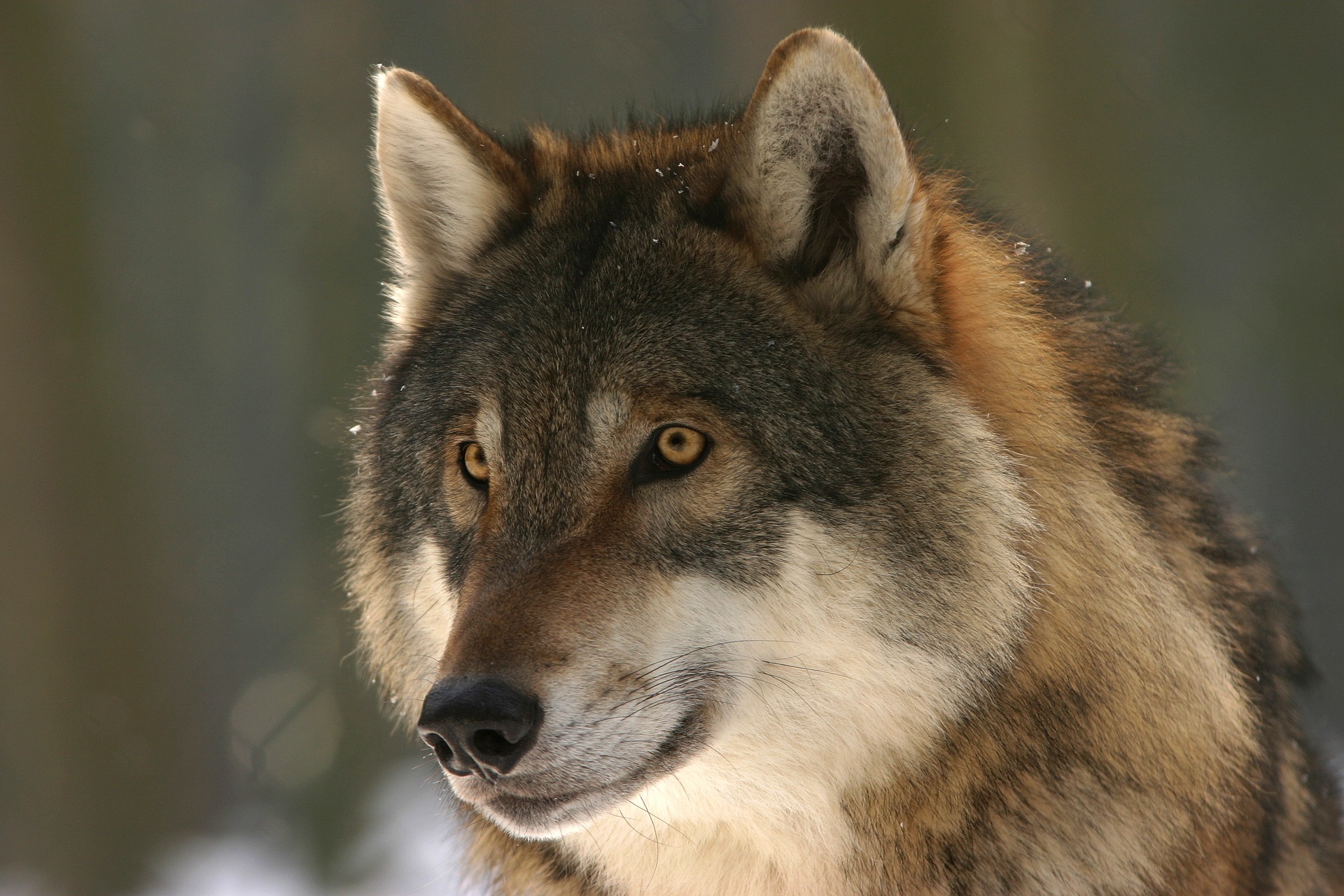
The dog has been man’s best friend since the Stone Age – and has followed its owners around the world. Probably all the breeds that exist today are descended from a wolf that was domesticated 20,000 years ago, according to a new DNA study of archaeological finds.
The dog is the oldest domestic animal in the service of man, but their genetic history has been relatively unknown due to the very few archaeological findings..
A report presented in the scientific journal Science sheds new light on the origins of the dog, conducted by a large team of international researchers led by scientists at the Francis Crick Institute, University of Oxford, University of Vienna, and archaeologists from more than 10 countries.
The team examined the entire genome of 27 prehistoric dog skeletons, the oldest almost 11,000 years old. Their genome has since been compared to modern dogs, wolves, and jackals.
The results show that even at that time there were five different genetic types of dogs spread around the world. This means that the domestic dog is significantly older than previously thought.
“Probably all living dogs descend from a wolf that was domesticated about 20,000 years ago, in the middle of the height of the last ice age,”
– Pontus Skoglund, a geneticist at the Francis Crick Institute in London, and one of the authors.
“If we look back more than four or five thousand years ago, we can see that Europe was a very diverse place when it came to dogs. Although the European dogs we see today come in such an extraordinary array of shapes and forms, genetically they derive from only a very narrow subset of the diversity that used to exist.”
– Anders Bergström, lead author and post-doctoral researcher in the Ancient Genomics laboratory at the Francis Crick Institute
No one knows where in the world the first wolf was domesticated. The only thing the geneticists can say is that it belonged to a now-extinct species and that the people who adopted it lived as hunters and gatherers.
It was probably a difficult project, as it does not seem that any similar so-called domestication, that is, adaptation to humans through breeding, of wild wolves, has been repeated later.
“Modern dogs did not evolve from the same lineage of the genus Canis from which modern wolves originated as this research has shown, and the similarity between today’s dogs and grey wolves is most likely due to their genetic mixing.”
– Dr. Sc. Mario Novak from the Institute of Anthropology in Zagreb.
The rest is a success story. The dogs spread quickly around the world and soon appeared all over the world. Sometimes you can see that the spread follows human migration, for example when the first dogs followed hunters from Siberia to America during the ice age. In other cases, they seem to have traveled without any signs of migration.
“Just as ancient DNA has revolutionized the study of our own ancestors, it’s now starting to do the same for dogs and other domesticated animals. Studying our animal companions adds another layer to our understanding of human history.”
– Ron Pinhasi, author and team leader at the University of Vienna
While this study provides major new insights into the early history of dog populations and their relationships with humans and each other, many questions still remain. In particular, research teams are still trying to uncover where and in which human cultural context, dogs were first domesticated.
Reference:
Anders Bergström et al. Origins and genetic legacy of prehistoric dogs Science 30 Oct 2020: Vol. 370, Issue 6516, pp. 557-564 DOI: 10.1126/science.aba9572