
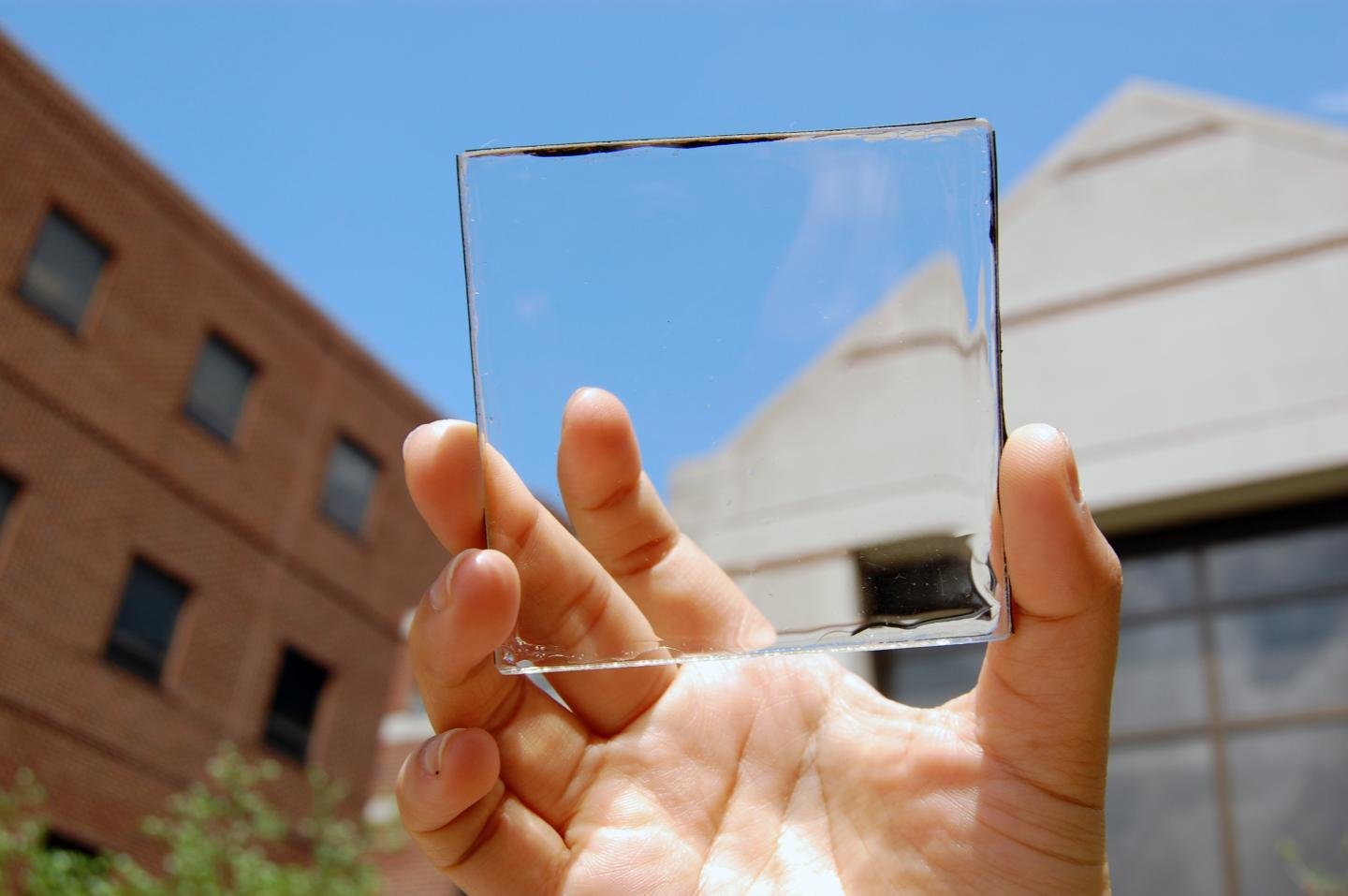
Researchers in the USA and China have taken us one step closer to being able to use transparent solar cells as our windows. The researchers realized a transparency level of 43.3% and an efficiency of 8.1% with the help of an organic, or carbon-based, design in contrast to traditional silicon.
Buildings constructed with glass facades today often have a coating that absorbs and reflects some of the light, both in the infrared and visible regions of the spectrum, to decrease the heating and brightness within the building. If we could harness this energy instead, it could be used to power the very same building. Transparent solar panels could tap it to meet a part of the electricity needs of the building.
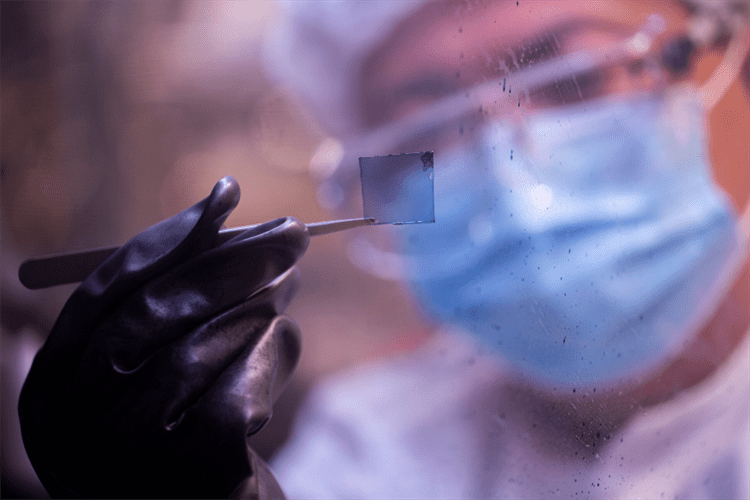
For solar cells to be a viable option for use as window panes – it is not only important for their efficiency to be high enough, i.e. that enough of the sunlight is converted into electricity – the solar cells need to be reasonably transparent
The researchers have now managed to create a solar cell with these properties. The efficiency is at eight percent, which may sound low, but is not so bad considering that ordinary solar cells are around twenty percent. The study has succeeded in increasing this efficiency by absorbing a greater amount of energy from the sun’s invisible infrared light, a frequency of light that do not affect the transparency we perceive with our own eyes.
“Windows, which are on the face of every building, are an ideal location for organic solar cells because they offer something silicon can’t, which is a combination of very high efficiency and very high visible transparency.”
– Stephen Forrest, Peter A. Franken Distinguished University Professor of Engineering and Paul G. Goebel Professor of Engineering, University of Michigan
The new material is a blend of organic molecules that absorb energy in the near-infrared region, coated to increase not only the power produced from infrared light but also the transparency in the visible range. An indium tin oxide electrode was used to make the color-neutral version of the device. The efficiency was enhanced to 10.8%, with transparency of 45.8%, by using a silver electrode.
The major challenge that remains is to extend the lifespan of the cells, which is short due to their high sensitivity to oxygen and moisture in the air. If mounted on existing glass panes, they, therefore, need to be protected by an extra layer of plastic.
The team is now making efforts to achieve various enhancements to the technology, and their next aim is to achieve a light utilization efficiency of 7% and extending the service life of the cell to about 10 years. Moreover, they are analyzing the economics of setting up transparent solar cell windows into existing and new buildings.
Reference:
Li, Y. et al. “Color-neutral, semi-transparent organic photovoltaics for power window applications”. Proceedings of the National Academy of Sciences, 17 August 2020. Doi: 10.1073 / pnas.2007799117