Close Menu
Illustrated Curiosity
    Facebook X (Twitter) Instagram YouTube
    Illustrated Curiosity
    • Earth
    • Economics
    • Environment
      • Climate
      • Environmental Tech
      • Pollution
      • Wildlife
    • Health
      • Health Tech
      • Medicine
      • Nutrition
      • Exercise
    • History
      • Prehistory
      • Ancient History
      • Postclassical Era
      • Modern History
    • Humans
      • Human Brain
      • Psychology
    • Life
      • Animals & Plants
      • Genetics
      • Paleontology
      • Evolution
      • Genetic Engineering
    • Physics
    • Space
      • Astrobiology
      • Astronomy
      • Extrasolar Planets
      • Space Tech
      • Spaceflight
    • Technology
      • Artificial Intelligence
      • Energy
      • Engineering
      • Materials
      • Robotics
      • Vehicles
    Illustrated Curiosity
    Home » A Newly Identified Raptor Hunted With The Terrifying Agility of a Cheetah
    Paleontology

    A Newly Identified Raptor Hunted With The Terrifying Agility of a Cheetah

    June 16, 2020No Comments3 Mins Read
    Share
    Facebook Twitter LinkedIn Pinterest Email
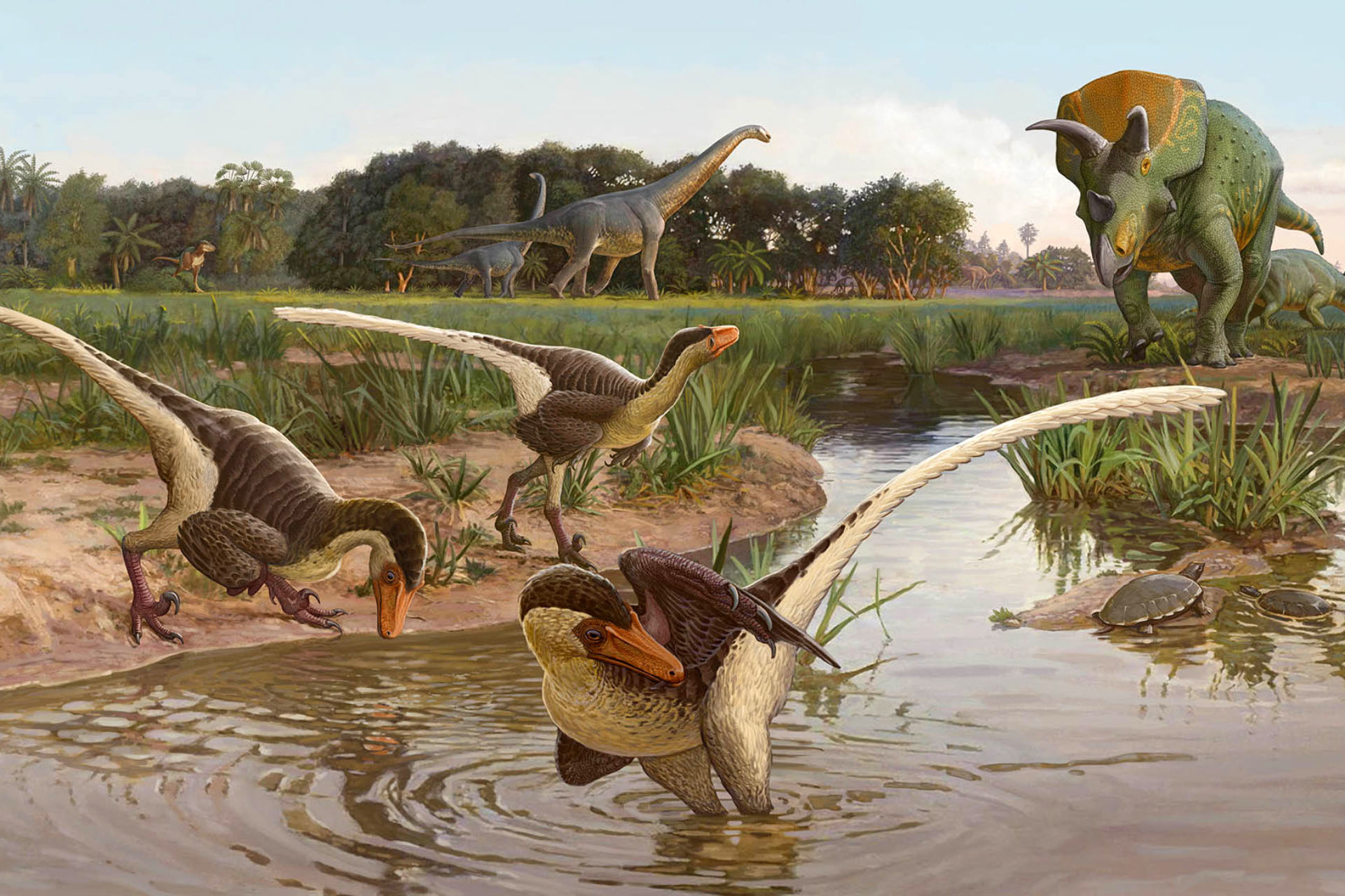
    Dineobellator notohesperus. Image credit: Sergey Krasovskiy.

    Scientists have unearthed fossils of a feathered dinosaur in northwestern New Mexico in the United States that was a quick and agile predator that could chase down smaller prey or swarm larger prey in pack attacks 67 million years ago.

    The dinosaur has been named ‘Dineobellator notohesperus’, which means “Navajo warrior from the Southwest,” in honor of the people who today live in the same region where this dinosaur once dwelled.

    It was a two-legged relatively small meat-eater – around 2 meters (7 feet) long and 1 meter (3 feet ) tall at the hip, weighing 18-22 kg (40-50 pounds ). But what Dineobellator lacked in size it made up for with ferocity, judging from a telltale scar on one of its menacing sickle-shaped claws.

    The dinosaur adds to scientists’ understanding of the paleo-biodiversity of the American Southwest, offering a clearer picture of what life was like in this region near the end of the reign of the dinosaurs.

    Dineobellator, as well as its Asian cousin Velociraptor, belongs to a group of dinosaurs known as the dromaeosaurids. While not all of the fossil bones of this dinosaur were recovered, bones from the forearm have quill nobs – small bumps on the surface where feathers would be anchored by ligaments – an indication that Dineobellator bore feathers in life, similar to those of the Velociraptor.

    Its tail also possessed unique characteristics. While most raptors’ tails were straight and stiffened with rod-like structures, Dineobellator’s tail was rather flexible at its base, allowing the rest of the tail to remain stiff and act as a rudder.

    “It was a swift, active predator. Its claws would have been several inches long and quite formidable, although rather than slicing through meat they probably would be more useful for holding on to things,”

    “A stiff tail that is highly mobile at its base allows for increased agility and changes in direction, and potentially aided Dineobellator in pursuing prey, especially in more open habitats.”

    – Paleontologist Steven Jasinski of the State Museum of Pennsylvania in Harrisburg, who led the research published in the journal Scientific Reports.

    The 25 percent of the recovered skeleton shows that Dineobellator had some unique evolutionary innovations setting it apart from other dromaeosaurs with superior grip strength in its hands, enhanced flexion in its arms and it unique tail structure.

    “Combining these features suggests Dineobellator would have been a swift, skilled pursuit predator that could run down smaller prey and attack and jump onto larger prey, holding on with stronger forelimbs and a tighter grip,”

    “Dineobellator tells us,” “that these dinosaurs were still diversifying and trying out new evolutionary pathways even at the twilight of their existence.”

    – Jasinski.

    Dineobellator lived near the very end of the age of dinosaurs, which is about a million years before an asteroid impact wiped them out. They probably inhabited a floodplain teeming with other dinosaurs including much larger predators and a variety of plant-eaters.

    This new discovery provides a better picture of the biology of North American dromaeosaurid dinosaurs, according to the researchers.

    Reference:

    Steven E. Jasinski, Robert M. Sullivan, Peter Dodson. New Dromaeosaurid Dinosaur (Theropoda, Dromaeosauridae) from New Mexico and Biodiversity of Dromaeosaurids at the end of the Cretaceous. Scientific Reports, 2020; 10 (1) DOI: 10.1038/s41598-020-61480-7

    Dinosaurs
    Share. Facebook Twitter Pinterest LinkedIn Tumblr Email Copy Link

    Related Posts

    All Dogs Are Descended from the Same Wolf

    November 30, 2020

    European Neanderthals Feasted on Fresh Seafood, Boosting Their Brain

    March 30, 2020

    Fishing in the Sahara? Yes – 10 000 Years Ago

    March 2, 2020

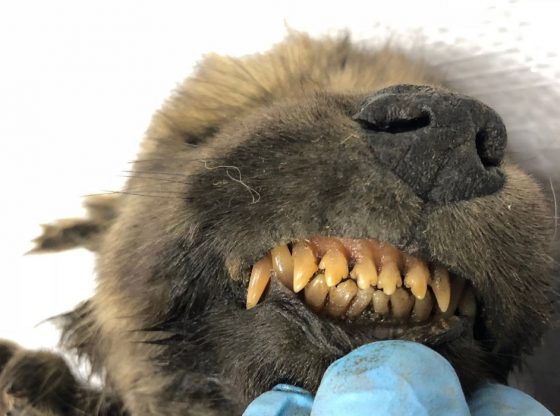
    18,000-Year-Old Frozen Puppy Found Perfectly Preserved in Siberian Permafrost

    December 9, 2019

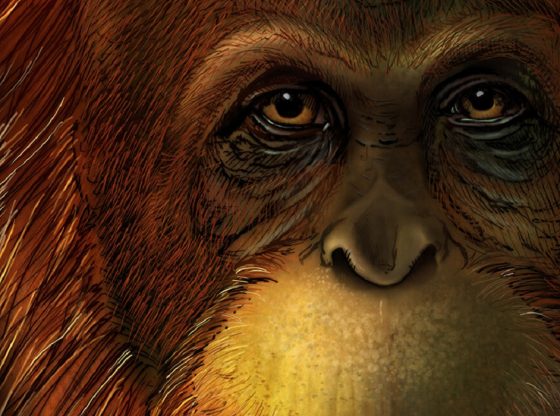
    Huge mysterious ape Gigantopithecus was a distant cousin of orangutans

    November 25, 2019

    Fossil Teeth Reveal Ancient Hyenas in the Arctic

    July 1, 2019
    Recent Posts
    • How the End of Bretton Woods Reshaped Our Economies — and Our Politics
    • Can the U.S. Really Handle 250% Debt-to-GDP? Why Jackson Hole’s Daring Paper Is Wrong
    • Japan’s Fiscal Trap: What Happens If Austerity Is No Longer an Option?
    • The Rise of Range Extended Electric Vehicles (REEVs): A New Era of Hybrid Mobility
    • The Great Capital Rotation: A Shift from U.S. Treasuries to Gold and Real Assets
    • The Hidden Risks of Short-Term Debt: A Balancing Act in U.S. Fiscal Policy
    • The Looming U.S. Debt Spiral: Understanding the Risks
    • The Looming Recession: Seven Economic Indicators Flashing Red for 2025
    • Europa Clipper: NASA’s Mission to Unlock the Secrets of Jupiter’s Icy Moon
    • Could Hedge Funds Cause Chaos in the U.S. Treasury Market? And What About Inflation?
    © 2025 Illustrated Curiosity

    Type above and press Enter to search. Press Esc to cancel.

    This website uses cookies to improve your experience. We'll assume you're ok with this, but you can opt-out if you wish.Accept Reject Read More
    Privacy & Cookies Policy

    Privacy Overview

    This website uses cookies to improve your experience while you navigate through the website. Out of these, the cookies that are categorized as necessary are stored on your browser as they are essential for the working of basic functionalities of the website. We also use third-party cookies that help us analyze and understand how you use this website. These cookies will be stored in your browser only with your consent. You also have the option to opt-out of these cookies. But opting out of some of these cookies may affect your browsing experience.
    Necessary
    Always Enabled
    Necessary cookies are absolutely essential for the website to function properly. This category only includes cookies that ensures basic functionalities and security features of the website. These cookies do not store any personal information.
    Non-necessary
    Any cookies that may not be particularly necessary for the website to function and is used specifically to collect user personal data via analytics, ads, other embedded contents are termed as non-necessary cookies. It is mandatory to procure user consent prior to running these cookies on your website.
    SAVE & ACCEPT