Close Menu
Illustrated Curiosity | Economics, History, Science, Space, Technology, Health, Physics, Earth
    Facebook X (Twitter) Instagram YouTube
    Illustrated Curiosity | Economics, History, Science, Space, Technology, Health, Physics, Earth
    • Earth
    • Economics
    • Environment
      • Environmental Tech
      • Pollution
      • Wildlife
    • Health
      • Health Tech
      • Medicine
      • Nutrition
      • Exercise
    • History
      • Prehistory
      • Ancient History
      • Postclassical Era
      • Modern History
    • Humans
      • Human Brain
      • Psychology
    • Life
      • Animals & Plants
      • Genetics
      • Paleontology
      • Evolution
      • Genetic Engineering
    • Physics
    • Space
      • Astrobiology
      • Astronomy
      • Extrasolar Planets
      • Space Tech
      • Spaceflight
    • Technology
      • Artificial Intelligence
      • Energy
      • Engineering
      • Materials
      • Robotics
      • Vehicles
    Illustrated Curiosity | Economics, History, Science, Space, Technology, Health, Physics, Earth
    Home » Biodegradable Bags Can Hold a Full Load of Shopping after 3 Years in the Environment
    Pollution

    Biodegradable Bags Can Hold a Full Load of Shopping after 3 Years in the Environment

    June 29, 20203 Mins Read
    Pixabay
    Pixabay
    Share
    Facebook Twitter LinkedIn Pinterest Email

    Pixabay License

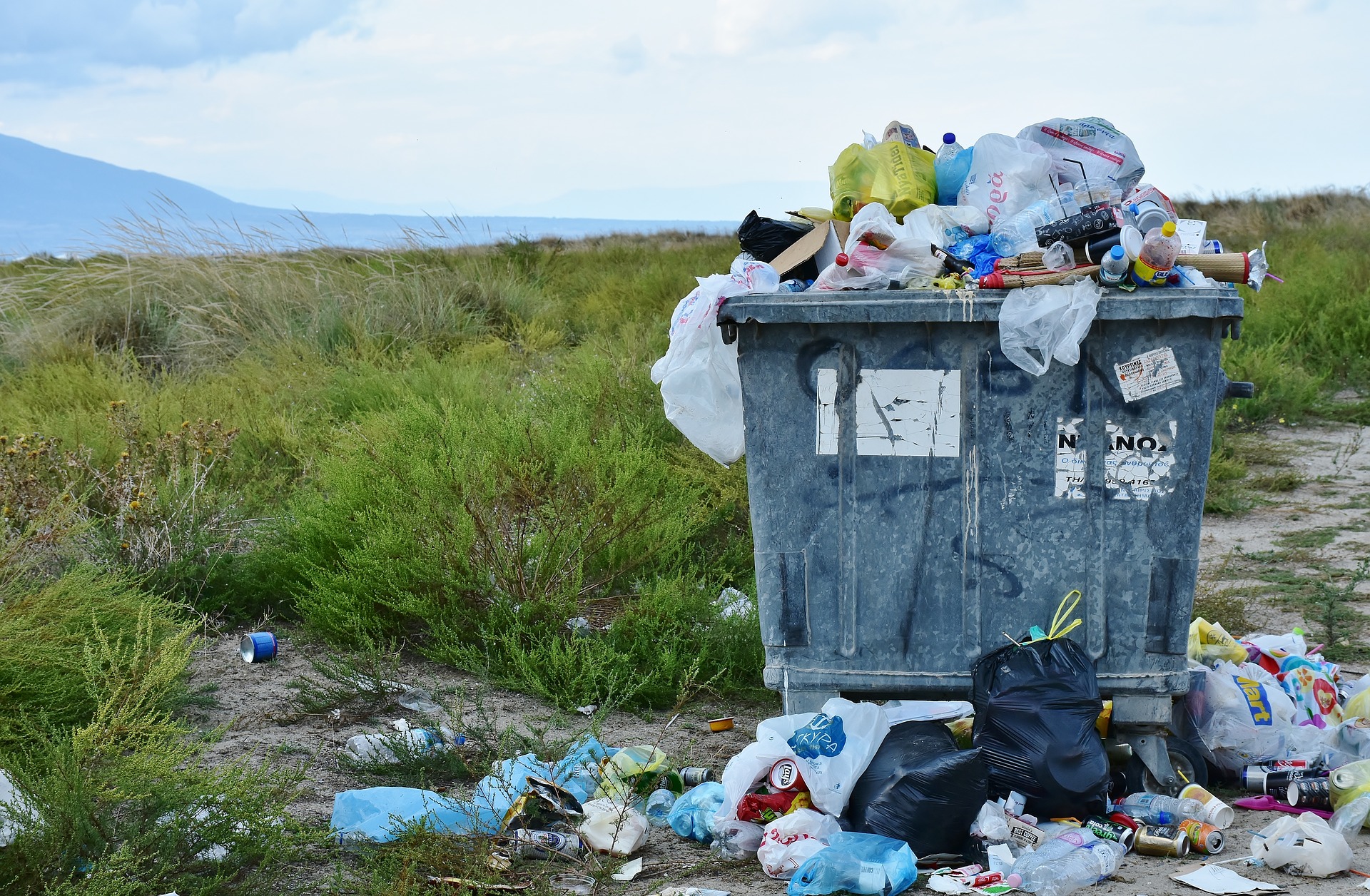
    That we stop using needless plastic is paramount for the environment, but new research casts doubt over just how environmentally friendly some forms of biodegradable plastic actually are. Image: Pixabay

    The study shows that biodegradable and compostable plastic bags are still capable of carrying full loads of shopping after being exposed to the natural environment for three years.

    Researchers from the University of Plymouth examined the degradation of five plastic bag materials widely available from high street retailers in the UK.

    Five different types of plastic carrier bags were compared. These included two types of oxo-biodegradable bags, one biodegradable bag, one compostable bag, and also a high-density polyethylene bag – a conventional plastic bag.

    They tested their resilience by long-term exposure to the sea, air, and earth. Then, to assess the amount of degradation, they visually observed changes in surface area and texture, as well as tensile strength and chemical structure over a three-year period.
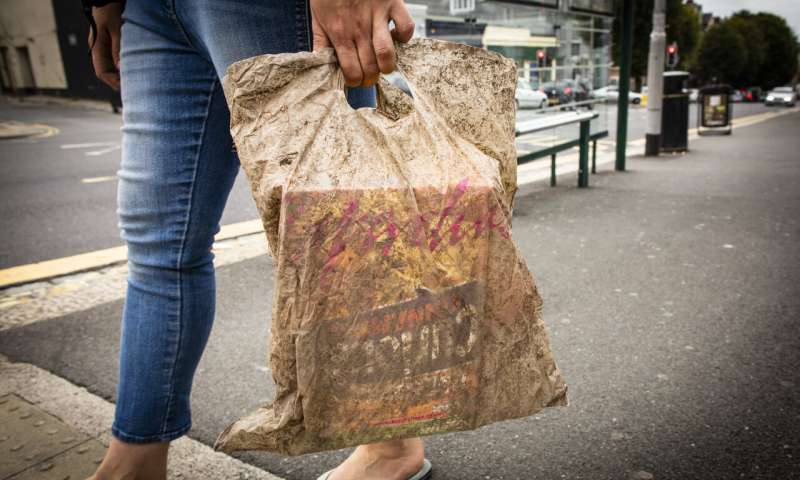
    None of the bags decomposed fully in all three environments, but the compostable bag appears to have fared better than the so-called biodegradable bag. The compostable bag sample had completely disappeared after three months in the marine environment.

    However, the biodegradable, oxo-biodegradable, and conventional plastic formulations remained functional as carrier bags after being in the soil or the marine environment for over three years.

    “After three years, I was really amazed that any of the bags could still hold a load of shopping. For biodegradable bags to be able to do that was the most surprising,”

    “When you see something labeled in that way, I think you automatically assume it will degrade more quickly than conventional bags. But, after three years at least, our research shows that might not be the case.”

    – Imogen Napper, who led the study as part of her doctoral program at Plymouth.

    The researchers raise the question of whether biodegradable formulations can be relied on to offer a sufficiently advanced rate of degradation and therefore a realistic solution to the problem of plastic litter.

    In the research, scientists quote a European Commission report in 2013 which suggested about 100 billion plastic bags were being issued every year, although various Governments have since introduced levies designed to address this.


    The researchers call for improved standards, such as the ISO, European Norm, and American Society for Testing and Materials (ASTM) International standards, relating to degradable plastic products – or perhaps, alternative disposal pathways.

    Reference:

    Imogen E. Napper, Richard C. Thompson. Environmental Deterioration of Biodegradable, Oxo-biodegradable, Compostable, and Conventional Plastic Carrier Bags in the Sea, Soil, and Open-Air Over a 3-Year Period. Environmental Science & Technology, 2019; DOI: 10.1021/acs.est.8b06984

    Share. Facebook Twitter Pinterest LinkedIn Tumblr Email Copy Link

    Related Posts

    Loss of Oxygen in Ocean a Major Threat to Marine Life

    January 7, 2020

    Microbe Chews through PFAS and other Tough Contaminants

    December 30, 2019

    A Highly Radioactive Wild Boar Shoot in Sweden – 33 Years since Chernobyl

    July 4, 2019

    The Absorption of Carbon Dioxide by the Sea Is Increasing with Emissions

    March 19, 2019

    China Is Suspected to Be behind Some of the Increased Chlorofluorocarbons Emissions

    June 25, 2018

    Record Concentration of Microplastic in Arctic Sea Ice

    May 10, 2018
    Recent Posts
    • The Day the Alliance Died
    • Evaluating Heart Disease: How Cumulative Diet Choices Compound Your Risk
    • What Would Happen If China Attacked Taiwan?
    • Geopoliticisation as a Structural Tailwind for Commodity Prices
    • America’s Economic Remodel: Who’s Really Paying the Bill?
    • Why Inflation May Be Preparing for a Second Act
    • How the End of Bretton Woods Reshaped Our Economies — and Our Politics
    • Can the U.S. Really Handle 250% Debt-to-GDP? Why Jackson Hole’s Daring Paper Is Wrong
    • Japan’s Fiscal Trap: What Happens If Austerity Is No Longer an Option?
    • The Rise of Range Extended Electric Vehicles (REEVs): A New Era of Hybrid Mobility
    © 2025 Illustrated Curiosity

    Type above and press Enter to search. Press Esc to cancel.