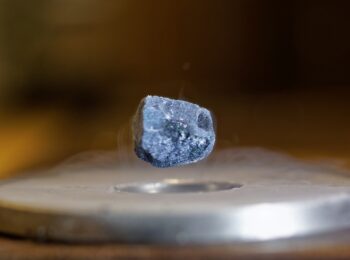

Researchers are moving quickly to test if a material called LK-99, discovered by a team of resarchers in South Korea, really is a superconductor at room temperature and pressure. Several labs have already announced results.
In a groundbreaking development that could revolutionize the world of energy transmission and storage, scientists have achieved a major breakthrough in the field of superconductors. The newly discovered room temperature superconductor, dubbed LK-99, has shattered previous limitations, paving the way for a new era of efficient and cost-effective technology applications.
Superconductors, materials that exhibit zero electrical resistance, have long been hailed as the holy grail of energy research. However, their practical application has been limited to extremely low temperatures, making them costly and impractical for widespread use. The discovery of LK-99 is poised to change this, bringing superconductivity to temperatures that are accessible without expensive cooling systems.
The Triumph of LK-99: Unleashing the Power of Superconductors
Traditional superconductors, such as those based on yttrium barium copper oxide (YBCO), require temperatures below -150°C (-238°F) to maintain their remarkable electrical properties. This necessitates the use of energy-intensive cooling mechanisms, which offset the advantages of superconductivity. LK-99, on the other hand, has the extraordinary ability to maintain superconductivity at room temperature, around 25°C (77°F), and above, eliminating the need for expensive and energy-consuming cooling methods.
The research leading to the discovery of LK-99 was carried out by an international team of physicists, chemists, and materials scientists. Their efforts focused on designing and synthesizing novel compounds capable of exhibiting superconductivity at higher temperatures. After years of extensive experimentation, LK-99 emerged as the most promising candidate for practical room temperature superconductivity.
The Potential Impact of Room Temperature Superconductors
The implications of LK-99 and its potential applications are vast, transforming numerous industries and daily lives in the process.
1. Energy Transmission and Storage:
Room temperature superconductors will revolutionize power transmission and distribution. By significantly reducing energy losses during transmission, power grids can become much more efficient, leading to decreased electricity costs for consumers. Additionally, the efficient storage of electricity becomes more achievable, enabling better integration of renewable energy sources like wind and solar into the grid.
2. Transportation:
The transportation sector is set to undergo a paradigm shift with room temperature superconductors. Electric vehicles (EVs) equipped with LK-99 technology would be more energy-efficient, offer extended driving ranges, and require shorter charging times. Maglev trains, which already operate using superconducting magnets, will experience a boost in efficiency, allowing for faster and smoother travel.
3. Healthcare and Scientific Research:
In medical applications, room temperature superconductors could enable the creation of more powerful and compact MRI machines, leading to more precise and faster diagnoses. Moreover, in scientific research, these advancements could unlock new opportunities in fields such as particle accelerators and fusion energy.
4. Electronics:
The computing and electronics industries stand to gain from room temperature superconductors. Faster and more energy-efficient electronic devices, from supercomputers to smartphones, could become a reality with the implementation of LK-99 technology.
The Road Ahead: Challenges and Commercialization
Despite this remarkable breakthrough, challenges remain before LK-99’s full potential can be harnessed. Researchers are now focusing on understanding the underlying physics of the compound and finding ways to mass-produce it at an economically viable scale.
Commercialization efforts are already underway, with major companies partnering with research institutions to fast-track the development of practical applications. Government funding and support will be crucial to accelerate the integration of LK-99 into our everyday lives.
The discovery of LK-99 marks a momentous leap in the quest for room temperature superconductors, opening up a universe of possibilities that were once confined to the realms of science fiction. As researchers continue to push the boundaries of what’s possible, society stands on the brink of a technological revolution that will undoubtedly reshape the world as we know it.
Reference:
Kapil Kumar, N.K. Karn, V.P.S. Awana Synthesis of possible room temperature superconductor LK-99:Pb9Cu(PO4)6O arXiv:2307.16402