

Samsung has developed a 900wh solid-state battery that provides electric vehicles with a range of 800 kilometers on a single charge – and has a life cycle of over 1,000 charges.
Competition is heating up among global chemical and automobile companies to develop a solid-state battery that is expected to lead the future electric vehicle (EV) market. Samsung has announced that it has presented a study on high-performance, all-solid-state batteries to Nature Energy, one of the world’s leading scientific journals.
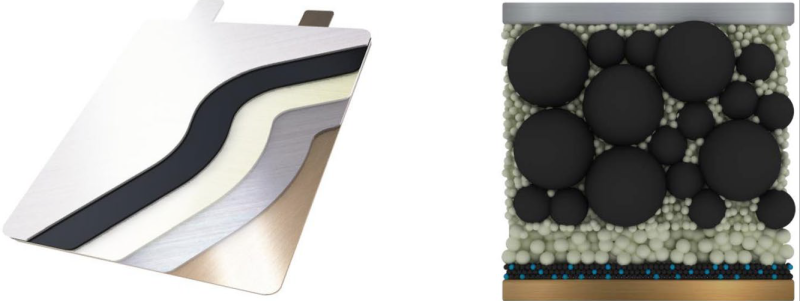
All-solid-state batteries refer to batteries that use a solid electrolyte between anodes and cathodes. Compared with lithium-ion batteries currently in use, they are safer and allow the production of large-capacity batteries.
Japan has been the most proactive in developing all-solid-state batteries. The country has made a large-scale investment in the development of the new battery through the New Energy Industry Technology Development Organization (NEDO). In particular, Toyota has invested 1.5 trillion yen in developing all-solid-state batteries in a bid to launch an EV loaded with them by 2022.
The Samsung Advanced Institute of Technology unveiled technology could cut the size of all-solid-state batteries while increasing their lifetime and safety. The South Korean firm noted that the technology is half the size of a conventional lithium-ion battery, which was achieved by reducing the anode thickness. The new battery is nonflammable because it uses solid material and avoids using any toxic chemical, all while still having energy densities up to 2.5 the times as its counterpart.
“The product of this study could be a seed technology for safer, high-performance batteries of the future.”
“Going forward, we will continue to develop and refine all-solid-state battery materials and manufacturing technologies to help take EV battery innovation to the next level.”
– Dongmin Im, Master at SAIT’s Next Generation Battery Lab, and the leader of the project explained.
Even though solid-state batteries can pack more capacity in the same footprint when compared to lithium-ion batteries, the lithium metal anodes that are used in solid-state batteries are prone to develop dendrites, which reduce a battery’s lifespan and safety. To counter this, Samsung’s research teams at Samsung have proposed the use of silver-carbon (Ag-C) composite layer as the anode.
The team found that incorporating an Ag-C layer into a prototype pouch cell enabled the battery to support a larger capacity, a longer cycle life, and enhanced its overall safety. Measuring just 5µm (micrometers) thick, the ultrathin Ag-C nanocomposite layer allowed the team to reduce anode thickness and increase energy density. It also enabled them to make their prototype approximately 50% smaller by volume than a conventional lithium-ion battery.
As the electric vehicle market is expected to grow rapidly, the commercialization of breakthrough technology is expected to gain speed.
Reference:
Lee, Y., Fujiki, S., Jung, C. et al. (2020) “High-energy long-cycling all-solid-state lithium metal batteries enabled by silver–carbon composite anodes.” Nat Energy doi: 10.1038/s41560-020-0575-z