Close Menu
Illustrated Curiosity | Economics, History, Science, Space, Technology, Health, Physics, Earth
    Facebook X (Twitter) Instagram YouTube
    Illustrated Curiosity | Economics, History, Science, Space, Technology, Health, Physics, Earth
    • Earth
    • Economics
    • Environment
      • Environmental Tech
      • Pollution
      • Wildlife
    • Health
      • Health Tech
      • Medicine
      • Nutrition
      • Exercise
    • History
      • Prehistory
      • Ancient History
      • Postclassical Era
      • Modern History
    • Humans
      • Human Brain
      • Psychology
    • Life
      • Animals & Plants
      • Genetics
      • Paleontology
      • Evolution
      • Genetic Engineering
    • Physics
    • Space
      • Astrobiology
      • Astronomy
      • Extrasolar Planets
      • Space Tech
      • Spaceflight
    • Technology
      • Artificial Intelligence
      • Energy
      • Engineering
      • Materials
      • Robotics
      • Vehicles
    Illustrated Curiosity | Economics, History, Science, Space, Technology, Health, Physics, Earth
    Home » Tranquil Planetary System Just 11 Light-Years Away Raises Hopes of Habitability
    Extrasolar Planets

    Tranquil Planetary System Just 11 Light-Years Away Raises Hopes of Habitability

    July 13, 20203 Mins Read
    Image: NASA
    Image: NASA
    Share
    Facebook Twitter LinkedIn Pinterest Email
    Image: Mark Garlick
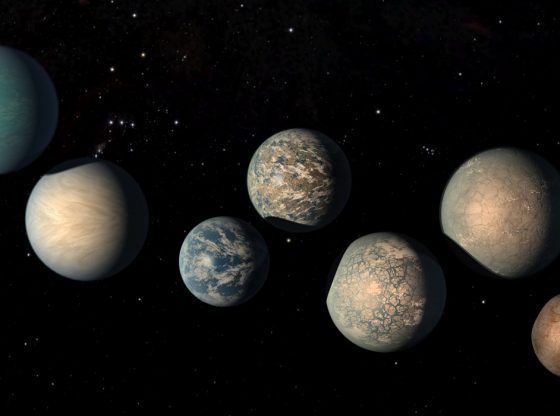
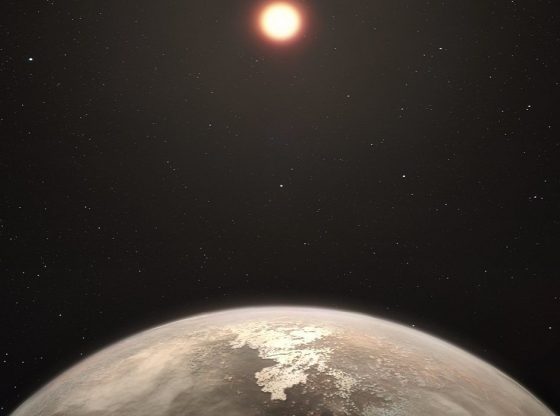
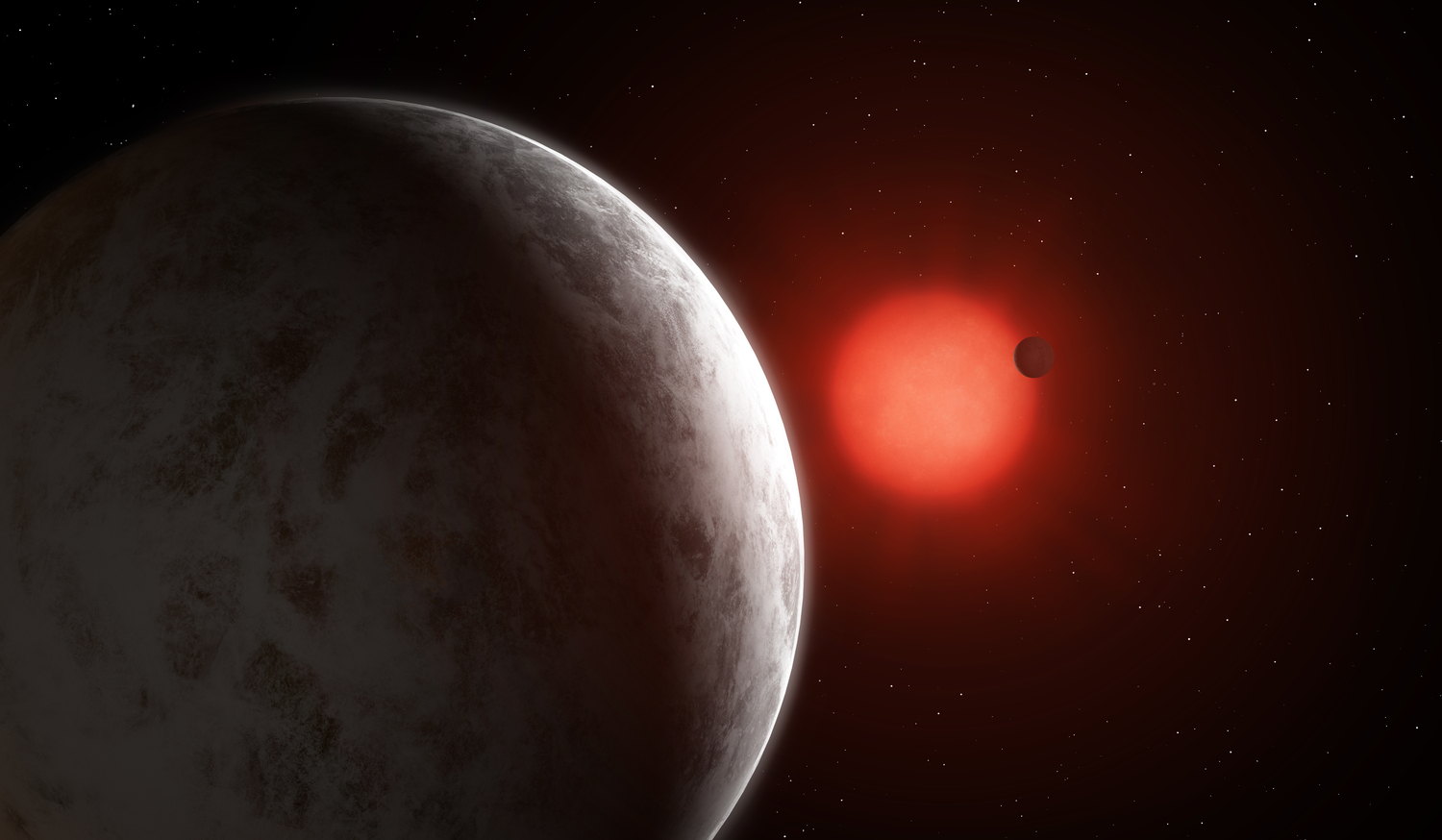
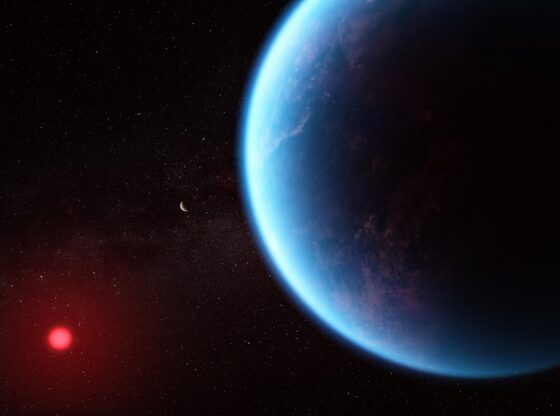
    Artist’s impression of exoplanets around the nearby red dwarf star GJ 887. Image: NASA

    Just 11 light-years away from Earth there are a bunch of very hot, rocky worlds that orbit a small, red star that is unusually calm. The fact that these objects are so nearby in cosmic terms, makes them relatively easy to study.

    The star is called Lacaille 9352, or GJ 887, and could be the “best star by far” to look for exoplanets with atmospheres like our own making GJ 887 one of the closest multi-planet systems to our Solar System, the researchers report.

    “These planets will provide the best possibilities for more detailed studies, including the search for life outside our Solar System,”

    – Astrophysicist Sandra Jeffers of the University of Göttingen in Germany.

    Sandra Jeffers at the University of Göttingen in Germany and her colleagues found its planets by using the High Accuracy Radial Velocity Planet Searcher (HARPS) at La Silla Observatory in Chile. They caught sight of them by watching for the wobbles in the star’s light caused by the planets’ gravitational pull.

    Two exoplanets that could be rocky, like Earth and Mars. With orbital periods lasting 9.8 and 21.8 days, respectively, GJ 887b and GJ 887c are too close to the star to be habitable. Computer simulations revealed that surface temperatures could stretch to around 77 degrees Celsius (170 degrees Fahrenheit).

    But there is also a hint of a third terrestrial exoplanet orbiting at a greater distance – has a much longer 50-day orbital period and lies just within the habitable zone – at a distance that could make it temperate, neither too hot nor too cold to prohibit liquid water on the surface.

    GJ 887 is a rather cool and faint red dwarf star about half as massive as the Sun, and around half its diameter. It shines about 1% of the Sun’s brightness, so its habitable zone is much closer than systems with yellow stars like our own.

    If astronomers can confirm the presence of this third exoplanet, GJ 887 will join the ranks of the TRAPPIST-1 and other exciting nearby systems. Nevertheless, the discovered planets could be among the first targets for NASA’s upcoming James Webb Space Telescope (JWST) simply because they’re so close.

    Reference:

    S. V. Jeffers1 et al. A multiplanet system of super-Earths orbiting the brightest red dwarf star GJ 887 Science 26 Jun 2020: Vol. 368, Issue 6498, pp. 1477-1481 DOI: 10.1126/science.aaz0795
    Share. Facebook Twitter Pinterest LinkedIn Tumblr Email Copy Link

    Related Posts

    James Webb Telescope Discovers Methane & Carbon Dioxide in the Atmosphere of Exoplanet K2-18b

    September 14, 2023

    TESS Mission Spots Earth-Size Potentially Habitable Planet 100 Light-Years Away

    January 8, 2020

    Water is Common—Yet Scarce—in Exoplanets

    December 17, 2019

    Astronomers Discover Jupiter-like Planet Orbiting A Tiny Star

    September 30, 2019

    Water Discovered in the Atmosphere of an Exoplanet in the Habitable zone

    September 12, 2019

    Astronomers Just Found a Planet Where Star Trek’s Vulcan Was Predicted to Exist

    October 1, 2018
    Recent Posts
    • The Day the Alliance Died
    • Evaluating Heart Disease: How Cumulative Diet Choices Compound Your Risk
    • What Would Happen If China Attacked Taiwan?
    • Geopoliticisation as a Structural Tailwind for Commodity Prices
    • America’s Economic Remodel: Who’s Really Paying the Bill?
    • Why Inflation May Be Preparing for a Second Act
    • How the End of Bretton Woods Reshaped Our Economies — and Our Politics
    • Can the U.S. Really Handle 250% Debt-to-GDP? Why Jackson Hole’s Daring Paper Is Wrong
    • Japan’s Fiscal Trap: What Happens If Austerity Is No Longer an Option?
    • The Rise of Range Extended Electric Vehicles (REEVs): A New Era of Hybrid Mobility
    © 2025 Illustrated Curiosity

    Type above and press Enter to search. Press Esc to cancel.