Close Menu
Illustrated Curiosity | Economics, History, Science, Space, Technology, Health, Physics, Earth
    Facebook X (Twitter) Instagram YouTube
    Illustrated Curiosity | Economics, History, Science, Space, Technology, Health, Physics, Earth
    • Earth
    • Economics
    • Environment
      • Environmental Tech
      • Pollution
      • Wildlife
    • Health
      • Health Tech
      • Medicine
      • Nutrition
      • Exercise
    • History
      • Prehistory
      • Ancient History
      • Postclassical Era
      • Modern History
    • Humans
      • Human Brain
      • Psychology
    • Life
      • Animals & Plants
      • Genetics
      • Paleontology
      • Evolution
      • Genetic Engineering
    • Physics
    • Space
      • Astrobiology
      • Astronomy
      • Extrasolar Planets
      • Space Tech
      • Spaceflight
    • Technology
      • Artificial Intelligence
      • Energy
      • Engineering
      • Materials
      • Robotics
      • Vehicles
    Illustrated Curiosity | Economics, History, Science, Space, Technology, Health, Physics, Earth
    Home » Water is Common—Yet Scarce—in Exoplanets
    Extrasolar Planets

    Water is Common—Yet Scarce—in Exoplanets

    December 17, 20193 Mins Read
    Image: NASA
    Image: NASA
    Share
    Facebook Twitter LinkedIn Pinterest Email
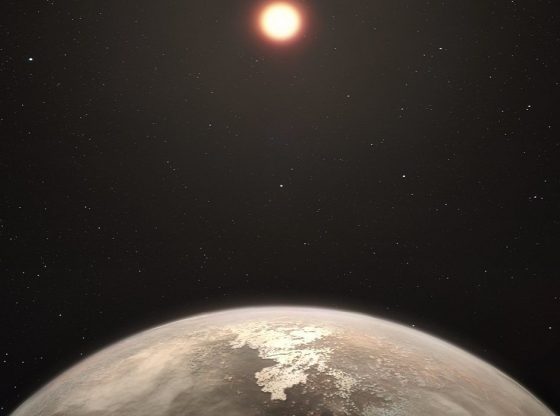
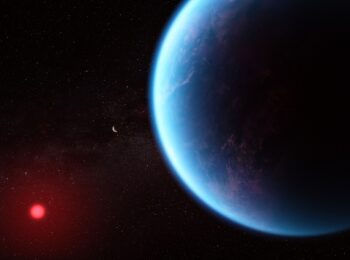
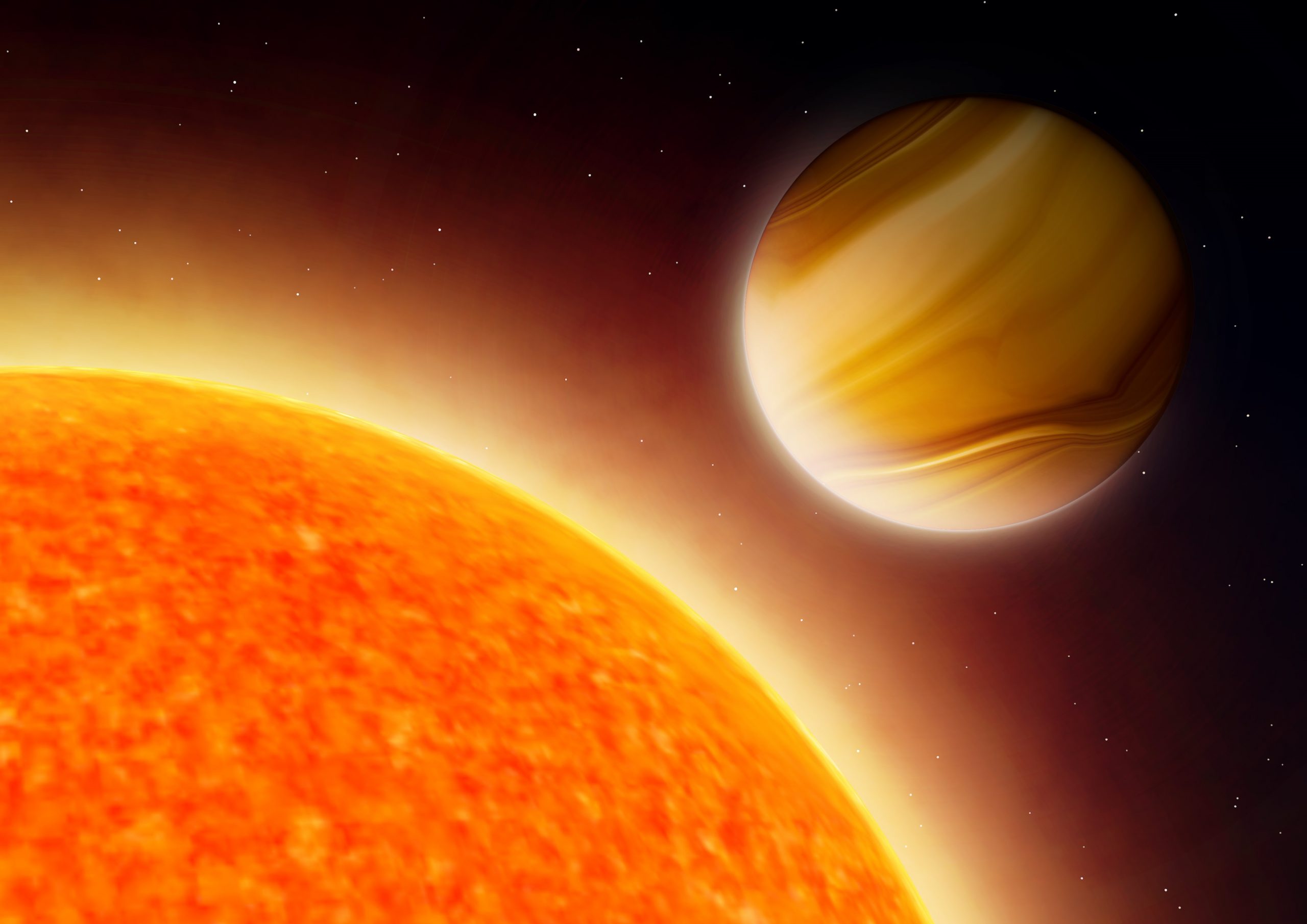
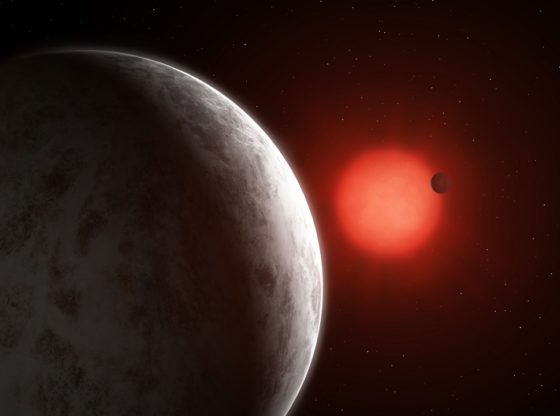
    The most extensive survey of atmospheric chemical compositions of exoplanets to date has revealed trends that challenge current theories of planet formation and has implications for the search for water in the solar system and beyond. Image: NASA

    A team of researchers, led by the University of Cambridge, used atmospheric data from 19 extrasolar planets to obtain detailed measurements of their chemical and thermal properties. They found that while water vapor is common in the atmospheres of many exoplanets, the amounts were lower than expected.

    The study published in The Astrophysical Journal Letters, researchers used extensive data from space-based and ground-based telescopes as well as a range of available observations to obtain detailed measurements of the chemical and thermal properties of 19 exoplanets.

    The exoplanets in the study span a large range in size, from ‘mini-Neptunes’ of nearly 10 Earth masses to ‘super-Jupiters’ of over 600 Earth masses. They are between nearly 20°C to over 2000°C in temperature. Similar to the giant planets in our solar system, their atmospheres are rich in hydrogen, but they orbit different types of stars.

    “We are seeing the first signs of chemical patterns in extra-terrestrial worlds, and we’re seeing just how diverse they can be in terms of their chemical compositions.”

    – Project leader Dr. Nikku Madhusudhan from the Institute of Astronomy at Cambridge said.

    The team reported the abundance of water vapor in 14 of the 19 planets, and the abundance of sodium and potassium in six planets each.

    The results suggest patterns in exoplanets’ chemical composition, showing how diverse they can be. In addition, the results also provide clues as to how they were formed.

    The researchers used extensive spectroscopic data from space-based and ground-based telescopes, including the Hubble Space Telescope, the Spitzer Space Telescope, the Very Large Telescope in Chile and the Gran Telescopio Canarias in Spain. The range of available observations, along with detailed computational models, statistical methods, and atomic properties of sodium and potassium, allowed the researchers to obtain estimates of the chemical abundances in the exoplanet atmospheres across the sample.

    The new study is the most extensive survey of exoplanets’ atmospheric chemical compositions to date. The technology that enables us to make this kind of measurement of exoplanet atmospheres is rapidly advancing and was impossibly just a few years ago.

    “Measuring the abundances of these chemicals in exoplanetary atmospheres is something extraordinary, considering that we have not been able to do the same for giant planets in our solar system yet, including Jupiter, our nearest gas giant neighbor,”

    – Lead author Luis Welbanks of the Institute of Astronomy

    Reference:

    Luis Welbank et al. Mass–Metallicity Trends in Transiting Exoplanets from Atmospheric Abundances of H2O, Na, and K Published 2019 December 11 • © 2019. The American Astronomical Society.
    Share. Facebook Twitter Pinterest LinkedIn Tumblr Email Copy Link

    Related Posts

    James Webb Telescope Discovers Methane & Carbon Dioxide in the Atmosphere of Exoplanet K2-18b

    September 14, 2023

    Tranquil Planetary System Just 11 Light-Years Away Raises Hopes of Habitability

    July 13, 2020

    TESS Mission Spots Earth-Size Potentially Habitable Planet 100 Light-Years Away

    January 8, 2020

    Astronomers Discover Jupiter-like Planet Orbiting A Tiny Star

    September 30, 2019

    Water Discovered in the Atmosphere of an Exoplanet in the Habitable zone

    September 12, 2019

    Astronomers Just Found a Planet Where Star Trek’s Vulcan Was Predicted to Exist

    October 1, 2018
    Recent Posts
    • Largest Battles in History: Cannae — Rome’s Darkest Day
    • The Day the Alliance Died
    • Evaluating Heart Disease: How Cumulative Diet Choices Compound Your Risk
    • What Would Happen If China Attacked Taiwan?
    • Geopoliticisation as a Structural Tailwind for Commodity Prices
    • America’s Economic Remodel: Who’s Really Paying the Bill?
    • Why Inflation May Be Preparing for a Second Act
    • How the End of Bretton Woods Reshaped Our Economies — and Our Politics
    • Can the U.S. Really Handle 250% Debt-to-GDP? Why Jackson Hole’s Daring Paper Is Wrong
    • Japan’s Fiscal Trap: What Happens If Austerity Is No Longer an Option?
    © 2025 Illustrated Curiosity

    Type above and press Enter to search. Press Esc to cancel.