
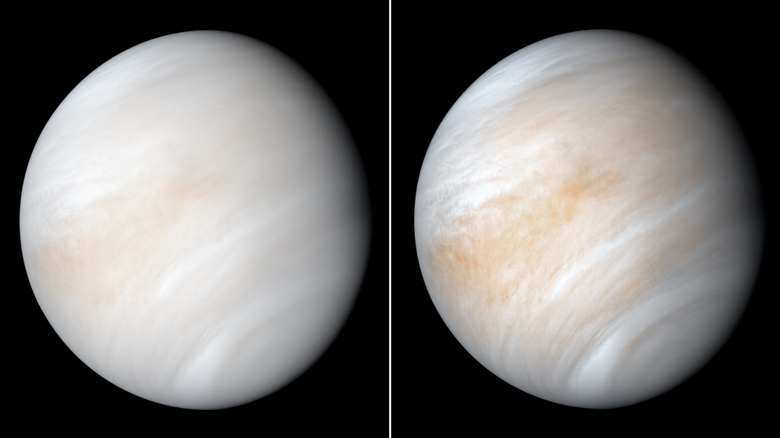
Jane Greaves from Cardiff University in the U.K. and several co-authors, including some from MIT, just announced in an exciting new paper the discovery of phosphine gas in the clouds of Venus.
This gas is almost exclusively associated with life here on Earth has been detected in the clouds surrounding Venus. On Earth, bacteria produce the flammable, foul, and toxic gas phosphine after taking up phosphate from minerals or biological material and adding hydrogen. Any terrestrial organisms on Venus would look very different from those on our planet, but nonetheless could be the source of phosphine in the atmosphere.
Phosphine is a chemical compound made up of one atom of phosphorus and three atoms of hydrogen. It is quite prevalent in the atmospheres on the gas giants Venus and Saturn, both of which are rich in hydrogen. On Earth, where the atmosphere leans more toward oxygen compounds, it’s much shorter-lived, and the same ought to be true on Venus.
“This was an experiment made out of pure curiosity, really – taking advantage of JCMT’s powerful technology, and thinking about future instruments,”
“I thought we’d just be able to rule out extreme scenarios, like the clouds being stuffed full of organisms. When we got the first hints of phosphine in Venus’ spectrum, it was a shock!”
– Professor Jane Greaves of Cardiff University
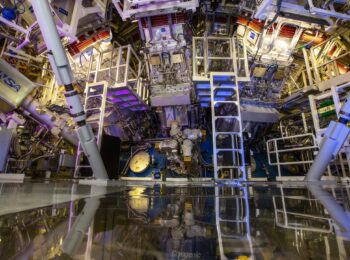
The researchers used the James Clerk Maxwell Telescope in Hawaii in 2017 and the Atacama Large Millimeter/submillimeter Array in 2019 to study Venus. Their data revealed a spectral signature unique to traces of phosphine in the planet’s atmosphere. The scientists estimated 20 parts-per-billion of the gas is present in Venus’ clouds.
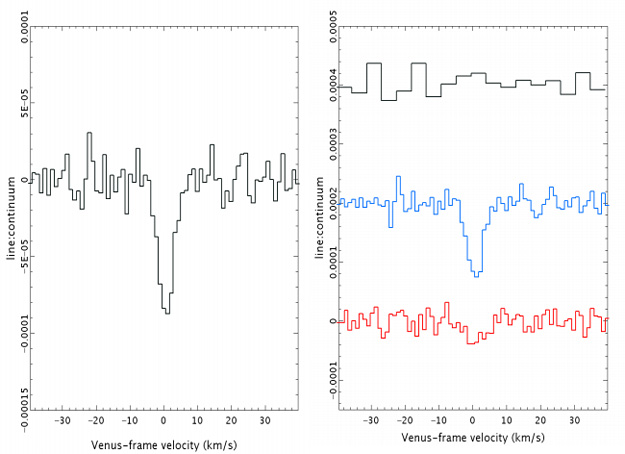
While the researchers are confident that it is phosphine they have detected in Venus’s clouds, they acknowledge that confirming the presence of life needs a lot more work. The high clouds of Venus are mostly made up of sulfuric acid, and it is unclear how microbes could survive this extreme level of acidity.
The research team considered surface sources like volcanoes, lightning, delivery via micrometeorites, or chemical processes occurring in the clouds as potential causes, but they haven’t been able to determine how the phosphine was produced.
This isn’t the first time phosphine has been detected, the Soviet Union’s Vega probes detected a phosphorus-containing chemical in the local clouds in the 1980s, although their instruments weren’t sophisticated enough to make a precise identification.
Besides phosphine, other gasses have been detected previously indicating the existence of life; in the analysis of mission data from the Venera, Pioneer Venus, and Magellan missions, it was discovered that carbonyl sulfide, hydrogen sulfide, and sulfur dioxide were present together in the upper atmosphere. Venera also detected large amounts of toxic chlorine just below the Venusian cloud cover. Carbonyl sulfide is difficult to produce inorganically, but it can be produced by volcanism.
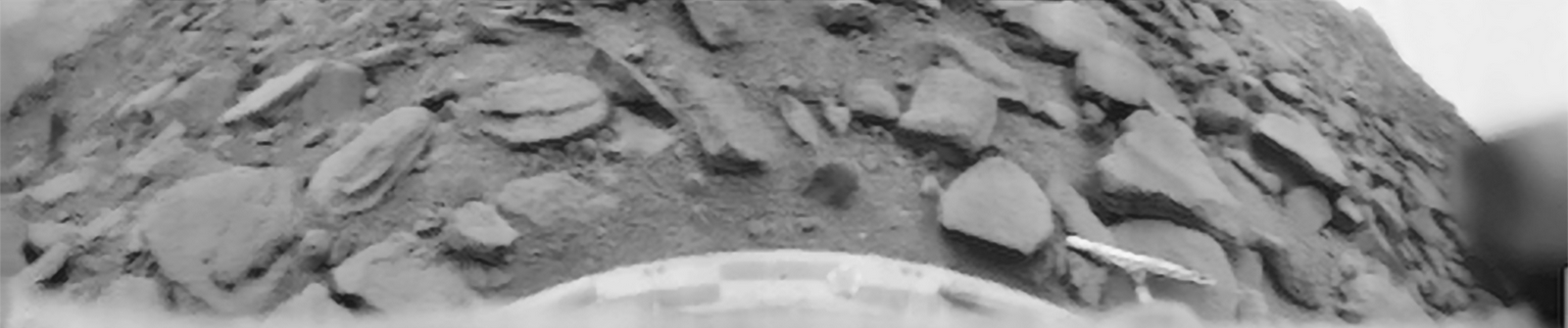
Venus is an unusual planet that scientists are still trying to understand. It’s our closest planetary neighbor, but it spins backward compared to other planets. The planet’s thick atmosphere helps to trap heat, and its surface is hot enough to melt lead. Above its hot surface, which is 500 degrees Celsius, the upper cloud deck that’s 53 to 60 kilometers above the planet’s surface is much more temperate. But Venus’ clouds are very acidic, which should quickly destroy phosphine.
It’s plausible that if liquid water once existed on the surface of Venus before the runaway greenhouse effect heated the planet, microbial life may have formed on Venus. Assuming the process that delivered water to Earth was common to all the planets near the habitable zone, it has been estimated that liquid water could have existed on its surface for up to 600 million years during and shortly after the Late Heavy Bombardment, which could be enough time for simple life to form.
Recent studies from September of 2019 concluded that Venus may have had surface water and a habitable condition for around 3 billion years and may have been in this condition until 700 to 750 million years ago, if correct this would give life an ample amount of time to evolve.
The research team will continue its search for the origin of the phosphine gas detected on Venus, as well as look for other unexpected gases in its atmosphere. Future observations could reveal the source of phosphine, as well as modeling to show why the gas is present in the atmosphere.
Life on Venus? The discovery of phosphine, a byproduct of anaerobic biology, is the most significant development yet in building the case for life off Earth. About 10 years ago NASA discovered microbial life at 120,000ft in Earth’s upper atmosphere. It’s time to prioritize Venus. https://t.co/hm8TOEQ9es
— Jim Bridenstine (@JimBridenstine) September 14, 2020
A future potential mission to the planet could sample the clouds and surface may also shed light on the source and Jim Bridenstine, the Administrator of the National Aeronautics and Space Administration (NASA), has now called for the immediate prioritization of studying Venus.
Reference:
Greaves, J.S., Richards, A.M.S., Bains, W. et al. Phosphine gas in the cloud decks of Venus. Nat Astron (2020). https://doi.org/10.1038/s41550-020-1174-4