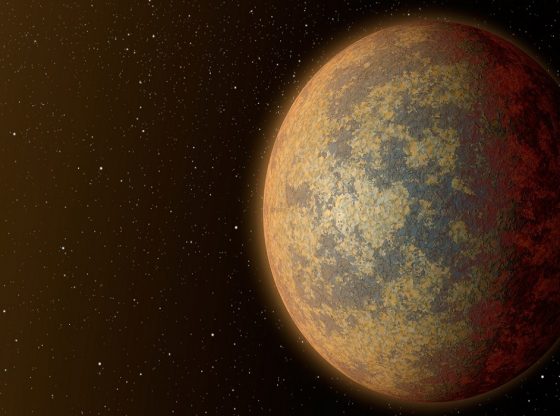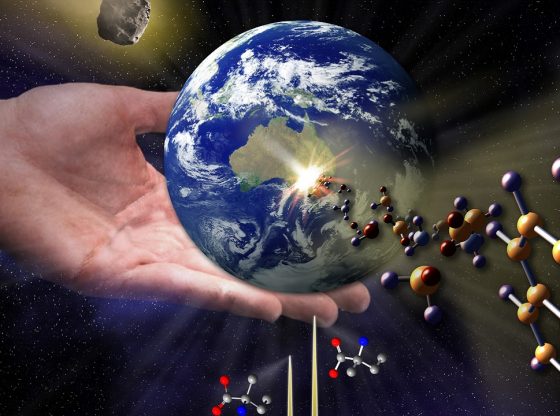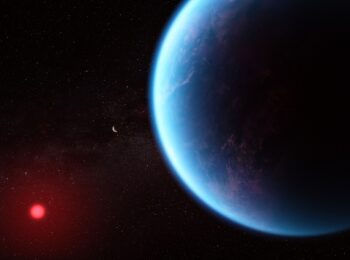

Several New Giant Telescopes may soon find traces of life elsewhere in the universe. These telescopes will be able to analyze the atmosphere of extrasolar planets. They may detect methane and carbon dioxide, even more, robust signs of life than oxygen, according to a new study.
It’s hard to believe we are completely alone in the universe. But we are yet to find the first evidence that would indicate otherwise.
An extraterrestrial civilization looking at Earth would find it obvious that there is life here because we have so much oxygen in the atmosphere. But if looking at Earth during earlier ages, this indicator wouldn’t be so obvious.
Over 20 years have passed since the Swiss astronomers Michel Mayor and Didier Queloz, for the first time, detected a planet orbiting another star. Now, we know of thousands of such exoplanets, even though we have only been able to investigate a very small part of the Milky Way.
Astronomers estimate that each star on average has at least one planet. If only one planet per star was the case, there would still be over 1,000 billion planets in our own galaxy. Based on the number of planets that are “Earth-like” in size and composition, discovered so far, and since life occurred here on Earth, it would only seem reasonable that there would be life in some form on other planets.
But we cannot be certain until we discover the first unequivocal traces of extraterrestrial life. Oxygen in the atmosphere would probably be the strongest indicator of life. Much research in astrobiology focuses on the correlation between oxygen and life. But even so, a planet that lacks oxygen doesn’t necessarily need to be dead. Life could very well exist in atmospheres without oxygen and this what a new research paper examines.
The paper, published in Science Advances, investigate how the imbalance in the Earth atmosphere may have looked like 4 billion years ago. Joshyua Krissansen-Totton and concludes that all life produces waste, like gases that the organism no longer needs, resulting from whatever energy metabolism the organisms are using.
The atmosphere of a planet with life will therefore always be in some form of imbalance. This waste product would affect the air and the atmosphere will never reach chemical equilibrium since more and more of the waste product is released into the atmosphere.
Over the past 2.5 billion years on Earth, equilibrium has been predominantly disturbed by green plants, algae, and bacteria that produce oxygen. During the more recent eons, the Proterozoic and Phanerozoic, have identifiable levels of oxygen gas (O2), nitrogen gas (N2), and liquid water (H2O) caused by life.
However, during the Archean, Earth was a significantly different world. There was virtually no oxygen gas in the atmosphere or dissolved oxygen gas in the oceans all those billions of years ago. But microscopic life was thriving in the oceans, releasing methane as a byproduct.
“Oxygen-making photosynthetic life may never emerge on other planets,”
“It’s a very complex metabolism that only evolved once on Earth and so could be quite rare in the cosmos.”
“Our calculations show that those four species cannot exist together in equilibrium, and that the methane should disappear unless it is continuously resupplied by something,”
“On the early Earth, evidence suggests that methane was resupplied by life—many microbes belch out methane as a waste product of their metabolism.”
“If you were an alien who looked at the earth, it would be obvious that there is life here, because we have so much oxygen in the atmosphere. But if you had looked at the earth during earlier ages, could you have discovered life then? That question motivated us, ”
– Joshua Krissansen-Totton, a doctoral student in astrobiology at the University of Washington, Seattle, USA.
Joshua and his research colleagues suggestion are that methane together with carbon dioxide is a possible sign of life.
Reference:
Joshua Krissansen-Totton1, Stephanie Olson3 and David C. Catling Disequilibrium biosignatures over Earth history and implications for detecting exoplanet life DOI: 10.1126/sciadv.aao5747