Close Menu
Illustrated Curiosity | Economics, History, Science, Space, Technology, Health, Physics, Earth
    Facebook X (Twitter) Instagram YouTube
    Illustrated Curiosity | Economics, History, Science, Space, Technology, Health, Physics, Earth
    • Earth
    • Economics
    • Environment
      • Environmental Tech
      • Pollution
      • Wildlife
    • Health
      • Health Tech
      • Medicine
      • Nutrition
      • Exercise
    • History
      • Prehistory
      • Ancient History
      • Postclassical Era
      • Modern History
    • Humans
      • Human Brain
      • Psychology
    • Life
      • Animals & Plants
      • Genetics
      • Paleontology
      • Evolution
      • Genetic Engineering
    • Physics
    • Space
      • Astrobiology
      • Astronomy
      • Extrasolar Planets
      • Space Tech
      • Spaceflight
    • Technology
      • Artificial Intelligence
      • Energy
      • Engineering
      • Materials
      • Robotics
      • Vehicles
    Illustrated Curiosity | Economics, History, Science, Space, Technology, Health, Physics, Earth
    Home » There Is Definitely Methane on Mars, Scientists Say. But Is It a Sign of Life?
    Astrobiology

    There Is Definitely Methane on Mars, Scientists Say. But Is It a Sign of Life?

    April 4, 20193 Mins Read
    Image: NASA, Public Domain
    Share
    Facebook Twitter LinkedIn Pinterest Email

    It really was a huge deal when researchers first discovered methane on Mars more than a decade ago. The presence of methane could enhance habitability and may even be a signature of life but it was never really confirmed independently — until now.

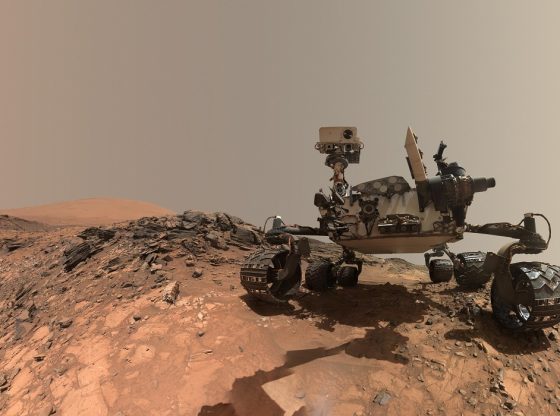
    NASA’s Curiosity rover mission determined that methane in Mars’ atmosphere cycle seasonally, peaking in the northern summer. The rover robot also detected two surges to date of the gas inside the Red Planet’s 154 kilometer Gale Crater — once in June 2013, and then again in late 2013 through early 2014.

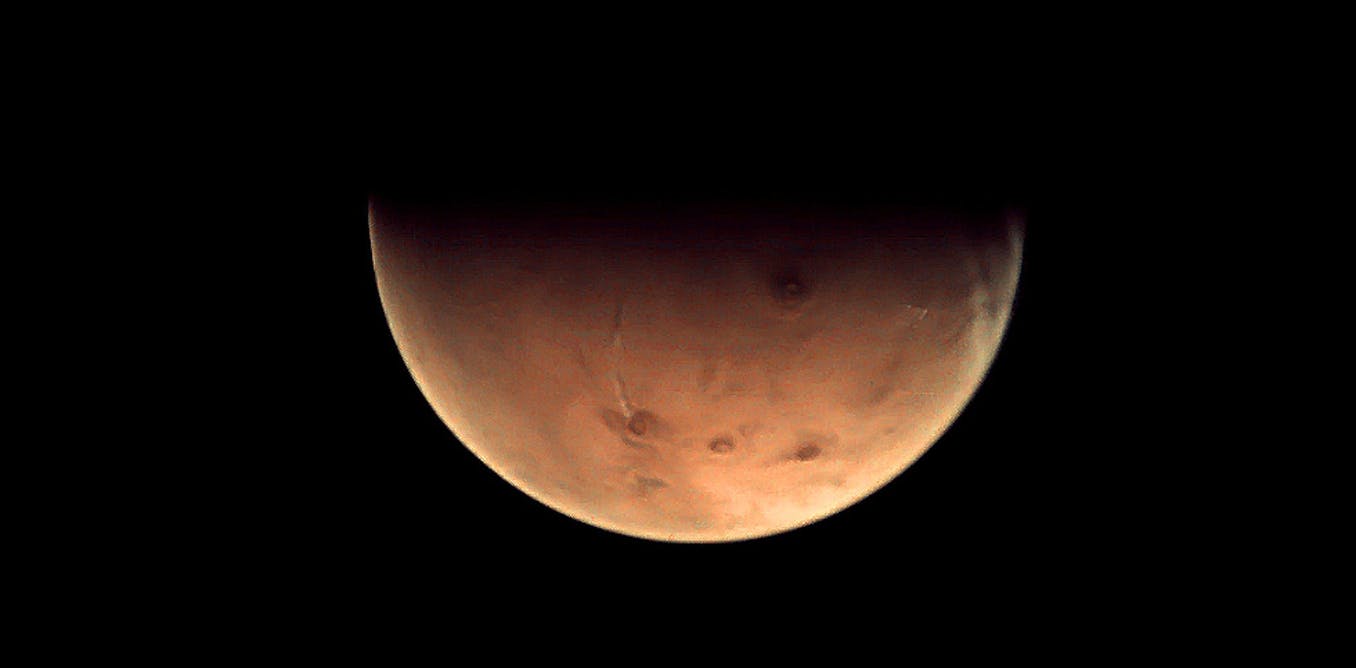
    Europe’s Mars Express orbiter captured this image of a half-lit Red Planet in December 2012. Credit: ESA, CC BY-SA 3.0 IGO

    Using an instrument onboard the European Space Agency’s Mars Express spacecraft, a team of scientists detected a methane spike on June 16, 2013 — backing up observations made a day before by NASA’s Curiosity rover.

    “A confirmation of measurements is the ultimate prize in planetary exploration,”

    – Chris Webster, who is in charge of Curiosity’s methane sensing instrument.

    The Mars Express team using the Mars Express’ Planetary Fourier Spectrometer instrument has even been able to home in on a potential location of the methane spike 500 kilometers to the east of Gale Crater, they report in the journal Nature Geoscience.
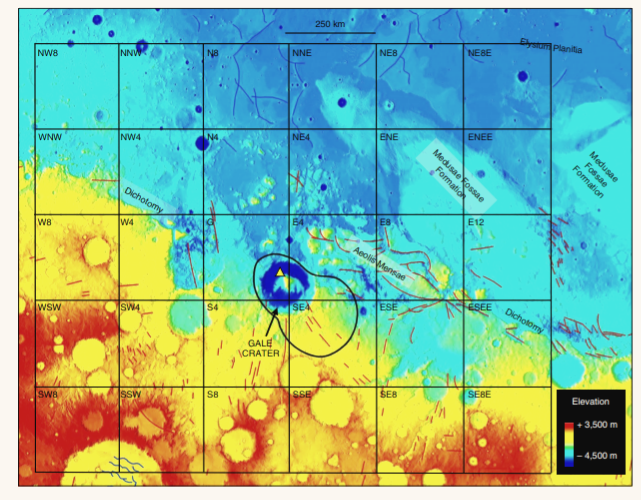
     Image credits: Giuranna et al.
    The yellow triangle is Curiosity’s location, black line around that is the location of methane detection. The area was split into grid squares to assess the likelihood of methane sources. The eastern blocks were found to be the most likely sources. Image: NASA, Public Domain

    A geological survey of the area, known as Aeolis Mensae, identified faults that extend below a region thought to contain shallow ice, according to the paper’s lead author Marco Giuranna of the National Institute of Astrophysics in Rome.

    “Since permafrost is an excellent seal for methane, it is possible that the ice here could trap subsurface methane and release it episodically along the faults that break through this ice,”

    “That methane could be released episodically along faults that break through the permafrost due to partial melting of ice, gas pressure buildup induced by gas accumulation during migration, or stresses due to planetary adjustments or local meteorite impact,”

    – Dr Giuranna said.

    They found one hit: a peak of about 15.5 parts per billion (ppb) methane by volume on June 16, 2013. That was just one Martian day after Curiosity detected a peak of nearly 6 ppb.

    The paper doesn’t address the ultimate origin of the methane — whether it was churned out by Martian microbes or reactions involving hot water and certain types of rock. And scientists don’t know if the detected methane was produced recently or long ago; it could have been trapped under the ice for eons.

    The exact source of the methane remains to be identified in future missions — as does the existence of life on Mars. Giuranna’s team is now involved with the ExoMars Trace Gas Orbiter, which arrived at Mars in October 2016, and coordinated TGO-Mars Express measurements are in the works.

    Reference:

    Marco Giuranna et al. Independent confirmation of a methane spike on Mars and a source region east of Gale Crater Nature Geoscience, 2019. https://doi.org/10.1038/s41561-019-0331-9
    Share. Facebook Twitter Pinterest LinkedIn Tumblr Email Copy Link

    Related Posts

    Europa Clipper: NASA’s Mission to Unlock the Secrets of Jupiter’s Icy Moon

    October 20, 2024

    The Phosphine Discovered in Venus’ Clouds May Be a Big Deal

    September 21, 2020

    NASA Is Working With Billionaire Yuri Milner To Search For Life On Enceladus

    November 12, 2018

    Salty Water Under the Surface of Mars Could Have Enough Oxygen for Life

    November 2, 2018

    NASA Finds ‘Organic’ Substances on Mars

    June 18, 2018

    Salty, Subglacial Lakes in Canada Could Be Key for Studying Alien Life

    May 11, 2018
    Recent Posts
    • The Strait of Hormuz Dilemma: Power, Energy, and an Irreversible Turning Point
    • Eggs, Cholesterol, and Heart Disease: What the Science Actually Says in 2026
    • Oil Shocks, Policy Mistakes, and the Risk of a Second Inflation Wave (Part II)
    • Oil Shocks, Policy Mistakes, and the Risk of a Second Inflation Wave (Part I)
    • Microsoft Stored a Movie on Glass — And It Could Last Centuries
    • AI, Automatic Stabilizers & Inflation
    • Largest Battles in History: Cannae — Rome’s Darkest Day
    • The Day the Alliance Died
    • Evaluating Heart Disease: How Cumulative Diet Choices Compound Your Risk
    • What Would Happen If China Attacked Taiwan?
    © 2025 Illustrated Curiosity

    Type above and press Enter to search. Press Esc to cancel.