

The warship Mars was the Swedish navy’s largest and most terrifying weapon. In an inferno of explosions and cannon fire, nearly a thousand people perished when the ship sank in 1564 during the Nordic seven-year war. The ship was discovered in 2011, almost 500 years later and parts of the wreck have now been salvaged to the surface.
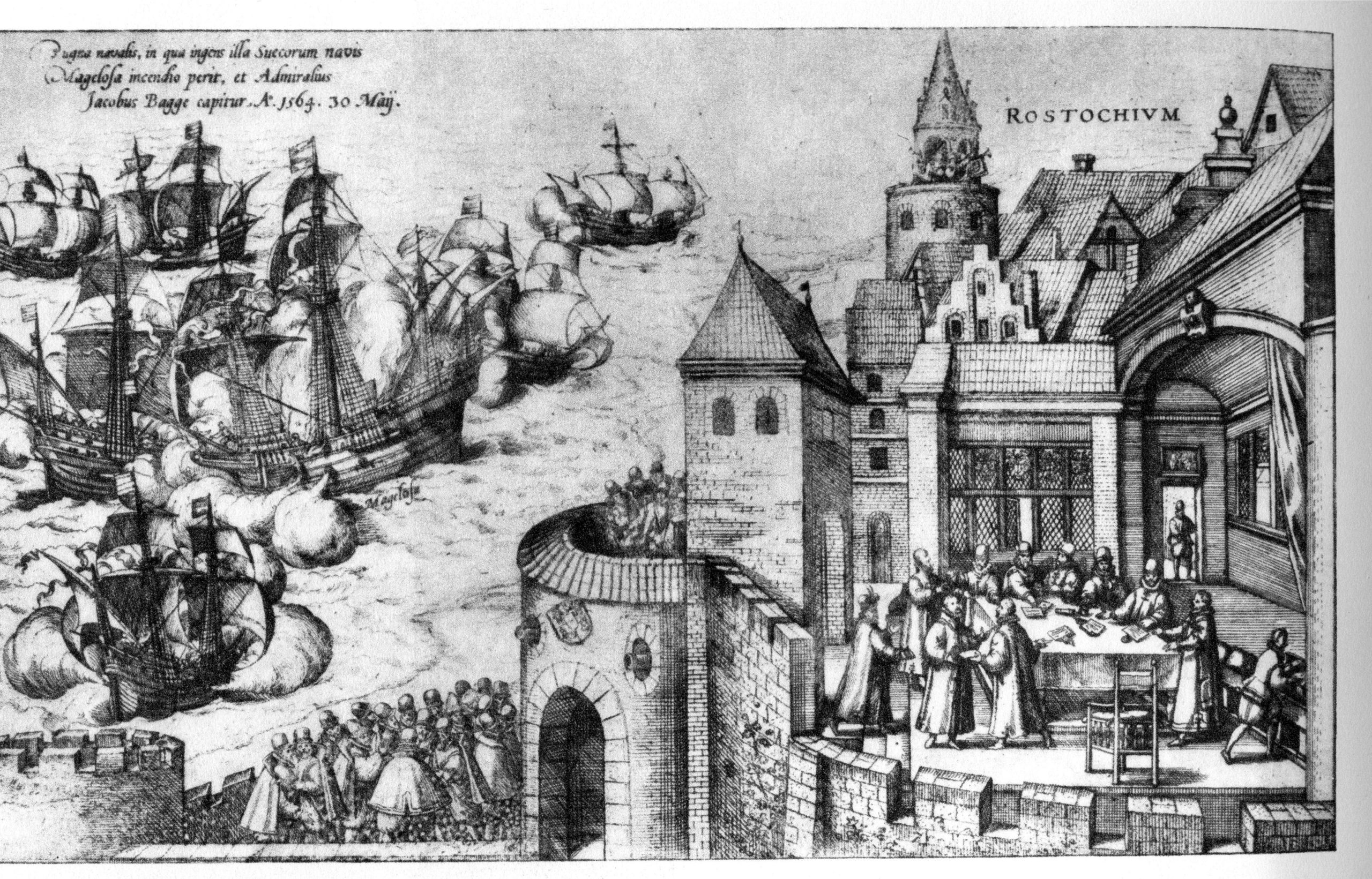
When the wind turned at dawn at the end of May 1564, the combined fleet of the Hanseatic League and Denmark faced Mars, the flagship of the Swedish navy. The sea battle “First battle of Öland” took place during the Nordic Seven Year War (1563-1570) and is considered history’s first modern naval battle.
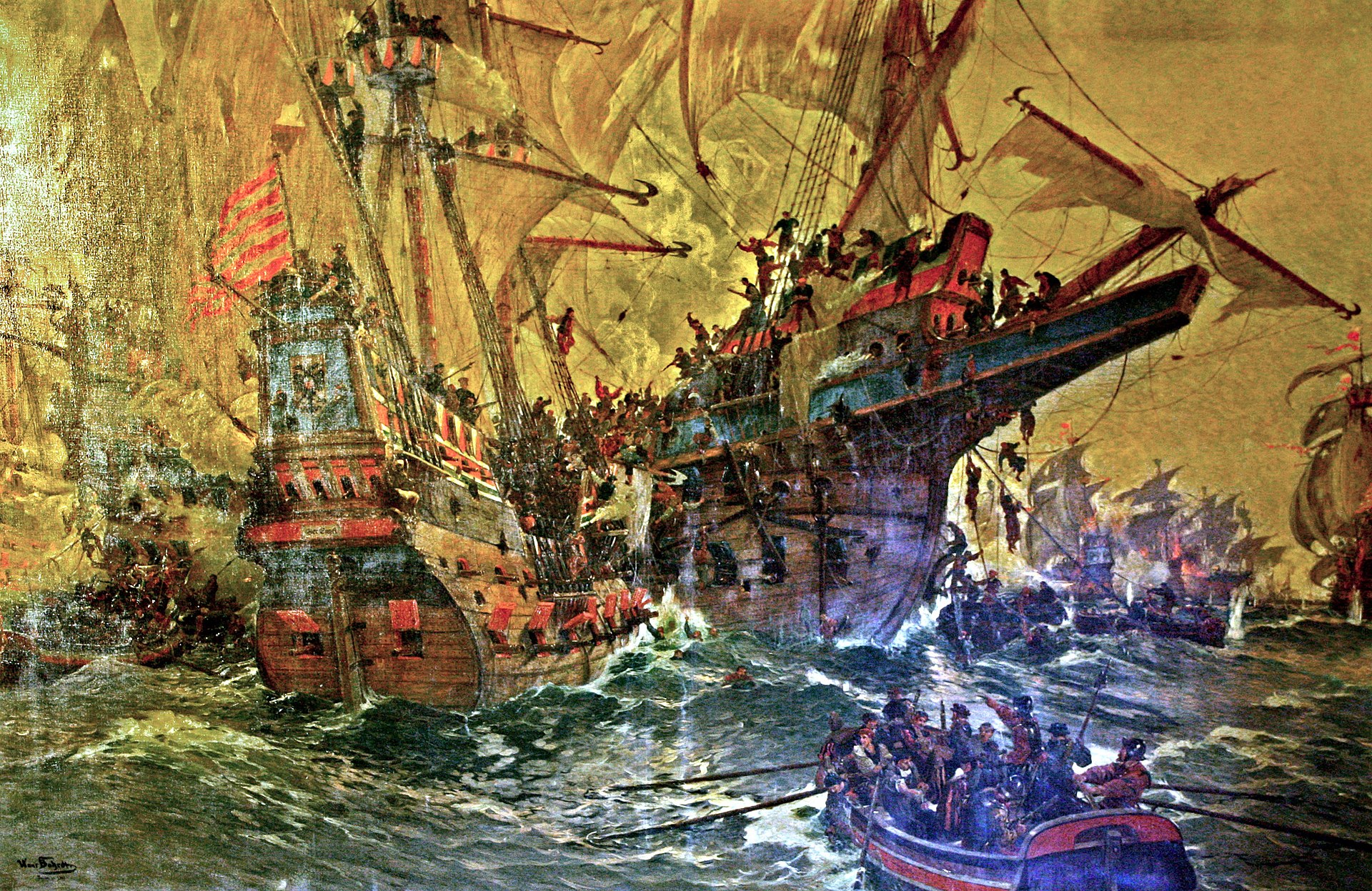
Commander-in-Chief Jacob Bagge commanded Mars to fire its more than a hundred guns. But still, the attackers could not be stopped, soldiers from two enemy ships climbed boarded Mars and full-scale close combat began.
Commander Bagge surrendered and, along with hundreds of crew. Yet, the battles escalated and Mars caught fire in the chaos. The ship then exploded and began to sink. Nearly a thousand men, Swedes, and Lübeckers were dragged down to the depths.
In the summer of 2011, a Swedish diving team finds a wreck at a depth of 73 meters (246 feet) just off the northern cape of the island Öland in the Baltic Sea. It turns out to be the Swedish warship Mars. One of the divers is Richard Lundgren from Ocean Discovery, who together with his brothers and some other divers makes the astounding discovery.
The discovery was the culmination of a 20-year search by Lundgren, along with his brother Ingemar and their colleague Fredrik Skogh. The men had dreamed of finding the mighty Mars since making a childhood visit to a Stockholm museum housing another iconic Swedish warship, named the Vasa.
The project is a unique collaboration between MARIS at Södertörn University, Defense College, Ocean Discovery, Deep Sea Productions, and Marine Measurement Technology. Filmmakers have documented the expedition and salvage of ship timbers, silver coins, and cannons. There is a highly recommended Smithsonian documentary, a snippet can be seen below.
Mars, also known as Mars the Magnificent, was built between 1563 and 1564. She was the leading ship of King Eric XIV of Sweden’s fleet, at 70 meters in length, weighing 2,000 tonnes, and equipped with 107 guns, she was the largest warship of the time.
Eric XIV of Sweden was the son of Swedish king Gustav Vasa, an enigmatic administrator with a ruthless streak not inferior to his predecessor’s. Gustav led Sweden to abandon the so-called Kalmar Union (1397 to 1523 CE), a Scandinavian Union of three kingdoms joined under a single monarch, consisting of the three kingdoms of Denmark, Sweden (then including most of Finland), and Norway, together with Norway’s overseas dependencies.
Sweden was pulled into the Northern Seven Years’ War, a war motivated by the dissatisfaction of King Frederick II of Denmark with the dissolution of the Kalmar Union, and the will of King Eric XIV of Sweden to break Denmark’s dominating position.
The powerful German Hanseatic city of Lübeck was troubled by the obstacles that Erik arranged for trading with Russia, and made a covenant with Denmark. Poland, which wanted to subdue the Baltic provinces, saw its chance and allied with the other two fractions, against Sweden.
Eric XIV of Sweden fancied himself a great navy and commissioned the gigantic warship Mars. It was the largest and fiercest warship in the world, named Mars for the Roman god of war. Eric needed to prepare for the imminent war against the Danes over the control of the lucrative trade in the Baltic Sea.
Mars was launched just in time for the great confrontation to begin, at the end of May 1564, 37 ships of the Swedish fleet sailed from Dalarö in the Stockholm archipelago to confront the enemy fleet. On May 30, the Swedish fleet collided with the Danish and Lubeck fleet, consisting of at least 25 warships.
The swedish flagship Mars in the naval war 1564 just of the island Öland. Painting by the German artist Frans Hogenberg (1535-1590).
During the first night’s battle, the crew on Mars effectively used their superior firepower consisting of 107 cannons, a record number for that time. The Lubeck ship Lange Bark was sunk and the Danish Admiral Trolle’s ship Fortuna was hit by 167 projectiles and was severely damaged.
During that same night, the Swedish fleet was dispersed due to strong winds, Mars was routed and suddenly surrounded by enemy ships. Lübeck forces were lobbing fireballs at Mars and eventually succeeded in pulling alongside for soldiers to board her.
Historical sources indicate that Mars had a large anti-boarding net covering its deck, but the net failed to prevent as many as 400 Danish and Lübeckian soldiers from jumping aboard attacking its crew. As gunpowder on the warship fueled the inferno, the heat became so intense that gunpowder probably exploded.
Out of about 700 Swedes on Mars, only 100 survived the battle, and those who did were taken captive. Only 30 ever returned home to Sweden. The wreckage is in itself a time travel to the bloody May night in 1564. The ship in solid oak on the bottom of the Baltic Sea is like a burnt-out war scene and a cemetery for the perished.
She came to rest on the seafloor tilted to her starboard, or right, side. Low levels of sediment, slow currents, brackish water, and the absence of a mollusk called a shipworm—responsible for breaking down wooden wrecks in other oceans in as little as five years—combined to keep the warship in remarkable condition.
The wreckage gives a snapshot of a piece of military and political history. It’s also an international history as the Seven Years’ War was fought across national boundaries.
The footage and recordings by the research team divers were used to create 3D-models of the wreck and the artifacts found at the site.