
Close Menu
Illustrated Curiosity
    Facebook X (Twitter) Instagram YouTube
    Illustrated Curiosity
    • Earth
    • Economics
    • Environment
      • Climate
      • Environmental Tech
      • Pollution
      • Wildlife
    • Health
      • Health Tech
      • Medicine
      • Nutrition
      • Exercise
    • History
      • Prehistory
      • Ancient History
      • Postclassical Era
      • Modern History
    • Humans
      • Human Brain
      • Psychology
    • Life
      • Animals & Plants
      • Genetics
      • Paleontology
      • Evolution
      • Genetic Engineering
    • Physics
    • Space
      • Astrobiology
      • Astronomy
      • Extrasolar Planets
      • Space Tech
      • Spaceflight
    • Technology
      • Artificial Intelligence
      • Energy
      • Engineering
      • Materials
      • Robotics
      • Vehicles
    Illustrated Curiosity
    Home » Ireland’s Population in ‘Serious Decline’ before Vikings’ Arrival
    Postclassical Era

    Ireland’s Population in ‘Serious Decline’ before Vikings’ Arrival

    September 5, 20194 Mins Read
    Share
    Facebook Twitter LinkedIn Pinterest Email

    Pixabay License

    Irelands population was in decline for almost 200 years before the Vikings settled in the 10th century, according to new research.

    It had been assumed that the Irish population saw a steady rise across the centuries until the Famine in the 1840s, but new research at Queen’s University Belfast have produced an estimate of past population numbers which show there had been a decline for almost 200 years before the Vikings settled in Ireland in the 10th century.

    The team of scientists analyzed data from the years 400 to 1200 CE and found that human activity in Ireland varied greatly during the period.

    The team used proxy data to approximate population growth, they built an archaeological data science algorithm that makes use of a database on archaeological sites discovered during Ireland’s “Celtic Tiger” years (the mid-1990s to the late-2000s), when there was a boom in motorway building and other developments.

    Since developers are required by law to employ archaeologists to record sites before they are destroyed. This allowed the researchers to access information that was not previously available.

    The database consists of some 10,000 radiocarbon dates of human activity in Ireland, each one of these “dates” was once a living thing – a fragment of wood, a grain of cereal, or an animal or human bone. – giving the researchers a holistic understanding of human activity on the island in ancient times.

    “Millions of people lived in Ireland during prehistory and the earliest Christian times.”

    “Around the year 700, this population in Ireland mysteriously entered a decline, perhaps because of war, famine, plague or political unrest. However, there was no single cause or one-off event, as the decline was a gradual process.”

    – Dr. Rowan McLaughlin in a university press release

    The model challenges the previously held understanding that population in Ireland grew steadily until the Famine in the 1840s, indicating that the Irish population went into decline around the year 700 before the first Viking settlements came around the turn of the new millennium.

    “The Vikings settled in Ireland in the tenth century, during the phase of decline and despite being few in number, they were more successful than the ‘natives’ in expanding their population. Today, genetic evidence suggests many Irish people have some Viking blood.”

    – Rowan McLaughlin adds.

    Recent genetic evidence has demonstrated that living Irish people share a small but significant amount of their DNA with Scandinavians, hence, the Vikings brought fresh blood to Ireland at a time when the existing population was stifled.
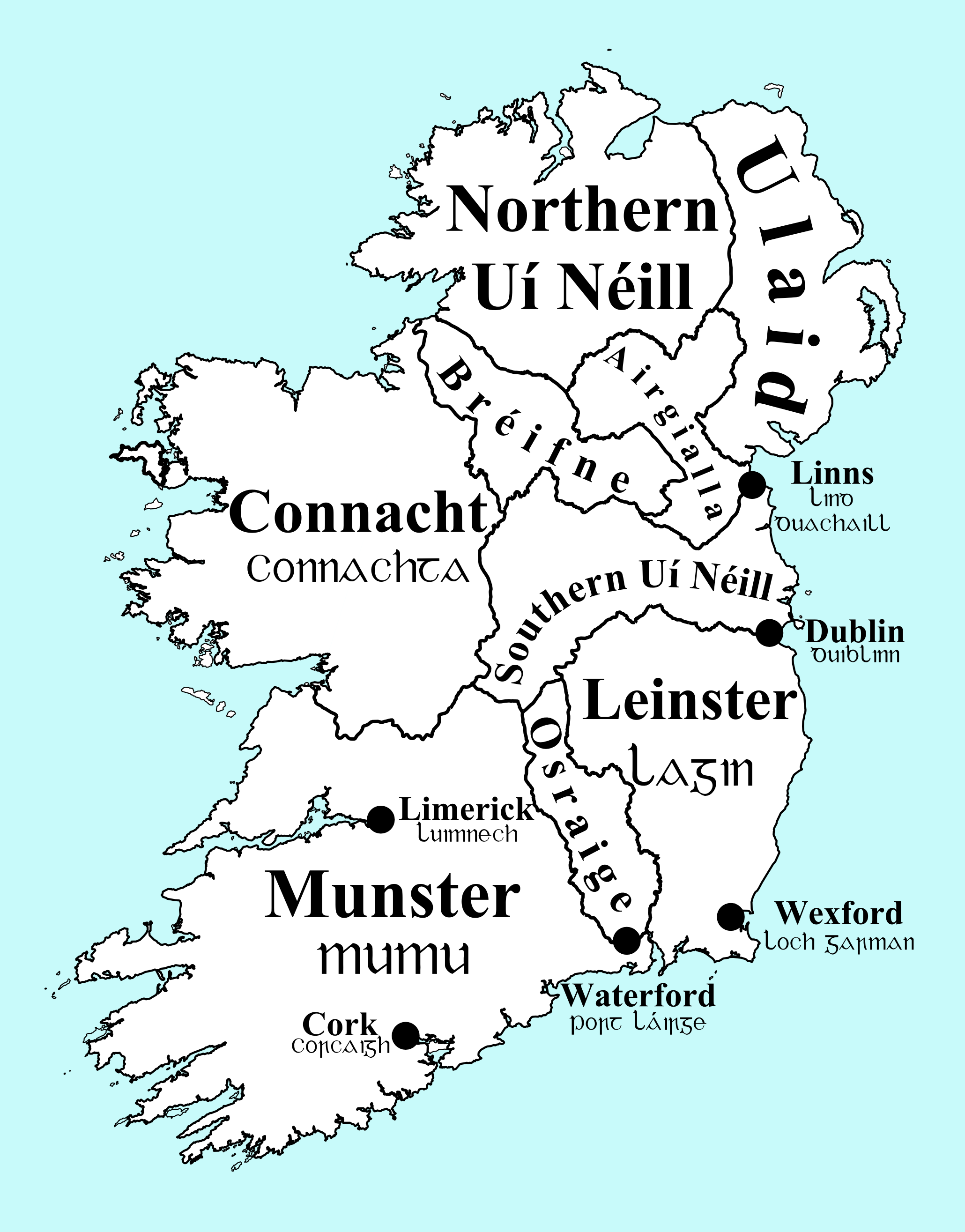
    Credit: Erakis
    Map of Ireland, circa 900, with overkingdoms and principal (Viking) towns indicated.

    Researchers at Trinity College Dublin, reported in 2018, that they believe the Viking and Norman invasions of Ireland may have made a more striking impression on the DNA breakup of the country than previously thought. They discovered 23 new genetic clusters in Ireland not previously identified, leading to the belief that we may have far more Viking and Norman ancestry than previously evidenced.

    This type of research is novel and new understandings may be achieved by re-imagining archaeology as a form of data science. The researchers argue that “big data” archaeology method may offer new perspectives on culture, economy, and religion: emerging via relations in economic and social networks, and that population records offer vital perspectives on past land use and how humans impact upon the environment.

    “Often in archaeology, we are focused on interpreting the evidence from a single site, but analyzing quantities of data in this way allows us to think about the long term. Now we know these broad trends, we can better understand the details of everyday life.”

    – Co-author Emma Hannah.

    Reference:

    Emma Hannah, RowanMcLaughlin Long-term archaeological perspectives on new genomic and environmental evidence from early medieval Ireland https://doi.org/10.1016/j.jas.2019.04.001

    Ireland Norse Vikings
    Share. Facebook Twitter Pinterest LinkedIn Tumblr Email Copy Link

    Related Posts

    Vikings Were in the Americas Exactly 1,000 Years Ago

    October 25, 2021

    The DNA Fingerprint of the Vikings is Found All Over Europe

    October 12, 2020

    The Game-Changing Swedish Warship That Sank in Its First Battle

    January 15, 2020

    Henbane Made the Vikings Go Berserk

    October 7, 2019

    Hoard of 1,000-Year-Old Coins Found By Metal Detecting Couple In England

    September 9, 2019

    Enormous, Rare Viking Ship Burial Discovered by Radar

    December 19, 2018
    Recent Posts
    • America’s Quiet Shift Into Fiscal Dominance: Why Inflation May Be Preparing for a Second Act
    • How the End of Bretton Woods Reshaped Our Economies — and Our Politics
    • Can the U.S. Really Handle 250% Debt-to-GDP? Why Jackson Hole’s Daring Paper Is Wrong
    • Japan’s Fiscal Trap: What Happens If Austerity Is No Longer an Option?
    • The Rise of Range Extended Electric Vehicles (REEVs): A New Era of Hybrid Mobility
    • The Great Capital Rotation: A Shift from U.S. Treasuries to Gold and Real Assets
    • The Hidden Risks of Short-Term Debt: A Balancing Act in U.S. Fiscal Policy
    • The Looming U.S. Debt Spiral: Understanding the Risks
    • The Looming Recession: Seven Economic Indicators Flashing Red for 2025
    • Europa Clipper: NASA’s Mission to Unlock the Secrets of Jupiter’s Icy Moon
    © 2025 Illustrated Curiosity

    Type above and press Enter to search. Press Esc to cancel.

    This website uses cookies to improve your experience. We'll assume you're ok with this, but you can opt-out if you wish.Accept Reject Read More
    Privacy & Cookies Policy

    Privacy Overview

    This website uses cookies to improve your experience while you navigate through the website. Out of these, the cookies that are categorized as necessary are stored on your browser as they are essential for the working of basic functionalities of the website. We also use third-party cookies that help us analyze and understand how you use this website. These cookies will be stored in your browser only with your consent. You also have the option to opt-out of these cookies. But opting out of some of these cookies may affect your browsing experience.
    Necessary
    Always Enabled
    Necessary cookies are absolutely essential for the website to function properly. This category only includes cookies that ensures basic functionalities and security features of the website. These cookies do not store any personal information.
    Non-necessary
    Any cookies that may not be particularly necessary for the website to function and is used specifically to collect user personal data via analytics, ads, other embedded contents are termed as non-necessary cookies. It is mandatory to procure user consent prior to running these cookies on your website.
    SAVE & ACCEPT