Close Menu
Illustrated Curiosity | Economics, History, Science, Space, Technology, Health, Physics, Earth
    Facebook X (Twitter) Instagram YouTube
    Illustrated Curiosity | Economics, History, Science, Space, Technology, Health, Physics, Earth
    • Earth
    • Economics
    • Environment
      • Environmental Tech
      • Pollution
      • Wildlife
    • Health
      • Health Tech
      • Medicine
      • Nutrition
      • Exercise
    • History
      • Prehistory
      • Ancient History
      • Postclassical Era
      • Modern History
    • Humans
      • Human Brain
      • Psychology
    • Life
      • Animals & Plants
      • Genetics
      • Paleontology
      • Evolution
      • Genetic Engineering
    • Physics
    • Space
      • Astrobiology
      • Astronomy
      • Extrasolar Planets
      • Space Tech
      • Spaceflight
    • Technology
      • Artificial Intelligence
      • Energy
      • Engineering
      • Materials
      • Robotics
      • Vehicles
    Illustrated Curiosity | Economics, History, Science, Space, Technology, Health, Physics, Earth
    Home » Sets of 120,000-Year-Old Footprints Belonging to Humans Have Been Discovered in Saudi Arabia
    Prehistory

    Sets of 120,000-Year-Old Footprints Belonging to Humans Have Been Discovered in Saudi Arabia

    September 29, 20202 Mins Read
    Pixabay
    Pixabay
    Share
    Facebook Twitter LinkedIn Pinterest Email

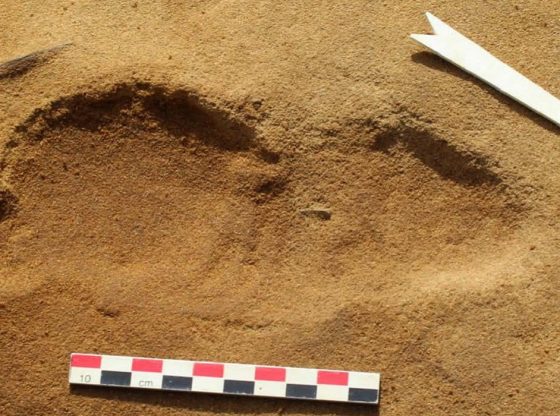
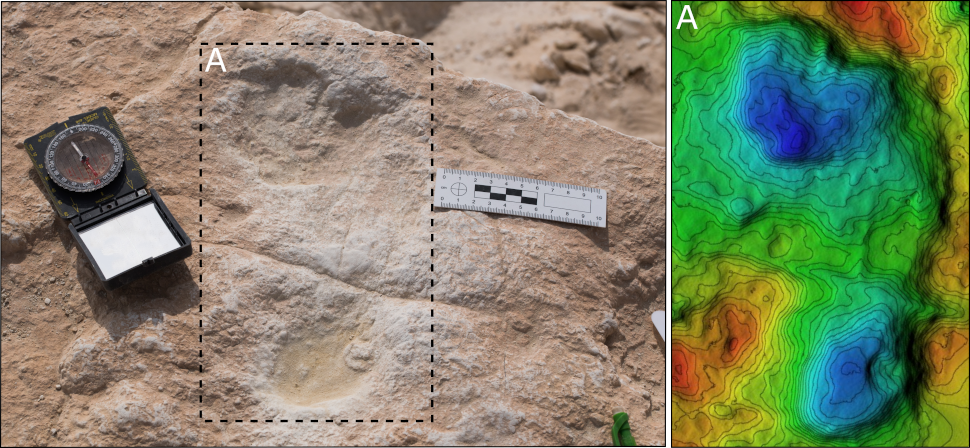
    One day about 120,000 years ago, a few humans wandered along the shore of an ancient lake in what is now the Nefud Desert in Saudi Arabia. Within hours of passing through, the humans’ and animals’ footprints dried out and eventually fossilized.

    The set of seven human footprints, found around an ancient dry lake in the northern region of Tabuk, are the earliest evidence of humans in the Arabian peninsula.

    These ancient footsteps offer rare evidence of when and where early humans once inhabited the Arabian Peninsula.

    “These are the first genuine human footprints of Arabia,”

    “Footprints are a unique form of fossil evidence in that they provide snapshots in time, typically representing a few hours or days, a resolution we tend not to get from other records.”

    – Archaeologist and team leader Michael Petraglia of the Max Planck Institute for the Science of Human History.

    The researchers think the footprints belong to modern humans, on the basis of stature and mass inferred from them, rather than Neanderthals, who aren’t known to have been in the region at the time.

    The Arabian Peninsula has long been considered the obvious route that early members of our species took as they trekked out of Africa and migrated to the Middle East and Eurasia.

    Stone tools have suggested ancient humans explored the Arabian Peninsula at various times in prehistory when the climate was wetter, it was once the Fertile Crescent after all.

    Yet, researchers have only found a single human finger bone dating to 88,000 years to prove modern humans. The footprints were found during an archaeological survey at the Alathar deposit, a former lake in the western Nefud Desert of Saudi Arabia. Researchers dated the sediments with optically stimulated luminescence, which produced the date range between 112,000 and 121,000 years ago.
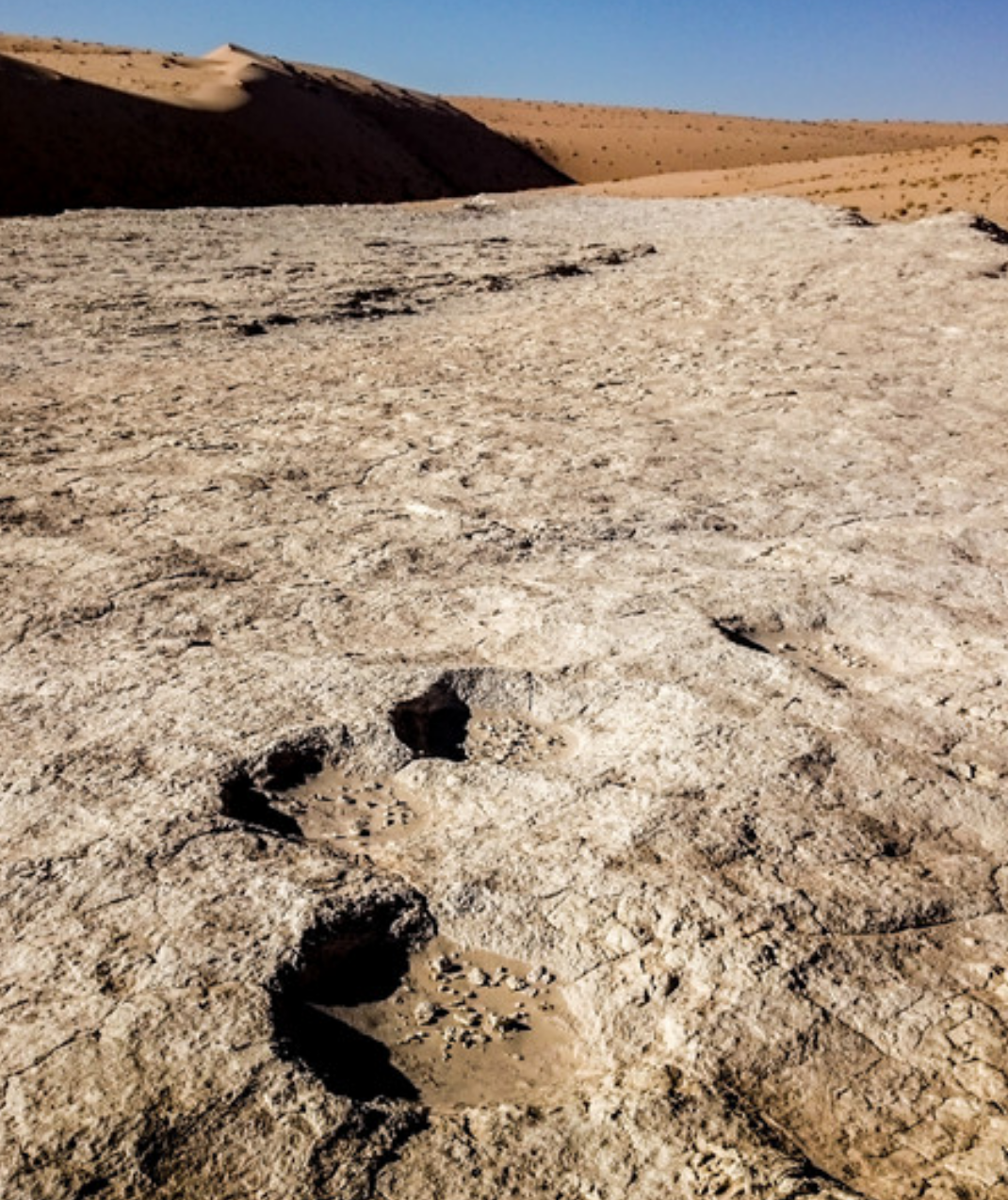
    Footprints of elephants and other animals were also identified alongside 233 fossils. The new research published in Science Advances describes the discovery of these fossilized footprints, of which at least seven could be linked to humans, specifically Homo sapiens.

    Reference:

    Mathew Stewart et al. Human footprints provide snapshot of last interglacial ecology in the Arabian interior DOI: 10.1126/sciadv.aba8940

    Share. Facebook Twitter Pinterest LinkedIn Tumblr Email Copy Link

    Related Posts

    Northern Europeans’ Genetic Pre-Historic is Repeated Genocide

    February 6, 2024

    Ancient Footprints Show Neanderthals May Have Been Taller than Thought

    May 14, 2020

    Fascinating Discovery Suggests Neanderthals Invented String

    April 13, 2020

    The oldest known Homo sapiens outside Africa was Greek

    July 15, 2019

    Jawbone Fossil Reveals More About the Denisovans

    May 6, 2019

    New Species of Ancient Human Discovered in a Cave in the Philippines

    April 19, 2019
    Recent Posts
    • Oil Shocks, Policy Mistakes, and the Risk of a Second Inflation Wave (Part II)
    • Oil Shocks, Policy Mistakes, and the Risk of a Second Inflation Wave (Part I)
    • Microsoft Stored a Movie on Glass — And It Could Last Centuries
    • AI, Automatic Stabilizers & Inflation
    • Largest Battles in History: Cannae — Rome’s Darkest Day
    • The Day the Alliance Died
    • Evaluating Heart Disease: How Cumulative Diet Choices Compound Your Risk
    • What Would Happen If China Attacked Taiwan?
    • Geopoliticisation as a Structural Tailwind for Commodity Prices
    • America’s Economic Remodel: Who’s Really Paying the Bill?
    © 2025 Illustrated Curiosity

    Type above and press Enter to search. Press Esc to cancel.