

We know that Columbus was not the first European to reach the Americas, the Vikings got there centuries before, although exactly when has remained unclear. Now, an international team of scientists shows that Europeans were active in the Americas in 1021 AD.
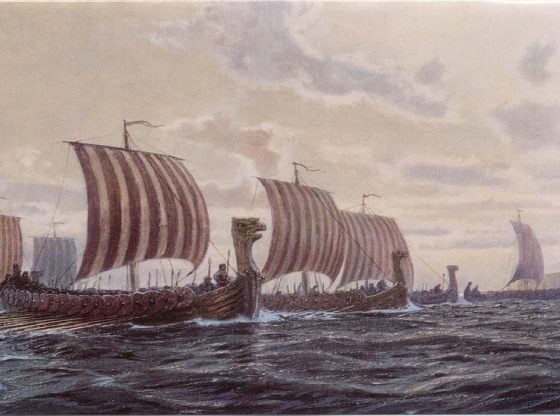
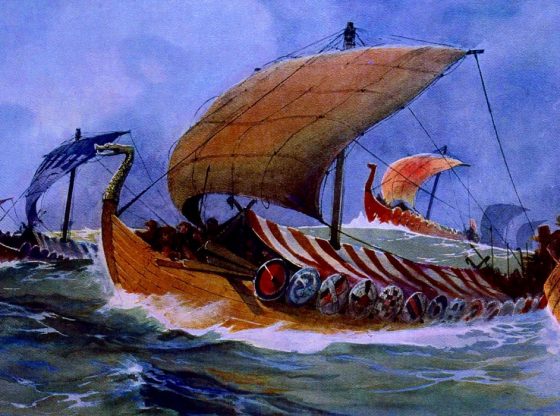
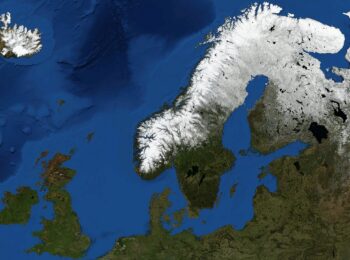
The Vikings sailed great distances in their iconic longships. To the west, they established settlements in Iceland, Greenland, and eventually a settlement at L’Anse c, Newfoundland, Canada.
The Viking settlement at L’Anse aux Meadows was found in the 1960s, in the eastern Canadian region of Terranova, and was thought to date to the 11th century. Archaeological evidence suggests that the Norse outpost at L’Anse aux Meadows was occupied for no more than 10 to 25 years. And it remains a mystery why the Vikings left and returned home.
Ordinary radiocarbon dating – determining the age of organic materials by measuring their content of a particular radioactive isotope of carbon – proved too imprecise to date L’Anse aux Meadows, although there was a general belief it was the 11th century.
Now, a team of scientists has analyzed wood findings at L’Anse aux Meadows and been able to show that Europeans were present in the Americas in 1021 AD — precisely 1000 years ago this year. This date also marks the earliest known point by which the Atlantic had been crossed, and migration by humankind had finally encircled the entire planet.

The new dating method relies on the fact that solar storms produce a distinctive radiocarbon signal in a tree’s annual growth rings. It was known there was a significant solar storm – a burst of high-energy cosmic rays from the sun – in 992 AD.
The team analyzed the chopping of wood by Vikings at L’Anse aux Meadows, dated to exactly the year 1021 AD. The three pieces of wood studied, from three different trees, all came from contexts archaeologically attributable to the Vikings. Each one also displayed clear evidence of cutting and slicing by blades made of metal – a material not produced by the indigenous population on the American continent. The exact year was determinable because of the massive solar storm that occurred in 992 AD that produced a distinct radiocarbon signal in tree rings from the following year.
In all three pieces of wood examined, from three different trees, 29 growth rings were formed after the one that bore evidence of the solar storm, meaning the wood was cut in 1021
“The distinct uplift in radiocarbon production that occurred between 992 and 993 AD has been detected in tree-ring archives from all over the world”
– Associate Professor Michael Dee (University of Groningen), director of the research.
“Finding the signal from the solar storm 29 growth rings in from the bark allowed us to conclude that the cutting activity took place in the year 1021 AD”
– Dr. Margot Kuitems (University of Groningen), first author of the paper.
These findings could act as a new point-of-reference for gathering future knowledge about the transatlantic activity of the Vikings. The study said it could shed light on the initial consequences of cultural interactions, “such as the transference of knowledge, and the potential exchange of genetic information, biota and pathologies.”
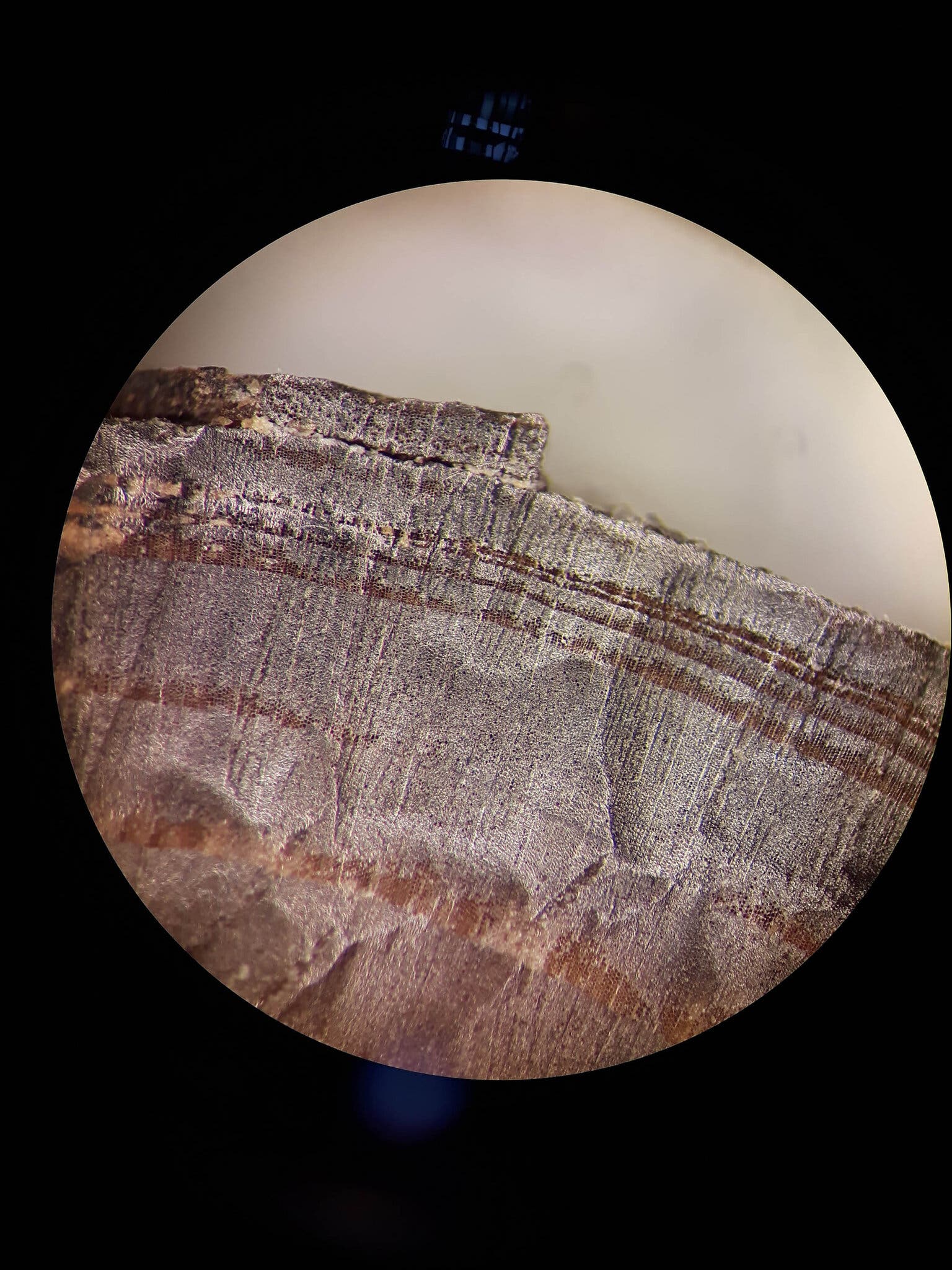
“It is a matter for future research how the year AD 1021 relates to overall transatlantic activity by the Norse. Nonetheless, our findings provide a chronological anchor for further investigations into the consequences of their westernmost expansion,” the study said.
L’Anse aux Meadows is a Unesco world heritage site on the Great Northern Peninsula tip of Newfoundland, Canada. It features the earliest evidence of the very first European presence in North America, discovered so far.
Besides archeological evidence, we also have the Norse sagas, with contains two sources of information about the Norse voyages to North America. These two Icelandic sagas are “The Saga of Eric the Red” and “The Saga of the Greenlanders”. Both tell how a significant amount of people, probably around a hundred, visited “Vinland” and sailed to certain places assumed to be located on the east coast of North America.
The sagas were oral tradition until written down 250 years after the events they describe. They cannot be accepted as any scientific or historical evidence of events, but they are pieces of a big fascinating puzzle. Other medieval accounts also exist, which imply prominent figures on the European mainland were made aware the Vikings had made landfall across the Atlantic.
The Viking Age is traditionally defined as 793-1066 AD, presenting a wide range for the timing of the transatlantic crossing.
Reference:
Kuitems, M. et al. Evidence for European presence in the Americas in AD 1021. Nature (2021). https://doi.org/10.1038/s41586-021-03972-8