Close Menu
Illustrated Curiosity | Economics, History, Science, Space, Technology, Health, Physics, Earth
    Facebook X (Twitter) Instagram YouTube
    Illustrated Curiosity | Economics, History, Science, Space, Technology, Health, Physics, Earth
    • Earth
    • Economics
    • Environment
      • Environmental Tech
      • Pollution
      • Wildlife
    • Health
      • Health Tech
      • Medicine
      • Nutrition
      • Exercise
    • History
      • Prehistory
      • Ancient History
      • Postclassical Era
      • Modern History
    • Humans
      • Human Brain
      • Psychology
    • Life
      • Animals & Plants
      • Genetics
      • Paleontology
      • Evolution
      • Genetic Engineering
    • Physics
    • Space
      • Astrobiology
      • Astronomy
      • Extrasolar Planets
      • Space Tech
      • Spaceflight
    • Technology
      • Artificial Intelligence
      • Energy
      • Engineering
      • Materials
      • Robotics
      • Vehicles
    Illustrated Curiosity | Economics, History, Science, Space, Technology, Health, Physics, Earth
    Home » Astronomers Discover Jupiter-like Planet Orbiting A Tiny Star
    Extrasolar Planets

    Astronomers Discover Jupiter-like Planet Orbiting A Tiny Star

    September 30, 20193 Mins Read
    Image: NASA
    Share
    Facebook Twitter LinkedIn Pinterest Email
    NASA
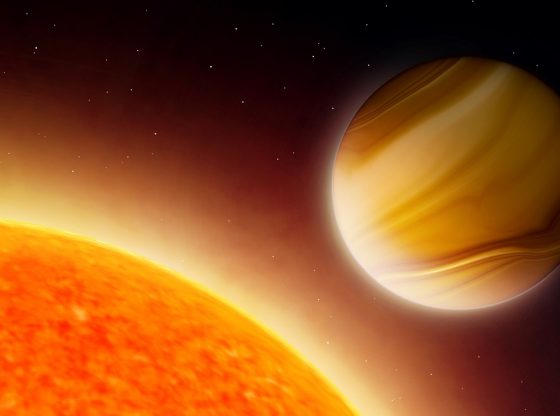
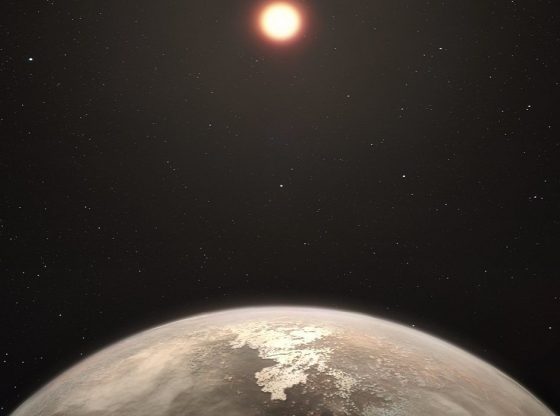
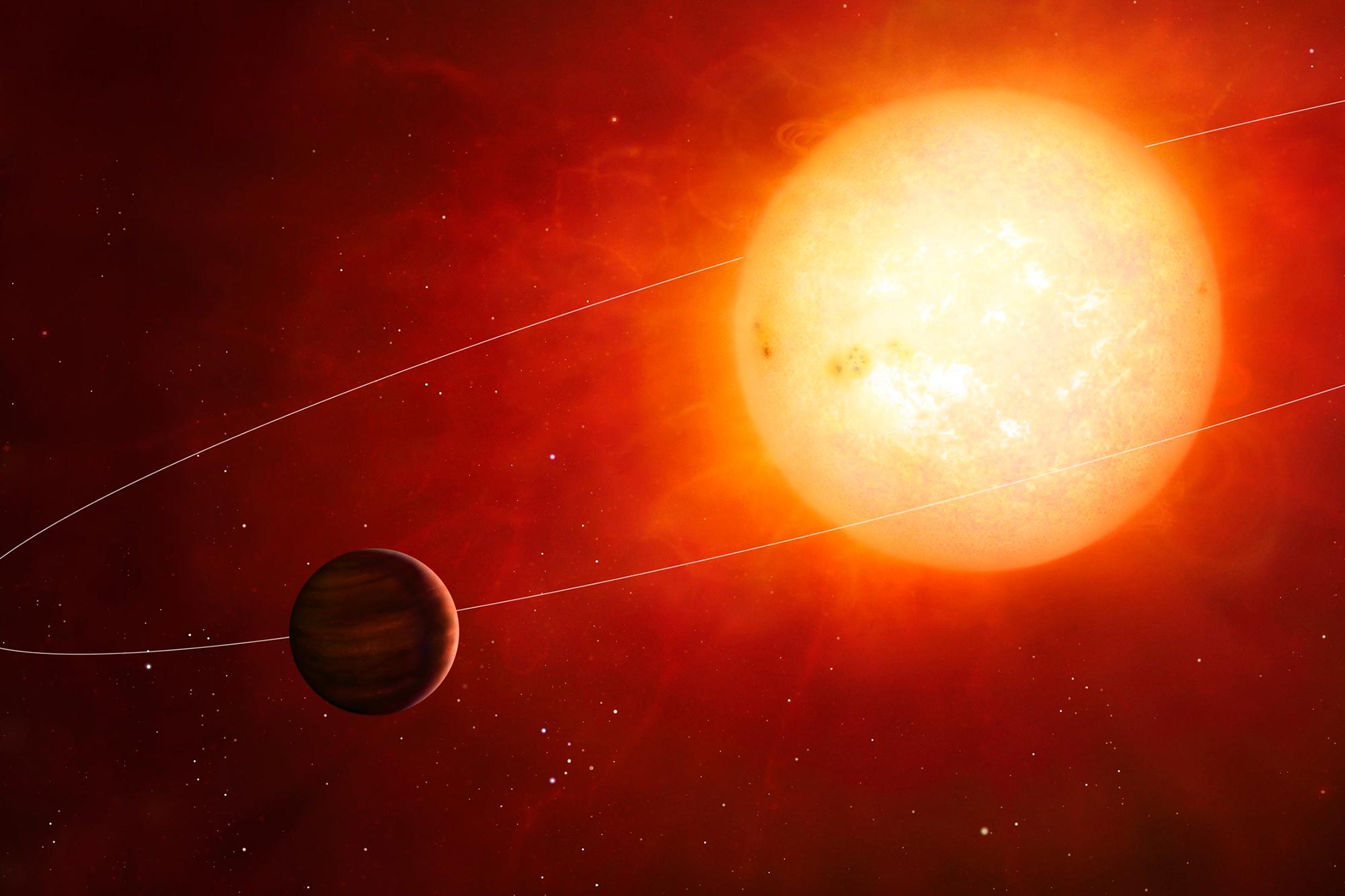
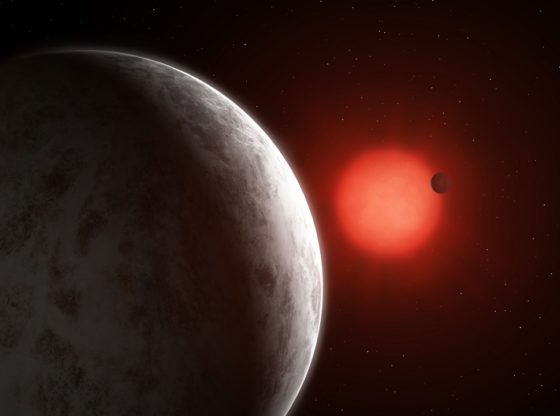
    Astronomers have unexpectedly discovered a gas giant Jupiter-esque exoplanet that’s orbiting a dwarf star, located about 30 light-years from our sun. The planet, known as GJ 3512 b, completes one orbit around the star every seven months. That makes this a giant planet with a long-distance orbit around a very small star – which challenges current theories about planet formation, according to a new study. Image: NASA

    The newly discovered planet probably formed from an unstable disc around the young star, which broke up into clumps. This contrasts with how the majority of massive planets are believed to form, where a planet grows slowly as gas falls onto a solid core.

    In accordance with the core accretion theory of planet formation, gas giants are less likely to form around low-mass stars. But this newfound exoplanet orbits an M-class dwarf star. This is the smallest type of stars.

    They mostly emit faint lights in the near-infrared spectrum, and that makes the detection of orbiting exoplanets very difficult. But those planets that have been detected around such stars are mostly super-Earth and Neptune-mass exoplanets.

    But now, astronomers have found a Jupiter-like planet orbiting a tiny red dwarf, which is 12% the mass of the Sun. The team of researchers published their findings in a report titled, ‘A giant exoplanet orbiting a very-low-mass star challenges planet formation models’ in the journal Science.

    The newly identified gas giant, named GJ 5312b, is nearly half as massive as Jupiter. But it is enormous relative to the small host star, which is little more than a tenth of the mass of the sun. These M-type red dwarfs are among the smallest and coolest stars. They are by far the most common type of star in the Milky Way. But only about 10% of the nearly 4,000 exoplanets discovered to date orbit these low-mass stars.

    Normally ,the mass of a disk should be proportional to the mass of the young star around which it rotates. The fact that at least one gas giant — possibly two — was found around a star that’s so much smaller than our Sun indicates that either the original disk was enormous, or that core accretion does not work in this system.

    The research team offers an alternative explanation of its formation. According to the astronomers, the planet probably formed from an unstable disc around the young star, which broke up into clumps. Their theory is that the gravitational instability of the protoplanetary disk – a circular cloud of gas and dust around young stars sometimes leads to the instantaneous formation of huge gas planets, irrespective of the size of the star.

    “It’s a great vindication for the disk instability method and a demonstration how one unusual discovery can swing the pendulum on our understanding of how planets form,”

    – Guillem Anglada-Escudé, IEEC research team’s members.

    The researchers studied the star’s wobbling motion by collecting data from Calar Alto Observatory to discover the planet’s lopsided orbit. The team is trying to find the probable second planet and a third planet that was ejected from the system.

    Reference:

    J.C. Morales et al, 2019. A giant exoplanet orbiting a very-low-mass star challenges planet formation models. Doi: 10.1126/science.aax3198
    Share. Facebook Twitter Pinterest LinkedIn Tumblr Email Copy Link

    Related Posts

    James Webb Telescope Discovers Methane & Carbon Dioxide in the Atmosphere of Exoplanet K2-18b

    September 14, 2023

    Tranquil Planetary System Just 11 Light-Years Away Raises Hopes of Habitability

    July 13, 2020

    TESS Mission Spots Earth-Size Potentially Habitable Planet 100 Light-Years Away

    January 8, 2020

    Water is Common—Yet Scarce—in Exoplanets

    December 17, 2019

    Water Discovered in the Atmosphere of an Exoplanet in the Habitable zone

    September 12, 2019

    Astronomers Just Found a Planet Where Star Trek’s Vulcan Was Predicted to Exist

    October 1, 2018
    Recent Posts
    • The Day the Alliance Died
    • Evaluating Heart Disease: How Cumulative Diet Choices Compound Your Risk
    • What Would Happen If China Attacked Taiwan?
    • Geopoliticisation as a Structural Tailwind for Commodity Prices
    • America’s Economic Remodel: Who’s Really Paying the Bill?
    • Why Inflation May Be Preparing for a Second Act
    • How the End of Bretton Woods Reshaped Our Economies — and Our Politics
    • Can the U.S. Really Handle 250% Debt-to-GDP? Why Jackson Hole’s Daring Paper Is Wrong
    • Japan’s Fiscal Trap: What Happens If Austerity Is No Longer an Option?
    • The Rise of Range Extended Electric Vehicles (REEVs): A New Era of Hybrid Mobility
    © 2025 Illustrated Curiosity

    Type above and press Enter to search. Press Esc to cancel.