
Carbon capture and storage technology might prove necessary to deal with global warming.
Humans first started burning fossil fuels on an industrial scale in the late 19th century when Earth’s atmosphere contained about 280ppm of CO2. The intervening years have seen that concentration rise above 410ppm, alongside a corresponding global average temperature increase of more than 1°C.
Despite decades of warnings from climate scientists, the world is still struggling to cut down its CO2 emissions and a handful of researchers and private companies are now trying to fill in some of the gaps with an idea that was once considered fringe: capturing carbon.
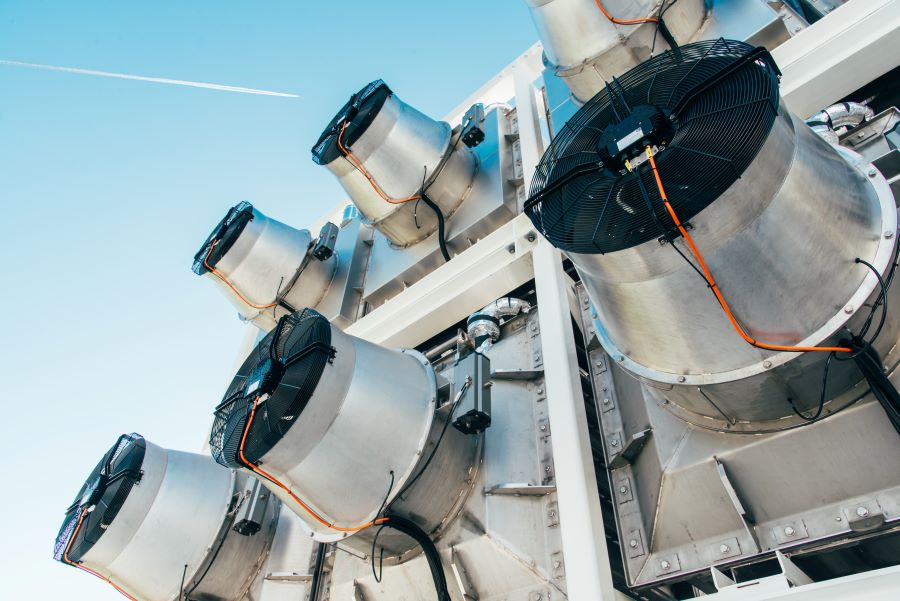
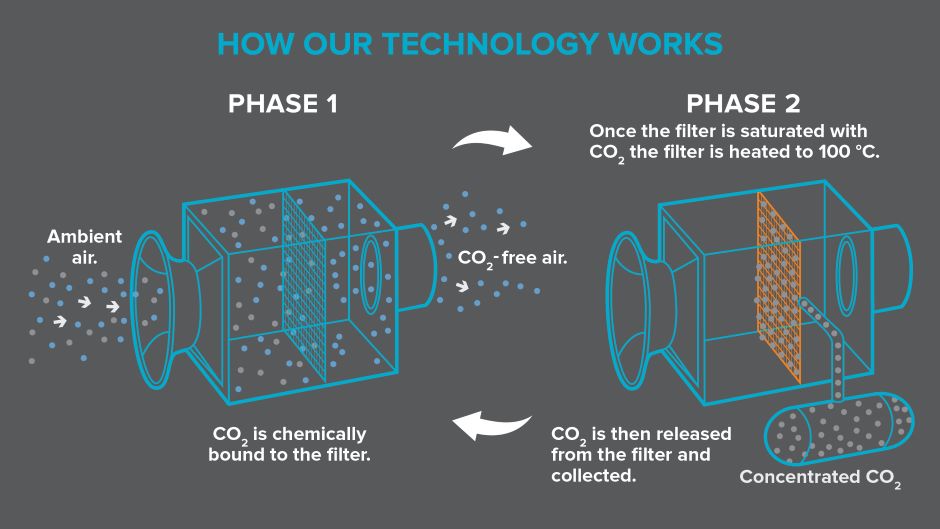
In Switzerland, a company has developed carbon dioxide collectors that can absorb relatively large amounts of CO2 from the air. On the roof of a large waste facility in Hinwil, close to Zurich, there are large constructions with funnels. These suck in air and then filter the carbon dioxide out of the air. Heat and energy come from the waste incineration from the plant below. Every collector can handle 50 tons of carbon dioxide a year according to the Communications Manager Louise Charles at the company Climeworks.
According to the International Energy Council last year, just over 33 billion tonnes of carbon dioxide were added to energy-related emissions. The UN Climate Panel IPCC has previously said that in this century we will have to remove about 10 billion tonnes of carbon dioxide from the atmosphere for temperatures to stabilize on a two-stage increase.
The 50 tons in Hinwil is only a minimal fraction of global CO2 concentrations and not even near the total quantities that would be needed. Millions of these collectors would be needed to take care of 10 billion tons of CO2. But the technological development is progressing and making good strides.
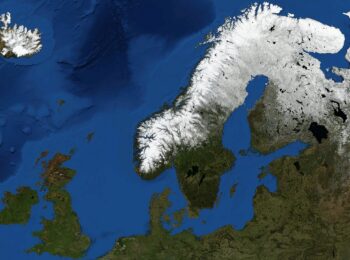
Some ten years ago, it was only possible to collect a few milligrams a day in a laboratory setting. Now the big challenge is to increase capacity so that carbon capture becomes a meaningful and relevant action in the battle against global warming. There are several similar facilities in Germany, Canada, USA, and Iceland. The Icelandic has the opportunity to bury the carbon dioxide, for geological reasons.
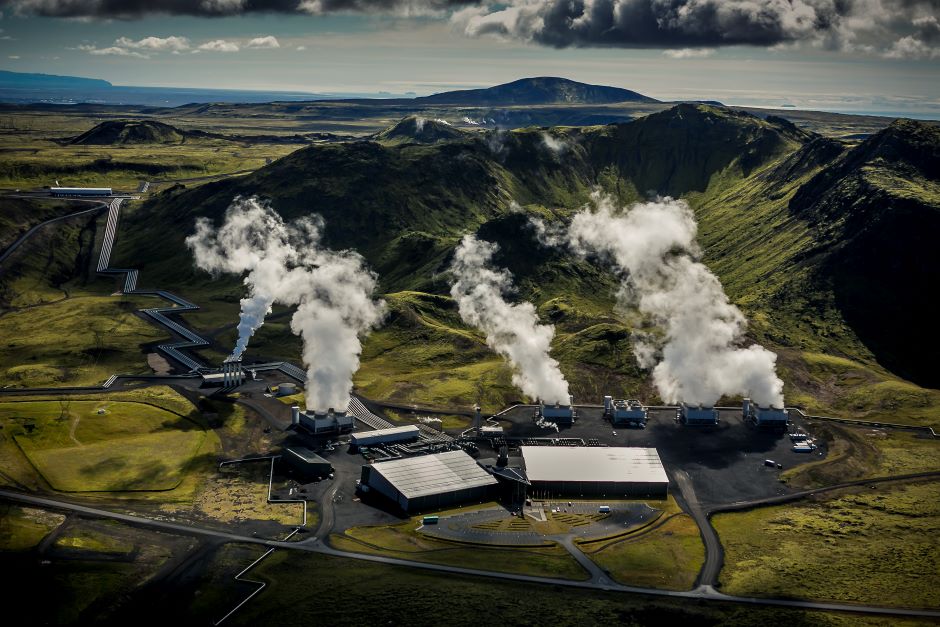
The Icelandic bedrock is basalt and it becomes a chemical reaction between basalt and the carbon dioxide’s “bubble water”, it becomes stone and then almost nothing is released back into the atmosphere. In Hinwil, on the other hand, the cycle continues. Captured carbon dioxide is sold to different users. The greenhouses in the area use fertilizers made with carbon dioxide, the soft drink industry buys a lot, and another part is used for the synthesis of renewable fuels. But economically the incentives aren’t there yet as the business isn’t profitable.
But according to Louise Charles, the business would be profitable if it was possible to bring the price below $ 100 per ton of captured carbon dioxide.