
Poor recycling of refrigerators in China is suspected to be behind the increased chlorofluorocarbons (CFCs) emissions.
Just a few weeks after the news that we covered recently of a dramatic increase in a prohibited ozone-destructive substance, scientists now claim that they know from where a portion of the emissions originates.
The problem is mainly about the substance CFC-11, a kind of chlorofluorocarbon used in refrigerators. CFC-11 was banned in 1989 because it destroyed the ozone layer. But on May 16 this year, it was detected in air samples again and researchers suspected that it came from East Asia.
The researchers who sounded the alarm suspected that the increased levels may be due to newly produced CFC-11, or that it could be a by-product of the production of other less harmful substances, which are used to manufacture e.g. Teflon and air conditioners.
A research team from Shenzen University in China now believes that some of the emissions may come from poor recycling of old refrigerators in China. The country is both the world’s largest producer and consumer of refrigerators. The team investigated a number of repair shops in Shenzen, which, among other things, resulted in broken refrigerators. They also visited state recycling centers in six different provinces.
It turned out that the workshops often disassembled the refrigerator outdoors, although this should be done in special chambers where it is possible to chemically neutralize the harmful gases. The researchers also noticed that even the state recycling centers were not fulfilling safety and environmental standards.
Poor recycling cannot be the whole reason for the increased CFC-11 levels though. According to the original report, about 13 million kilos of CFC-11 emissions are released per year, and refrigerators account for less than 1 million kilos per year according to the researcher’s estimation based on that most people are changing their refrigerators every ten years. If there are even older refrigerators that are now being scrapped, it could result in higher CFC-11 levels.
“Our results imply an urgent need for improving the recycling and waste management of RACs in China.”
– The study’s authors warn.
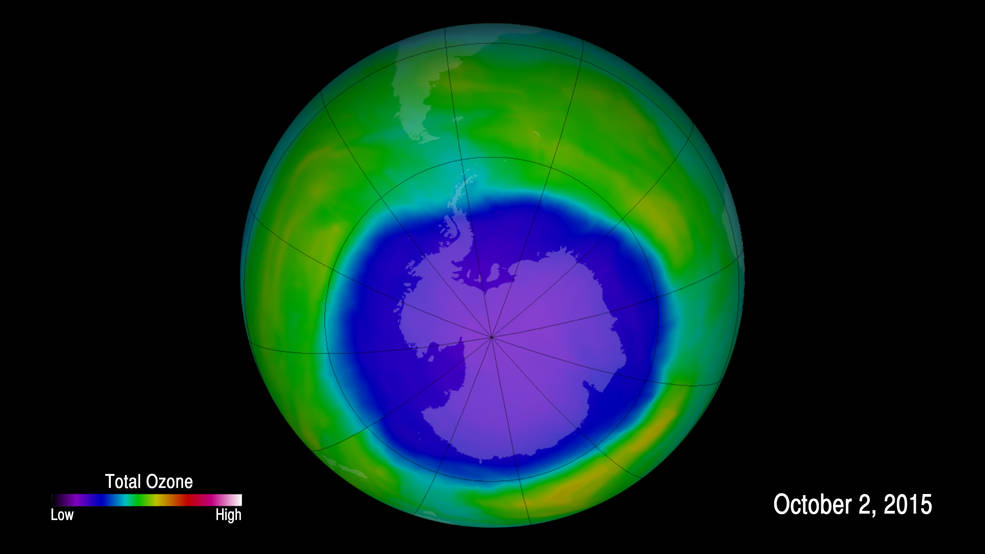
The ozone hole is a severe depletion of the ozone layer above Antarctica that was first detected in the 1980s. The Antarctic ozone hole forms and expands during the Southern Hemisphere spring (August and September) because of the high levels of chemically active forms of chlorine and bromine in the stratosphere. These chlorine- and bromine-containing molecules are largely derived from man-made chemicals that steadily increased in Earth’s atmosphere up through the early 1990s.
Scientists predict it will take another 50 years for chlorine levels in the atmosphere to fall to pre-industrial levels. However, these estimates were based on the assumption that no additional CFCs were being released – assumptions challenged by the most recent research.
The study was published in the journal Environmental Science & Technology.
Reference:
Huabo Duan, T. Reed Miller et al. Chilling Prospect: Climate Change Effects of Mismanaged Refrigerants in China DOI: 10.1021/acs.est.7b05987