

Emissions of some ozone-depleting Chlorofluorocarbons (CFCs) have shot up in the past six years, despite a decades-old treaty banning them altogether.
CFCs was previously used as a refrigerant in refrigerators and fuel in spray bottles. These gases later proved to have harmful effects on the ozone layer and it was thus agreed upon with the Montreal Agreement in 1987 that the world was to phase out the use of CFCs.
The ozone layer protects the Earth from the sun’s harmful UV radiation. Its decline sparked a wave of concern in the 1980s about rising rates of skin cancer.
Since trichlorofluoromethane or CFC-11 was effectively phased out with the 1987 international agreement, scientists had reported the ozone layer was on the mend and up to now. It was commonly believed that since 2007 there was no production of CFC-11.
However, in a new paper published in the journal Nature, an international team of scientists reports an unexpected finding of rising CFC-11, one of the major ozone-depleting chemicals. The new discovery was made by Stephen Montzka and several colleagues at the US National Oceanic and Atmospheric Administration (NOAA) in Colorado.
“We’re raising a flag to the global community to say, ‘This is what’s going on, and it is taking us away from timely recovery from ozone depletion,'”
– Montzka told Science Daily.
The study saw NOAA and CIRES scientists take measurements of global atmospheric concentrations of CFC-11 in 12 remote sites around the world. The measurements revealed steady declines of the dangerous substance prior to 2002, in line with the international ban.
However, after that period the rate of decrease stopped accelerating and was even reduced by 50% post-2012. The team of scientists therefore logically deducted that CFC emissions must have increased after that year.
So, rather than having anything to do with historical trends, the scientists’ simulations suggested this decline was due to an increase in CFC-11 production since 2012.
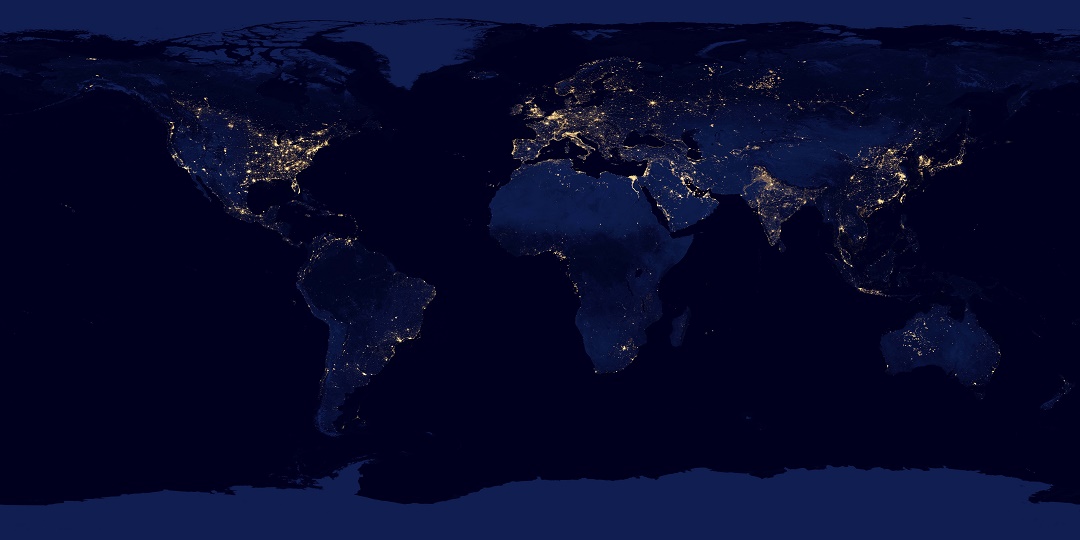
The scientists have done measurements in Hawaii, among other sites, and noticed that freon levels increased when the winds transported air from the west, indicating that emissions can come from eastern Asia.
The researchers also took into account old goods and buildings that still can release freons. However, they concluded that they can not release enough freon to affect the decrease in total freon concentration.
If the source of these emissions can be identified and mitigated soon, the damage to the ozone layer should be minor. If not remedied soon, however, substantial delays in ozone layer recovery could be expected, according to the researchers.
Reference:
Stephen A. Montzka, Geoff S. Dutton, et al. An unexpected and persistent increase in global emissions of ozone-depleting CFC-11 Naturevolume 557, pages413–417 (2018)