
Close Menu
Illustrated Curiosity
    Facebook X (Twitter) Instagram YouTube
    Illustrated Curiosity
    • Earth
    • Economics
    • Environment
      • Climate
      • Environmental Tech
      • Pollution
      • Wildlife
    • Health
      • Health Tech
      • Medicine
      • Nutrition
      • Exercise
    • History
      • Prehistory
      • Ancient History
      • Postclassical Era
      • Modern History
    • Humans
      • Human Brain
      • Psychology
    • Life
      • Animals & Plants
      • Genetics
      • Paleontology
      • Evolution
      • Genetic Engineering
    • Physics
    • Space
      • Astrobiology
      • Astronomy
      • Extrasolar Planets
      • Space Tech
      • Spaceflight
    • Technology
      • Artificial Intelligence
      • Energy
      • Engineering
      • Materials
      • Robotics
      • Vehicles
    Illustrated Curiosity
    Home » Scientists now agree: The Anthropocene has begun
    Environment

    Scientists now agree: The Anthropocene has begun

    January 9, 2016No Comments3 Mins Read
    Share
    Facebook Twitter LinkedIn Pinterest Email

    Composite map of the world assembled from data acquired by the Suomi NPP satellite in April and October 2012. Credit: NASA Earth Observatory/NOAA NGDC

    An international panel of researchers has determined that we are now in the geological period known as the Anthropocene. In essence, a new era in the history of the Earth caused by human influence on the environment.

    During the last century, in particular, the number of people on the planet and our consumption have accelerated, which is leaving its mark on the Earth’s geological sediments.

    For example, we have converted more than 50% of the Earth’s surface to serve our purposes, through urban landscaping, forestry, and agriculture.
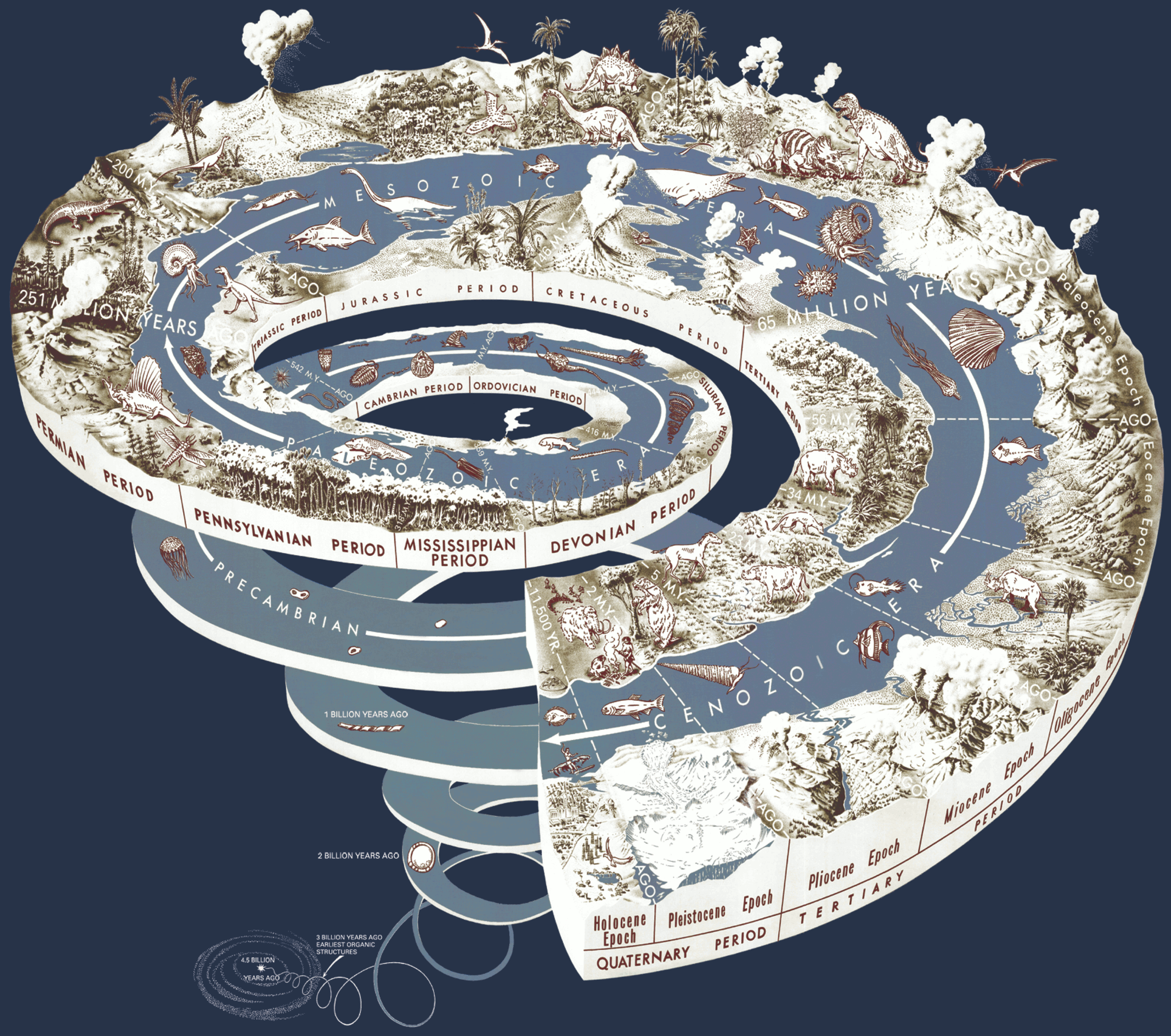
    Graham, Joseph, Newman, William, and Stacy, John, 2008, The geologic time spiral—A path to the past (ver. 1.1): U.S. Geological Survey . Wikipedia, public domain.
    Graphical representation of Earth’s history as a spiral

    Residues from nuclear explosions will leave traces on Earth during hundreds of thousands of years. Plastics in our waterways and oceans giving rise to micro-plastic particles, plastics that will likely leave identifiable fossil records for future generations to discover.

    We have doubled the nitrogen and phosphorous in our soils during the past century by our fertilizer use. We have most certainly left a permanent marker in sediment and glacial ice with our airborne polluters such as black carbon from fossil fuel-burning.

    The classification of the new epoch in the history of the Earth is not totally complete, though. It is not exactly certain yet when the Anthropocene is considered to have begun, but according to the researchers, the 1950s is a good bet.

    There are three main events during human history that would possibly classify as the beginning, as described in the study The Anthropocene is functionally and stratigraphically distinct from the Holocene;

    Humans are altering the planet, including long-term global geologic processes, at an increasing rate. Any formal recognition of an Anthropocene epoch in the geological time scale hinges on whether humans have changed the Earth system sufficiently to produce a stratigraphic signature in sediments and ice that is distinct from that of the Holocene epoch. Proposals for marking the start of the Anthropocene include an “early Anthropocene” beginning with the spread of agriculture and deforestation; the Columbian Exchange of Old World and New World species; the Industrial Revolution at ~1800 CE; and the mid-20th century “Great Acceleration” of population growth and industrialization.

    The international team behind the paper includes several other members of the Subcommission on Quaternary Stratigraphy’s Anthropocene working group. They hope to present a proposal to the ICS later this year. The upswing in the usage of the Anthropocene term can most certainly be credited to Paul Crutzen, the Dutch Nobel prize-winning atmospheric chemist after he wrote about it in 2000.

    _______________
    The Anthropocene is functionally and stratigraphically distinct from the Holocene
    ______________________________
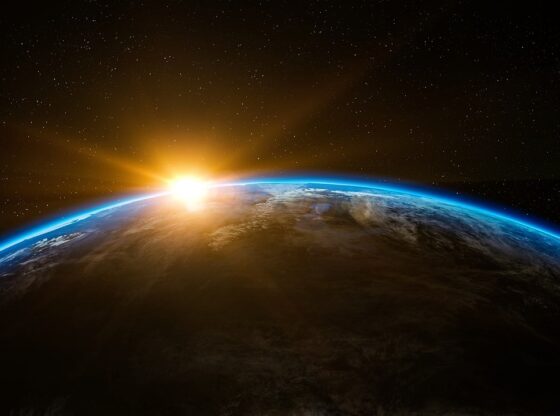
    Anthropocene Sustainability
    Share. Facebook Twitter Pinterest LinkedIn Tumblr Email Copy Link

    Related Posts

    How to Save the Planet According to a New Study

    November 16, 2020

    COVID-19 Recovery Funds Dwarf Clean Energy Investment Needs

    October 26, 2020

    Biodegradable Bags Can Hold a Full Load of Shopping after 3 Years in the Environment

    June 29, 2020

    Researchers Warn: The Bumblebees Are Heading for Extinction

    March 9, 2020

    Loss of Oxygen in Ocean a Major Threat to Marine Life

    January 7, 2020

    Microbe Chews through PFAS and other Tough Contaminants

    December 30, 2019
    Recent Posts
    • How the End of Bretton Woods Reshaped Our Economies — and Our Politics
    • Can the U.S. Really Handle 250% Debt-to-GDP? Why Jackson Hole’s Daring Paper Is Wrong
    • Japan’s Fiscal Trap: What Happens If Austerity Is No Longer an Option?
    • The Rise of Range Extended Electric Vehicles (REEVs): A New Era of Hybrid Mobility
    • The Great Capital Rotation: A Shift from U.S. Treasuries to Gold and Real Assets
    • The Hidden Risks of Short-Term Debt: A Balancing Act in U.S. Fiscal Policy
    • The Looming U.S. Debt Spiral: Understanding the Risks
    • The Looming Recession: Seven Economic Indicators Flashing Red for 2025
    • Europa Clipper: NASA’s Mission to Unlock the Secrets of Jupiter’s Icy Moon
    • Could Hedge Funds Cause Chaos in the U.S. Treasury Market? And What About Inflation?
    © 2025 Illustrated Curiosity

    Type above and press Enter to search. Press Esc to cancel.

    This website uses cookies to improve your experience. We'll assume you're ok with this, but you can opt-out if you wish.Accept Reject Read More
    Privacy & Cookies Policy

    Privacy Overview

    This website uses cookies to improve your experience while you navigate through the website. Out of these, the cookies that are categorized as necessary are stored on your browser as they are essential for the working of basic functionalities of the website. We also use third-party cookies that help us analyze and understand how you use this website. These cookies will be stored in your browser only with your consent. You also have the option to opt-out of these cookies. But opting out of some of these cookies may affect your browsing experience.
    Necessary
    Always Enabled
    Necessary cookies are absolutely essential for the website to function properly. This category only includes cookies that ensures basic functionalities and security features of the website. These cookies do not store any personal information.
    Non-necessary
    Any cookies that may not be particularly necessary for the website to function and is used specifically to collect user personal data via analytics, ads, other embedded contents are termed as non-necessary cookies. It is mandatory to procure user consent prior to running these cookies on your website.
    SAVE & ACCEPT