Close Menu
Illustrated Curiosity
    Facebook X (Twitter) Instagram YouTube
    Illustrated Curiosity
    • Earth
    • Economics
    • Environment
      • Climate
      • Environmental Tech
      • Pollution
      • Wildlife
    • Health
      • Health Tech
      • Medicine
      • Nutrition
      • Exercise
    • History
      • Prehistory
      • Ancient History
      • Postclassical Era
      • Modern History
    • Humans
      • Human Brain
      • Psychology
    • Life
      • Animals & Plants
      • Genetics
      • Paleontology
      • Evolution
      • Genetic Engineering
    • Physics
    • Space
      • Astrobiology
      • Astronomy
      • Extrasolar Planets
      • Space Tech
      • Spaceflight
    • Technology
      • Artificial Intelligence
      • Energy
      • Engineering
      • Materials
      • Robotics
      • Vehicles
    Illustrated Curiosity
    Home » DNA of The Mysterious ‘Siberian Unicorn’ Has Been Analysed For The First Time
    Paleontology

    DNA of The Mysterious ‘Siberian Unicorn’ Has Been Analysed For The First Time

    December 6, 2018No Comments3 Mins Read
    Share
    Facebook Twitter LinkedIn Pinterest Email
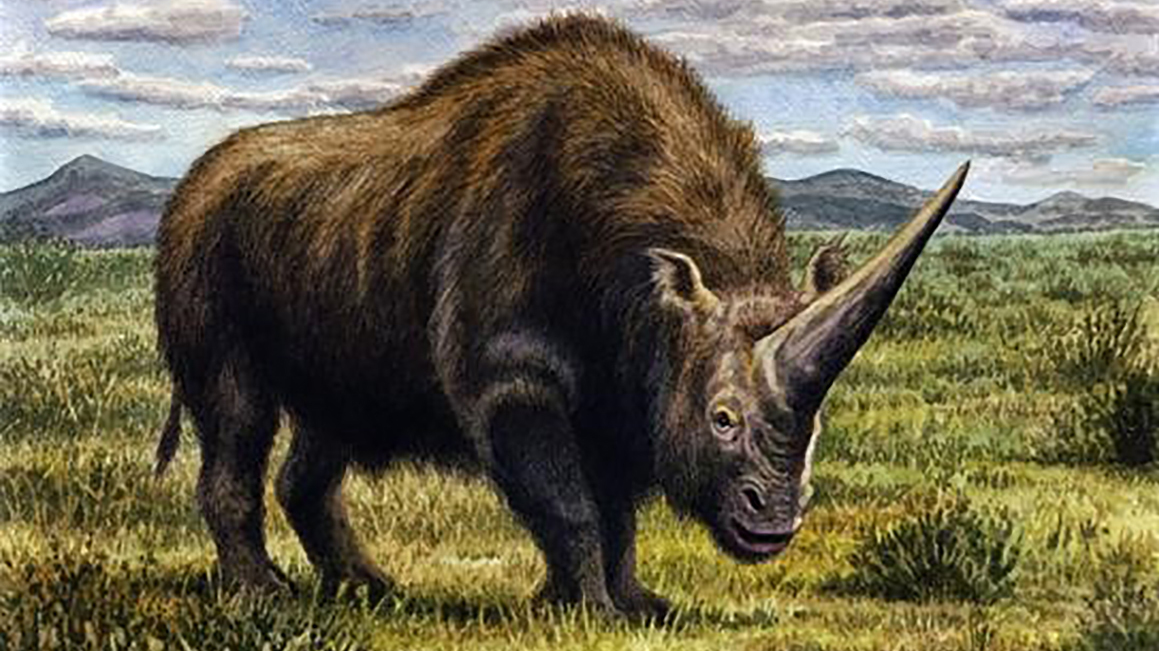
    Illustration: W. S. Van der Merwe
    Artist’s impression of the “Siberian unicorn,” actually a species of rhino.

    An extinct giant rhinoceros, sometimes described as a “Siberian unicorn,” lived on the planet much longer than scientists previously thought, new research shows.

    A study published last week in the journal Nature Ecology & Evolution says that the creature once roamed among humans, surviving in Eastern Europe and western Asia until at least 39,000 years ago, around the same time of Neanderthals and early modern humans.

    Weighing up to 3.5 tons, Elasmotherium sibericum — also known as the ‘Siberian unicorn’, due to its extraordinary single horn – hence a “unicorn” of sorts.

    The research team used radiocarbon dating and genetic analysis on 23 specimens of the rhinoceros to reveal the life of the mysterious 3.8-ton Elasmotherium sibiricum.

    The DNA shows that the animal was not closely related to modern rhinos, but a unique lineage that split from the line that led to modern rhinos over 40 million years ago. These Ice Age rhinos are the last species of a “highly distinctive and ancient lineage,” according to the research.

    It has long been assumed that this ancient creature went extinct well before the Ice Age. However, the new findings challenges the date of this species’ demise.

    The radiocarbon dating shows that Elasmotherium survived until at least 39,000 years ago, possibly as late as 35,000 years ago. It existed alongside what are known as Pleistocene megafauna, gigantic animals that emerged after the dinosaurs.

    “This megafaunal extinction event didn’t really get going until about 40,000 years ago,”

    “So Elasmotherium with its apparent extinction date of 100,000 years ago or more has not been considered as part of that same event.”

    – Adrian Lister, Merit researcher at the NHM, said in a press statement.

    Further analysis showed that the extinct species shared some similarities with its modern relatives. The scientists examined the Elasmotherium’s teeth and were able to compare the carbon and nitrogen isotopes found there with a variety of plant species.

    They were able to confirm that the Siberian beast grazed on tough, dry grasses—just like rhinos. For this reason, the researchers argues that the rise of humans likely did not lead to the rhino’s extinction. Rather, the rhino’s specialized grazing diet mixed with climate change was a more likely cause.

    Reference:

    Pavel Kosintsev, et al. Evolution and extinction of the giant rhinoceros Elasmotherium sibiricum sheds light on late Quaternary megafaunal extinctions DOI https://doi.org/10.1038/s41559-018-0722-
    Rhinoceros
    Share. Facebook Twitter Pinterest LinkedIn Tumblr Email Copy Link

    Related Posts

    All Dogs Are Descended from the Same Wolf

    November 30, 2020

    A Newly Identified Raptor Hunted With The Terrifying Agility of a Cheetah

    June 16, 2020

    European Neanderthals Feasted on Fresh Seafood, Boosting Their Brain

    March 30, 2020

    Fishing in the Sahara? Yes – 10 000 Years Ago

    March 2, 2020

    18,000-Year-Old Frozen Puppy Found Perfectly Preserved in Siberian Permafrost

    December 9, 2019

    Huge mysterious ape Gigantopithecus was a distant cousin of orangutans

    November 25, 2019
    Recent Posts
    • How the End of Bretton Woods Reshaped Our Economies — and Our Politics
    • Can the U.S. Really Handle 250% Debt-to-GDP? Why Jackson Hole’s Daring Paper Is Wrong
    • Japan’s Fiscal Trap: What Happens If Austerity Is No Longer an Option?
    • The Rise of Range Extended Electric Vehicles (REEVs): A New Era of Hybrid Mobility
    • The Great Capital Rotation: A Shift from U.S. Treasuries to Gold and Real Assets
    • The Hidden Risks of Short-Term Debt: A Balancing Act in U.S. Fiscal Policy
    • The Looming U.S. Debt Spiral: Understanding the Risks
    • The Looming Recession: Seven Economic Indicators Flashing Red for 2025
    • Europa Clipper: NASA’s Mission to Unlock the Secrets of Jupiter’s Icy Moon
    • Could Hedge Funds Cause Chaos in the U.S. Treasury Market? And What About Inflation?
    © 2025 Illustrated Curiosity

    Type above and press Enter to search. Press Esc to cancel.

    This website uses cookies to improve your experience. We'll assume you're ok with this, but you can opt-out if you wish.Accept Reject Read More
    Privacy & Cookies Policy

    Privacy Overview

    This website uses cookies to improve your experience while you navigate through the website. Out of these, the cookies that are categorized as necessary are stored on your browser as they are essential for the working of basic functionalities of the website. We also use third-party cookies that help us analyze and understand how you use this website. These cookies will be stored in your browser only with your consent. You also have the option to opt-out of these cookies. But opting out of some of these cookies may affect your browsing experience.
    Necessary
    Always Enabled
    Necessary cookies are absolutely essential for the website to function properly. This category only includes cookies that ensures basic functionalities and security features of the website. These cookies do not store any personal information.
    Non-necessary
    Any cookies that may not be particularly necessary for the website to function and is used specifically to collect user personal data via analytics, ads, other embedded contents are termed as non-necessary cookies. It is mandatory to procure user consent prior to running these cookies on your website.
    SAVE & ACCEPT