Close Menu
Illustrated Curiosity
    Facebook X (Twitter) Instagram YouTube
    Illustrated Curiosity
    • Earth
    • Economics
    • Environment
      • Climate
      • Environmental Tech
      • Pollution
      • Wildlife
    • Health
      • Health Tech
      • Medicine
      • Nutrition
      • Exercise
    • History
      • Prehistory
      • Ancient History
      • Postclassical Era
      • Modern History
    • Humans
      • Human Brain
      • Psychology
    • Life
      • Animals & Plants
      • Genetics
      • Paleontology
      • Evolution
      • Genetic Engineering
    • Physics
    • Space
      • Astrobiology
      • Astronomy
      • Extrasolar Planets
      • Space Tech
      • Spaceflight
    • Technology
      • Artificial Intelligence
      • Energy
      • Engineering
      • Materials
      • Robotics
      • Vehicles
    Illustrated Curiosity
    Home » Einstein’s Theory of Relativity Celebrates 100 Years
    Physics

    Einstein’s Theory of Relativity Celebrates 100 Years

    November 28, 2015No Comments5 Mins Read
    Share
    Facebook Twitter LinkedIn Pinterest Email
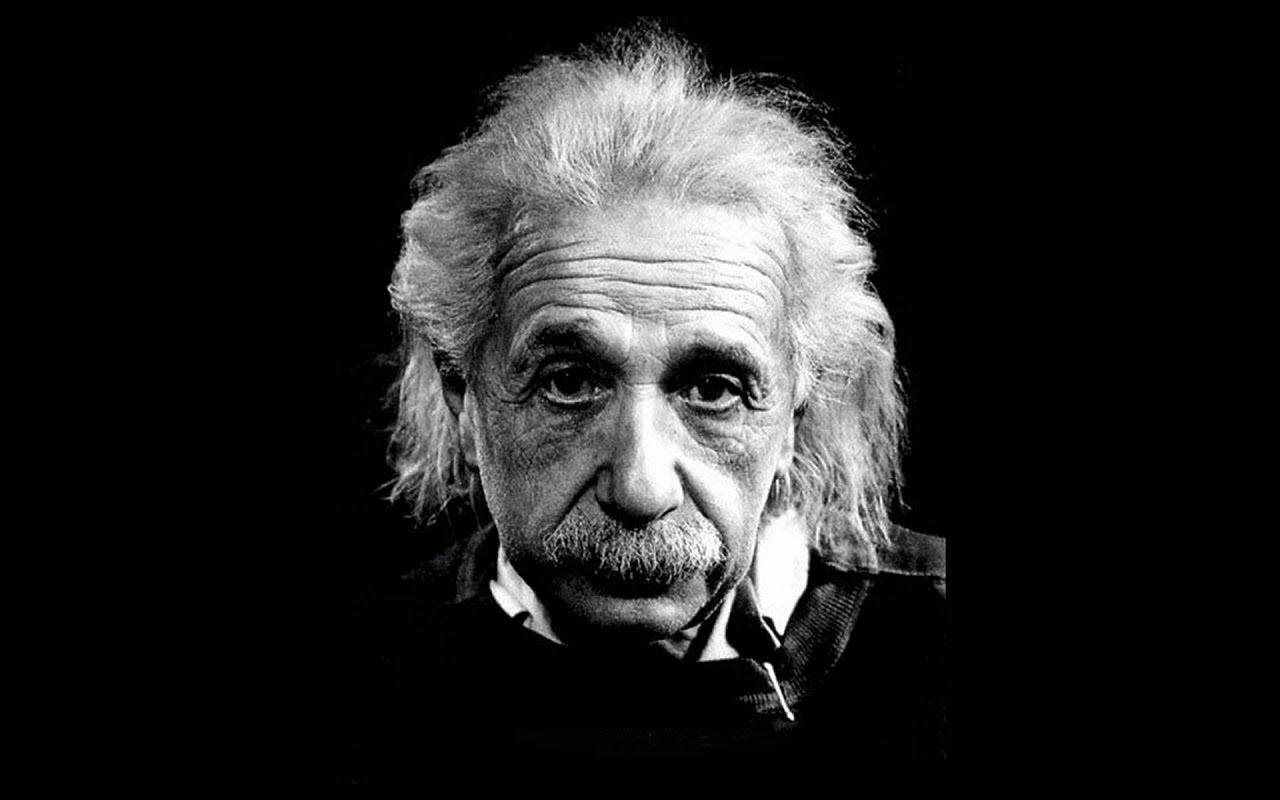
    Albert Einstein ( 14 March 1879 – 18 April 1955) in 1947. Born in Germany, while he was visiting the United States in 1933 , being Jewish, he did not go back to Germany where Adolf Hitler had just come to power.

    For 200 years, Newton’s description of gravity applied. Gravity was the force that worked by the attraction between celestial bodies. A theory that worked well to describe nature in a great number of situations, such as to describe planetary motion.

    But some discrepancies did exist for which Newton’s gravity did not apply. Then Einstein came with an alternative solution that would turn established science on its head.

    Space-Time
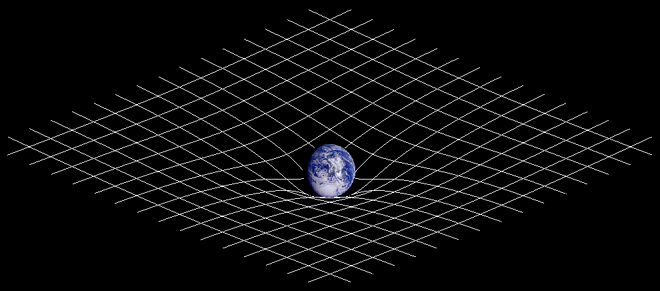
    Illustration of spacetime curvature.

    In a lecture on November 25th in 1915 at the Prussian Academy of Sciences, Einstein presented the idea that gravity is not a force, but a consequence of mass curving space-time.

    This new concept solved a 150-year-old problem, for which Mercury’s closest point of approach to the Sun was moving forward more than expected. A problem that was once thought to be explained by another, not yet known planet named Vulcan (later to inspire Gene Roddenberry and his Star Trek).

    Einstein’s flash of insight was to fuse the dimensions of space with that of time and create a single, mutable whole: spacetime. And by doing so, this significantly simplified a large number of physical theories, as well as to describe in a more uniform way the workings of the universe at both the supergalactic and subatomic levels.

    Lightspeed and Gravity

    Einstein put forward that the speed of light is absolute. But as light is always seen to move at the speed of light, the theory predicted weird effects like the shrinking of physical extent (length contraction) or stretching of time (time dilation) as objects got faster. The latter brilliantly featured in the movie Interstellar. Counter-intuitively, though, the theory worked.

    As its name suggests, it was a special case—for movement at constant speeds in straight lines. Einstein knew, for example, that his ideas didn’t match up with that of Isaac Newton’s theory of gravity, which presumed unchanging dimensions of space and made no mention of time.

    Einstein came up with a solution to this problem while working at the Swiss federal patent office, having what he later described as “the happiest thought of my life” – gravitation and acceleration were identical.

    He imagined a person in a cabin in outer space (this being long before manned spaceflight, he conjured a “spacious chest resembling a room”) being pulled along in such a way that the person inside would find the situation indistinguishable from that on Earth.

    That is, gravity not only looked like acceleration, he concluded; it was acceleration. He further explained that as mass creates a kind of dip into which object fall, creating a dip in space-time, making matter fall along the path of least resistance rather than being pulled by gravity.

    Special And General

    The theory of relativity usually encompasses two theories; special relativity and general relativity. Special relativity is a theory of the structure of space-time, including the theory of the speed of light in a vacuum to be absolute. General relativity is a theory of gravitation.

    Mass–energy equivalence arose originally from special relativity as a paradox described by Henri Poincaré. But Einstein was the first to propose that the equivalence of mass and energy is a general principle and a consequence of the symmetries of space and time. And the resulting famous equation describing the relationship is E=mc^2.

    The even weirder Quantum mechanics were introduced shortly after and offered explanations of physics at the atomic level.

    Standing on the Shoulders of Giants
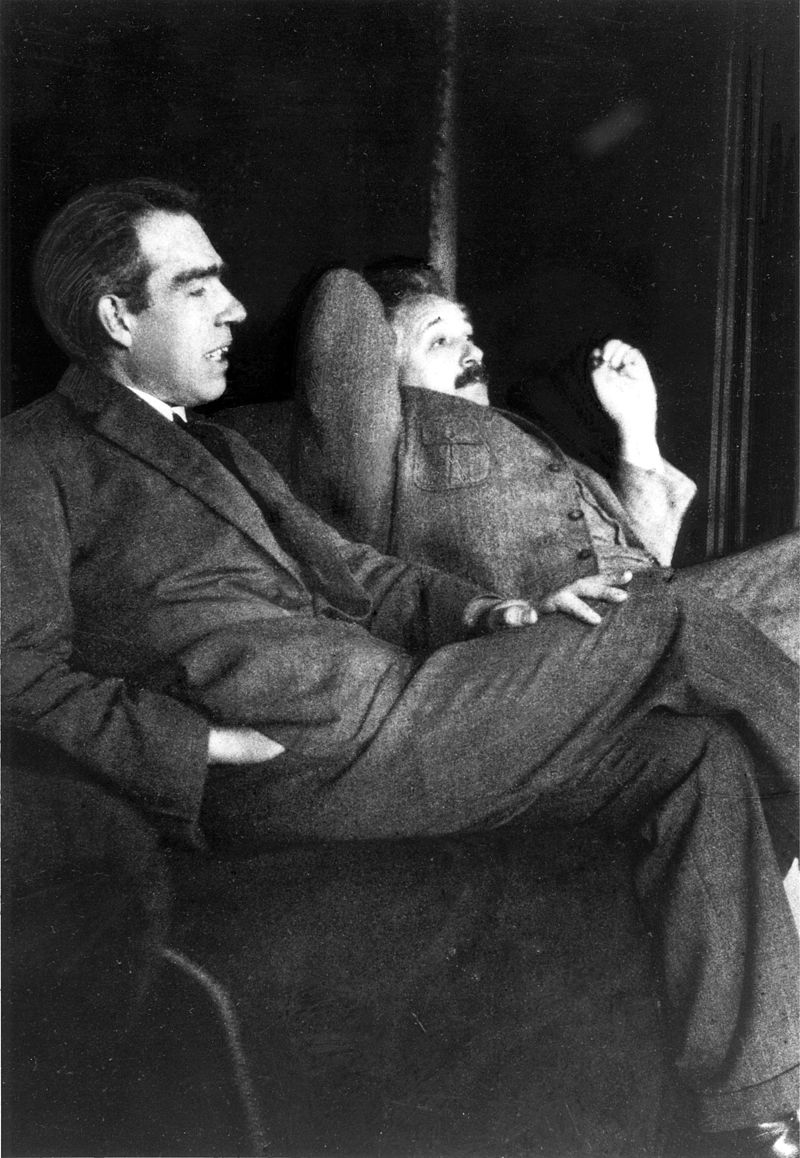
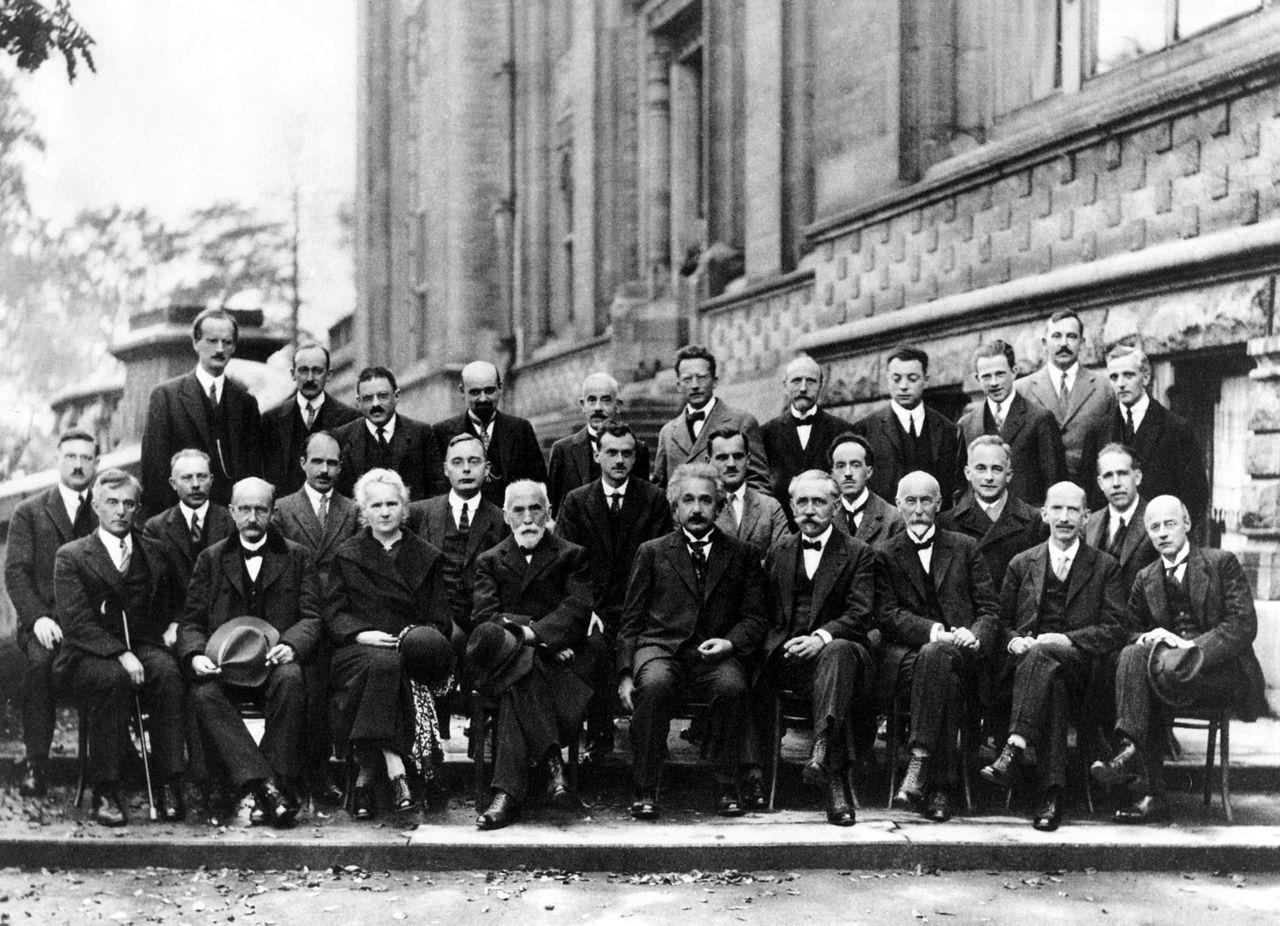
    The picture was taken at Ehrenfest's home in Leiden, the occasion was most likely the 50th anniversary of Hendrik Lorentz' doctorate (December 11, 1925).
    Einstein and Niels Bohr, 1925
    From back to front and from left to right : Auguste Piccard, Émile Henriot, Paul Ehrenfest, Édouard Herzen, Théophile de Donder, Erwin Schrödinger, Jules-Émile Verschaffelt, Wolfgang Pauli, Werner Heisenberg, Ralph Howard Fowler, Léon Brillouin, Peter Debye, Martin Knudsen, William Lawrence Bragg, Hendrik Anthony Kramers, Paul Dirac, Arthur Compton, Louis de Broglie, Max Born, Niels Bohr, Irving Langmuir, Max Planck, Marie Skłodowska Curie, Hendrik Lorentz, Albert Einstein, Paul Langevin, Charles-Eugène Guye, Charles Thomson Rees Wilson, Owen Willans Richardson
    1927 Solvay Conference on Quantum Mechanics. Photograph by Benjamin Couprie, Institut International de Physique Solvay, Brussels, Belgium.

    Albert Einstein was no lonesome genius, though, as the brilliant Isaac Newton famously said If I have seen further it is by standing on the shoulders of giants.

    Considering other contemporary brilliant physicists working at this time, to mention a few, Max Planck, Marie Curie, Werner Heisenberg, Max Born and Niels Bohr.

    Whereas the Bohr–Einstein debates as a series of public disputes about quantum mechanics between Albert Einstein and Niels Bohr is considered of great importance to the philosophy of science.

    Two of Einstein’s childhood friends were important to his achievements. Marcel Grossman, who was a mathematician and Michele Besso who was an engineer. Both met Albert Einstein at the Technical University of Zurich.

    Then Grossman’s father helped Einstein to get a job at the patent office in Bern in 1902. Later, Besso came to work there as well, and in 1905, Einstein published his special theory of relativity.

    In 1912, both Grossman and Einstein returned to ETH and the following year they published an article together about matter curving space-time. And in 1915, he devised the Einstein field equations which relate the curvature of space-time with the mass, energy, and momentum within it.

    ______________
    History: Einstein was no lone genius
    ____________________________
    Albert Einstein Gravity Light Space-Time Theory of Relativity
    Share. Facebook Twitter Pinterest LinkedIn Tumblr Email Copy Link

    Related Posts

    Scientists Race to Test Claimed Room-Temperature Superconductor

    August 3, 2023

    2020 Nobel Prize in Physics Awarded to Trio for Work on Black Hole Formation

    October 6, 2020

    Atomic Clocks So Precise, They Could Detect Space-Time Distortion

    December 4, 2018

    The World Just Redefined the Kilogram

    November 21, 2018

    China Plans to Build a Particle Collider Five Times More Powerful Than the LHC

    November 19, 2018

    Nobel Prize in Physics 2018 Awarded to Scientists Who Put Light to Work

    October 2, 2018
    Recent Posts
    • How the End of Bretton Woods Reshaped Our Economies — and Our Politics
    • Can the U.S. Really Handle 250% Debt-to-GDP? Why Jackson Hole’s Daring Paper Is Wrong
    • Japan’s Fiscal Trap: What Happens If Austerity Is No Longer an Option?
    • The Rise of Range Extended Electric Vehicles (REEVs): A New Era of Hybrid Mobility
    • The Great Capital Rotation: A Shift from U.S. Treasuries to Gold and Real Assets
    • The Hidden Risks of Short-Term Debt: A Balancing Act in U.S. Fiscal Policy
    • The Looming U.S. Debt Spiral: Understanding the Risks
    • The Looming Recession: Seven Economic Indicators Flashing Red for 2025
    • Europa Clipper: NASA’s Mission to Unlock the Secrets of Jupiter’s Icy Moon
    • Could Hedge Funds Cause Chaos in the U.S. Treasury Market? And What About Inflation?
    © 2025 Illustrated Curiosity

    Type above and press Enter to search. Press Esc to cancel.

    This website uses cookies to improve your experience. We'll assume you're ok with this, but you can opt-out if you wish.Accept Reject Read More
    Privacy & Cookies Policy

    Privacy Overview

    This website uses cookies to improve your experience while you navigate through the website. Out of these, the cookies that are categorized as necessary are stored on your browser as they are essential for the working of basic functionalities of the website. We also use third-party cookies that help us analyze and understand how you use this website. These cookies will be stored in your browser only with your consent. You also have the option to opt-out of these cookies. But opting out of some of these cookies may affect your browsing experience.
    Necessary
    Always Enabled
    Necessary cookies are absolutely essential for the website to function properly. This category only includes cookies that ensures basic functionalities and security features of the website. These cookies do not store any personal information.
    Non-necessary
    Any cookies that may not be particularly necessary for the website to function and is used specifically to collect user personal data via analytics, ads, other embedded contents are termed as non-necessary cookies. It is mandatory to procure user consent prior to running these cookies on your website.
    SAVE & ACCEPT