Close Menu
Illustrated Curiosity
    Facebook X (Twitter) Instagram YouTube
    Illustrated Curiosity
    • Earth
    • Economics
    • Environment
      • Climate
      • Environmental Tech
      • Pollution
      • Wildlife
    • Health
      • Health Tech
      • Medicine
      • Nutrition
      • Exercise
    • History
      • Prehistory
      • Ancient History
      • Postclassical Era
      • Modern History
    • Humans
      • Human Brain
      • Psychology
    • Life
      • Animals & Plants
      • Genetics
      • Paleontology
      • Evolution
      • Genetic Engineering
    • Physics
    • Space
      • Astrobiology
      • Astronomy
      • Extrasolar Planets
      • Space Tech
      • Spaceflight
    • Technology
      • Artificial Intelligence
      • Energy
      • Engineering
      • Materials
      • Robotics
      • Vehicles
    Illustrated Curiosity
    Home » An Iceberg Adrift the Size of a City
    Climate

    An Iceberg Adrift the Size of a City

    July 15, 2013No Comments2 Mins Read
    Share
    Facebook Twitter LinkedIn Pinterest Email
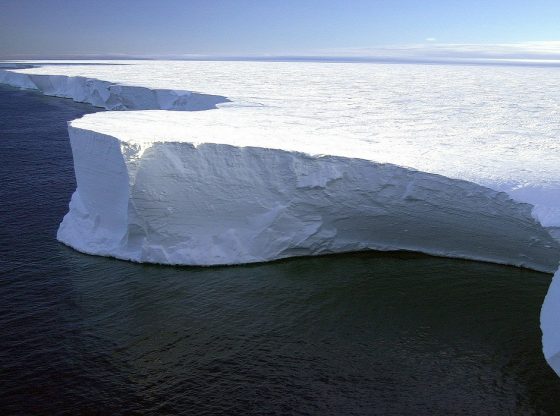
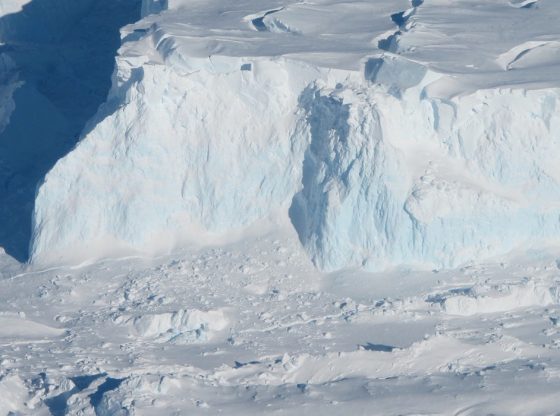
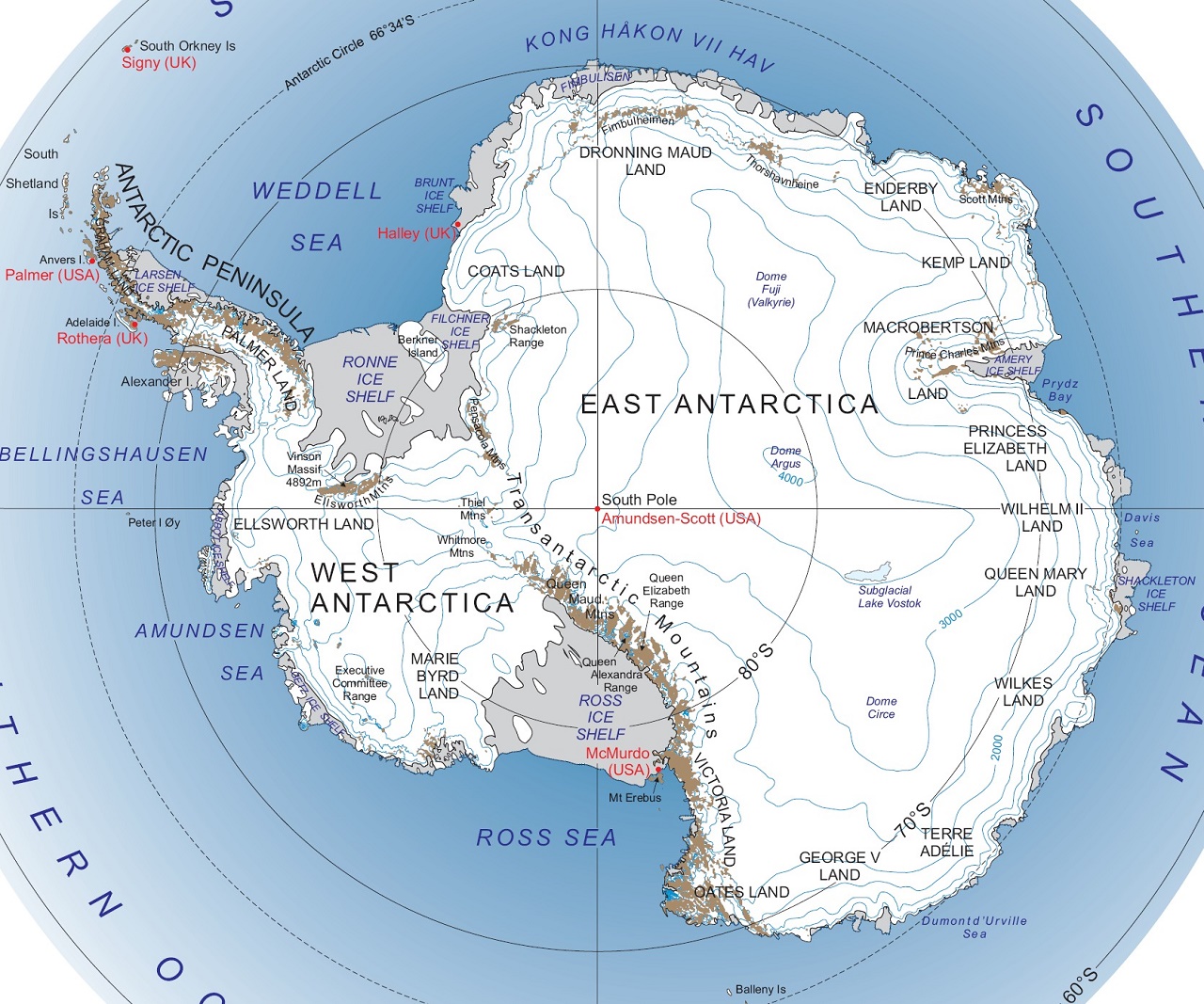
    The Pine Island Glacier at the Ross Ice Shelf.

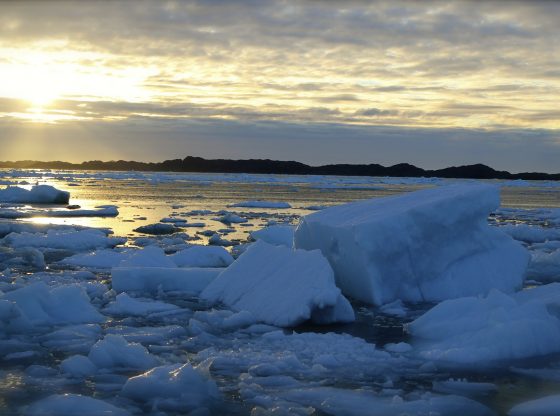
    A huge iceberg has broken off Antarctica and is floating freely in the ocean according to German scientists. It broke off Antarctica’s Pine Island Glacier this last Monday.

    The iceberg is truly immense, being 44.257 square kilometers (275 sq miles), and thus bigger than the city of Chicago (234.0 sq mi (606.1 km2) and half the size of greater London. It was spotted by the TerraSAR-X Earth-orbiting satellite operated by the German Space Agency (DLR).

    Pine Island Winds

    As the Antarctica continental ice continues to melt, The Pine Island glacier is melting even faster, and thus shears off into icebergs that float away and slowly melts in the ocean.

    Researcher at the Alfred Wegener Institute, Helmholtz Centre for Polar and Marine Research Angelika Humbert in a statement, “The wind now brings warm sea water beneath the shelf ice,” “Over time, this process means that the shelf ice melts from below, primarily at the so-called grounding line, the critical transition to the land ice.”
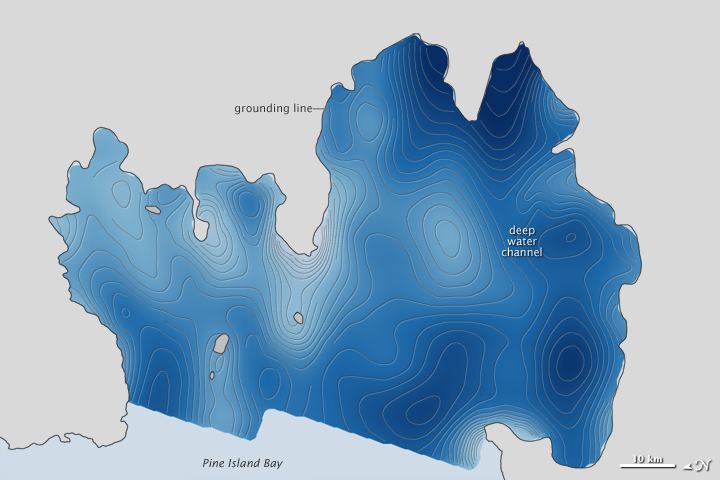
    The top image above shows the bathymetry—the height and depth of the seafloor—beneath Pine Island Glacier. The deepest regions (navy blue) descend about 1,200 meters (3,900 feet) below sea level, while elevated seamounts and shoals (pale blue to white) are mostly 200 meters (650 feet) below sea level. Credit: NASA Earth Observatory

    Therefore the speed of the melting icebergs from specifically The Pine Island Glacier may actually have more to do with changed wind directions rather than rising temperatures directly.

    What is more stressing, however, is that the Pine Island Glacier seems to work as a “plug” that holds back the massive West Antarctic Ice Sheet. Ice now resting on land contributes more to sea level rising than ice already in the ocean, as Archimedes principle dictates.

    A Hypothetical Worse Case Scenario

    If both polar regions and Greenland were to melt, the whole world would not be underwater. But it would be radically different, with our coastlines stretching far inland. Indeed, if all the ice covering Antarctica, Greenland, and in mountain glaciers around the world were to melt, sea level would rise about 70 meters (230 feet).

    Head here to see an interactive map of Earth if all ice would melt, by National Geographic.

    _______________
    Huge iceberg breaks away from the Pine Island glacier in the Antarctic
    ______________________________
    Antarctica Global Warming Ice Sea Level Rise
    Share. Facebook Twitter Pinterest LinkedIn Tumblr Email Copy Link

    Related Posts

    COVID-19 Recovery Funds Dwarf Clean Energy Investment Needs

    October 26, 2020

    Mont Blanc Glacier in Danger of Collapse, Experts Warn

    September 26, 2019

    The Absorption of Carbon Dioxide by the Sea Is Increasing with Emissions

    March 19, 2019

    Antarctic Ice Is Melting Six Times Faster Than in 1979

    February 12, 2019

    U.N. Says 2018 Will Be Earth’s 4th-Warmest Year on Record, Predicts a 5- to 9-Degree Temperature Rise This Century

    December 12, 2018

    Temperatures to Rise 1.5 Degrees Celsius by 2030-2052 without Rapid Steps According to U.N. Report

    October 19, 2018
    Recent Posts
    • How the End of Bretton Woods Reshaped Our Economies — and Our Politics
    • Can the U.S. Really Handle 250% Debt-to-GDP? Why Jackson Hole’s Daring Paper Is Wrong
    • Japan’s Fiscal Trap: What Happens If Austerity Is No Longer an Option?
    • The Rise of Range Extended Electric Vehicles (REEVs): A New Era of Hybrid Mobility
    • The Great Capital Rotation: A Shift from U.S. Treasuries to Gold and Real Assets
    • The Hidden Risks of Short-Term Debt: A Balancing Act in U.S. Fiscal Policy
    • The Looming U.S. Debt Spiral: Understanding the Risks
    • The Looming Recession: Seven Economic Indicators Flashing Red for 2025
    • Europa Clipper: NASA’s Mission to Unlock the Secrets of Jupiter’s Icy Moon
    • Could Hedge Funds Cause Chaos in the U.S. Treasury Market? And What About Inflation?
    © 2025 Illustrated Curiosity

    Type above and press Enter to search. Press Esc to cancel.

    This website uses cookies to improve your experience. We'll assume you're ok with this, but you can opt-out if you wish.Accept Reject Read More
    Privacy & Cookies Policy

    Privacy Overview

    This website uses cookies to improve your experience while you navigate through the website. Out of these, the cookies that are categorized as necessary are stored on your browser as they are essential for the working of basic functionalities of the website. We also use third-party cookies that help us analyze and understand how you use this website. These cookies will be stored in your browser only with your consent. You also have the option to opt-out of these cookies. But opting out of some of these cookies may affect your browsing experience.
    Necessary
    Always Enabled
    Necessary cookies are absolutely essential for the website to function properly. This category only includes cookies that ensures basic functionalities and security features of the website. These cookies do not store any personal information.
    Non-necessary
    Any cookies that may not be particularly necessary for the website to function and is used specifically to collect user personal data via analytics, ads, other embedded contents are termed as non-necessary cookies. It is mandatory to procure user consent prior to running these cookies on your website.
    SAVE & ACCEPT