Close Menu
Illustrated Curiosity | Economics, History, Science, Space, Technology, Health, Physics, Earth
    Facebook X (Twitter) Instagram YouTube
    Illustrated Curiosity | Economics, History, Science, Space, Technology, Health, Physics, Earth
    • Earth
    • Economics
    • Environment
      • Environmental Tech
      • Pollution
      • Wildlife
    • Health
      • Health Tech
      • Medicine
      • Nutrition
      • Exercise
    • History
      • Prehistory
      • Ancient History
      • Postclassical Era
      • Modern History
    • Humans
      • Human Brain
      • Psychology
    • Life
      • Animals & Plants
      • Genetics
      • Paleontology
      • Evolution
      • Genetic Engineering
    • Physics
    • Space
      • Astrobiology
      • Astronomy
      • Extrasolar Planets
      • Space Tech
      • Spaceflight
    • Technology
      • Artificial Intelligence
      • Energy
      • Engineering
      • Materials
      • Robotics
      • Vehicles
    Illustrated Curiosity | Economics, History, Science, Space, Technology, Health, Physics, Earth
    Home » New Earthquake Early Warning: Gravity Beats Seismic Activity
    Earth

    New Earthquake Early Warning: Gravity Beats Seismic Activity

    December 1, 20173 Mins Read
    Illustration: Illustrated Curiosity
    Share
    Facebook Twitter LinkedIn Pinterest Email

    Determining the true size of a major earthquake is a complex and time-consuming process. For the most powerful quakes, it can take up to half an hour to calculate a reliable magnitude. Now, French researchers have developed a method that could dramatically shorten that timeline—by measuring subtle changes in Earth’s gravitational field that occur almost instantly after a quake begins.

    The challenge arises particularly for very large earthquakes—those exceeding magnitude 8 on the Richter scale. Traditional magnitude estimates rely on seismic stations that record ground motion. However, stations located closest to massive quakes often become saturated and cannot accurately capture the full energy released. As a result, scientists must wait for data from more distant stations, delaying precise magnitude calculations.

    By analyzing data from the devastating 2011 earthquake in Japan, researchers from CNRS, Institut de Physique du Globe de Paris (IPGP), Université Paris Diderot, and California Institute of Technology (Caltech) have developed a faster approach to estimating earthquake magnitude.

    Earthquakes release seismic waves that travel through the Earth at speeds between roughly 3 and 10 kilometers per second. These waves can cause catastrophic damage when they reach populated areas. But seismic waves are not the only signals generated during a quake. The sudden redistribution of mass inside the Earth also produces a disturbance in the planet’s gravitational field.

    Instead of waiting for seismic waves to arrive, the researchers focus on detecting these gravity disturbances—sometimes referred to as elastogravity signals. Unlike seismic waves, changes in gravity propagate at the speed of light.

    c = 3.0×10^8 m/s

    Because gravitational changes travel so quickly, a monitoring station located 1,000 kilometers from the epicenter could detect a gravity signal more than two minutes before the seismic waves arrive. This allows scientists to estimate the size of a major earthquake in approximately three minutes—compared to roughly 30 minutes using conventional techniques.

    However, the method currently works best for extremely powerful earthquakes. Detecting gravity changes from quakes below magnitude 8 to 8.5 remains difficult, as the signals are too weak relative to the natural seismic “noise” constantly present within the Earth. Isolating these subtle signals from background disturbances is a major technical challenge that researchers continue to address.

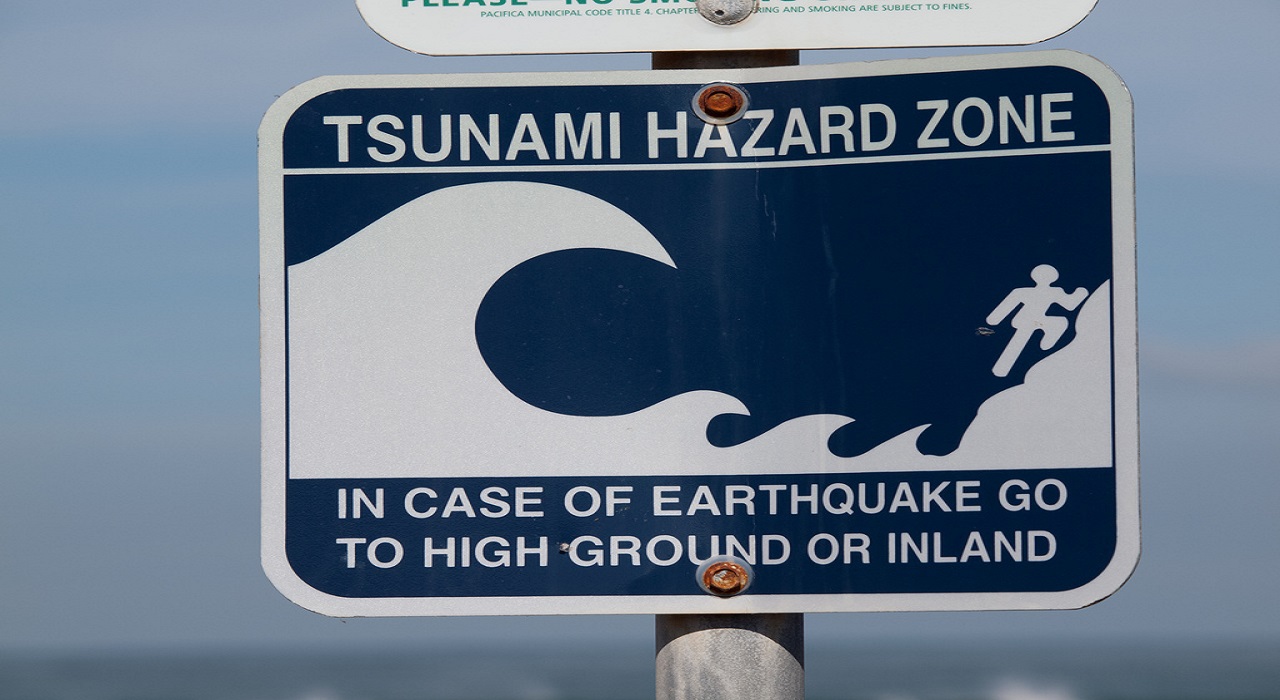
    The study, published in the journal Science, could play a crucial role in improving early-warning systems—particularly for tsunamis triggered by large offshore earthquakes. Faster magnitude estimates could translate into earlier alerts and potentially save lives.

    Reference:
    Vallée et al., Observations and modeling of the elastogravity signals preceding direct seismic waves, Science, December 1, 2017. DOI: 10.1126/science.aao0746.

    Share. Facebook Twitter Pinterest LinkedIn Tumblr Email Copy Link

    Related Posts

    The Looming Giant: Grindavik’s Potential Volcanic Eruption and its Global Implications

    November 13, 2023

    Small Warning Signs Can Reveal Volcano Eruption – before the Disaster

    October 3, 2019

    Earth’s Core Is Actually Solid According to New Research

    October 22, 2018

    Tree Ring Dating Confirms Historical Accounts of ‘Blood Aurora’ as Extreme Cosmic Radiation

    October 18, 2018

    Scientists Offer Clues to What Caused the Mass Extinction 250 Million Years Ago

    October 12, 2018

    Geoengineering, to Combat Global Warming, May Harm Crop Production

    August 15, 2018
    Recent Posts
    • Oil Shocks, Policy Mistakes, and the Risk of a Second Inflation Wave (Part II)
    • Oil Shocks, Policy Mistakes, and the Risk of a Second Inflation Wave (Part I)
    • Microsoft Stored a Movie on Glass — And It Could Last Centuries
    • AI, Automatic Stabilizers & Inflation
    • Largest Battles in History: Cannae — Rome’s Darkest Day
    • The Day the Alliance Died
    • Evaluating Heart Disease: How Cumulative Diet Choices Compound Your Risk
    • What Would Happen If China Attacked Taiwan?
    • Geopoliticisation as a Structural Tailwind for Commodity Prices
    • America’s Economic Remodel: Who’s Really Paying the Bill?
    © 2025 Illustrated Curiosity

    Type above and press Enter to search. Press Esc to cancel.