Close Menu
Illustrated Curiosity | Economics, History, Science, Space, Technology, Health, Physics, Earth
    Facebook X (Twitter) Instagram YouTube
    Illustrated Curiosity | Economics, History, Science, Space, Technology, Health, Physics, Earth
    • Earth
    • Economics
    • Environment
      • Environmental Tech
      • Pollution
      • Wildlife
    • Health
      • Health Tech
      • Medicine
      • Nutrition
      • Exercise
    • History
      • Prehistory
      • Ancient History
      • Postclassical Era
      • Modern History
    • Humans
      • Human Brain
      • Psychology
    • Life
      • Animals & Plants
      • Genetics
      • Paleontology
      • Evolution
      • Genetic Engineering
    • Physics
    • Space
      • Astrobiology
      • Astronomy
      • Extrasolar Planets
      • Space Tech
      • Spaceflight
    • Technology
      • Artificial Intelligence
      • Energy
      • Engineering
      • Materials
      • Robotics
      • Vehicles
    Illustrated Curiosity | Economics, History, Science, Space, Technology, Health, Physics, Earth
    Home » The World’s Oldest Payslip is 5,000 Years Old
    Economics

    The World’s Oldest Payslip is 5,000 Years Old

    July 8, 20163 Mins Read
    Share
    Facebook Twitter LinkedIn Pinterest Email
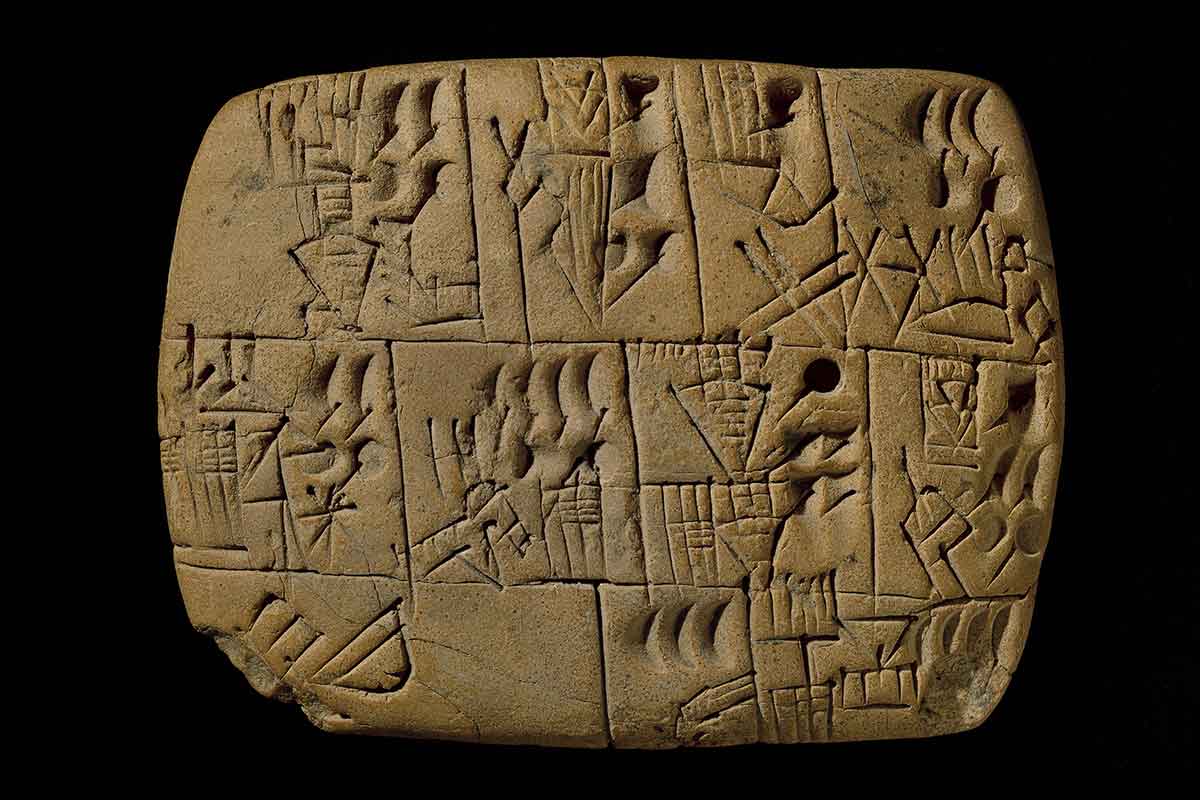
    Beer o’clock, 3000 BC. Credit: The Trustees of the British Museum. Image: BabelStone, via Wikipedia Commons, licensed under CC BY-SA 3.0
    Beer o’clock, 3000 BC. Credit: The Trustees of the British Museum. Image: BabelStone, via Wikipedia Commons, licensed under CC BY-SA 3.0

    You didn’t work to get rich in ancient Mesopotamia. Instead, you got paid in beer.

    This ancient payslip is covered with scratching that features a human head eating from a bowl and it is probably the world’s oldest payslip.

    This according to the team of archaeologists that have studied the clay tablet from the ancient city of Uruk (in modern-day Iraq), which was part of Mesopotamia some 5,000 years ago.

    The payslip has nothing to do with money, however. Instead, it shows that workers were rewarded with beer for their efforts.

    Popular Beverage

    The scratchings across the surface of the clay tablet was written with the world’s oldest writing systems, known as cuneiform. In fact, the tablet is one of the earliest known examples of human writing.

    The eating person on the tablet can be translated as “rationed” while the container means “beer”. Then, each scratch made on the board indicates the amount of beer that a worker received.

    The payment in alcohol was probably not just to make the workers happy and satisfied. In ancient times, beer was a nourishing drink that in itself was a meal.

    Throughout history, beverages containing alcohol was a necessity since drinking water in a densely populated city was most certainly often not healthy.

    Mesopotamia was not the only place where work was rewarded with alcohol. The wine was often served as a reward for a long day’s work in Europe during the Middle Ages. Archaeologists have found evidence that those who built the pyramids in Egypt drank between four and five liters of beer a day.

    Ancient Money

    During this phase of human history, economic reliance for the populace was just starting to emerge. It was based on a “gift economy” and debt. But the concept of money possibly made its debut after 3000 BCE. Possibly around 300 years after this artifact was etched.

    During the period when the inscribed tablet was used, people in Mesopotamia probably used a system of commodity money, which entails the use of exchanged objects that have value in themselves, like salt, gold, silver, tea and even alcohol – as opposed to dedicated coins or metal tokens given a specific value – guaranteed by a state.

    Given the absence of a currency system, the employers opted for other ingenious methods of paying their workers. And alcoholic beverages probably was an efficient payment at the time, highly valued and sort after by everyone in society.

    ______________
    Early writing tablet

    ____________________________
    Alcohol Economic History Mesopotamia The Fertile Crescent Uruk
    Share. Facebook Twitter Pinterest LinkedIn Tumblr Email Copy Link

    Related Posts

    The Day the Alliance Died

    January 5, 2026

    What Would Happen If China Attacked Taiwan?

    December 23, 2025

    Geopoliticisation as a Structural Tailwind for Commodity Prices

    December 22, 2025

    America’s Economic Remodel: Who’s Really Paying the Bill?

    December 16, 2025

    Why Inflation May Be Preparing for a Second Act

    December 11, 2025

    How the End of Bretton Woods Reshaped Our Economies — and Our Politics

    December 6, 2025
    Recent Posts
    • Largest Battles in History: Cannae — Rome’s Darkest Day
    • The Day the Alliance Died
    • Evaluating Heart Disease: How Cumulative Diet Choices Compound Your Risk
    • What Would Happen If China Attacked Taiwan?
    • Geopoliticisation as a Structural Tailwind for Commodity Prices
    • America’s Economic Remodel: Who’s Really Paying the Bill?
    • Why Inflation May Be Preparing for a Second Act
    • How the End of Bretton Woods Reshaped Our Economies — and Our Politics
    • Can the U.S. Really Handle 250% Debt-to-GDP? Why Jackson Hole’s Daring Paper Is Wrong
    • Japan’s Fiscal Trap: What Happens If Austerity Is No Longer an Option?
    © 2025 Illustrated Curiosity

    Type above and press Enter to search. Press Esc to cancel.