Close Menu
Illustrated Curiosity
    Facebook X (Twitter) Instagram YouTube
    Illustrated Curiosity
    • Earth
    • Economics
    • Environment
      • Climate
      • Environmental Tech
      • Pollution
      • Wildlife
    • Health
      • Health Tech
      • Medicine
      • Nutrition
      • Exercise
    • History
      • Prehistory
      • Ancient History
      • Postclassical Era
      • Modern History
    • Humans
      • Human Brain
      • Psychology
    • Life
      • Animals & Plants
      • Genetics
      • Paleontology
      • Evolution
      • Genetic Engineering
    • Physics
    • Space
      • Astrobiology
      • Astronomy
      • Extrasolar Planets
      • Space Tech
      • Spaceflight
    • Technology
      • Artificial Intelligence
      • Energy
      • Engineering
      • Materials
      • Robotics
      • Vehicles
    Illustrated Curiosity
    Home » VW to invest $2 billion in U.S. network of electric charging stations
    Economics

    VW to invest $2 billion in U.S. network of electric charging stations

    April 23, 2017No Comments3 Mins Read
    Share
    Facebook Twitter LinkedIn Pinterest Email

    Volkswagen invests $ 2 billion in a new charging network for electric cars in the United States.
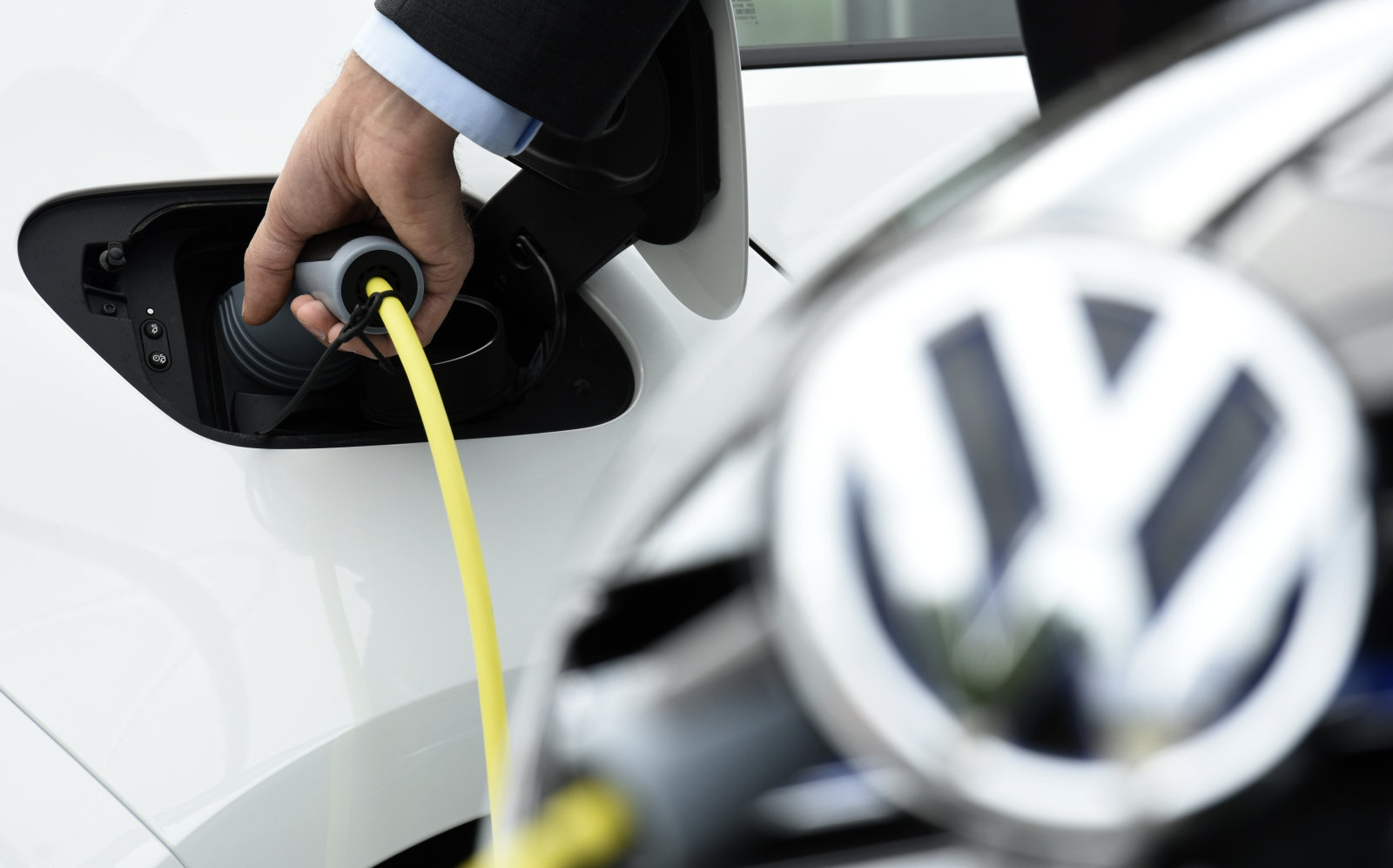
    As part of its court settlement with the California Air Resources Board (CARB) and the U.S. Environmental Protection Agency (EPA) for the DieselGate scandal, Volkswagen agreed to invest $2 billion in electric vehicle infrastructure in the US.

    Building the charging stations across the U.S will begin this fall. They will offer more than twice as fast charging as the Tesla superchargers according to VW.

    Volkswagen has already, together with three other car manufacturers – BMW, Daimler, and Ford – decided to build a network of thousands of fast-chargers in Europe by 2020.

    The VW venture in the United States is a consequence of the deal with the US state after “dieselgate“, by which the German car giant promised a commitment to a cleaner environment. As part of its court settlement with the California Air Resources Board (CARB) and the U.S. Environmental Protection Agency (EPA) for the DieselGate scandal, Volkswagen agreed to invest $2 billion in electric vehicle infrastructure in the US.

    The investments are made through a newly formed subsidiary, Electrify America, which also aims to raise awareness about the benefits of electric cars.

    The goal is to build more than 2,500 charging stations in 11 metropolitan areas and along the major highways over the next ten years. The project will be launched in four phases with 30 months period for each. The first phase will be launched this fall and completed in 2019.

    VW will provide 450 stations across the U.S. Some 240 stations will be built along the major highways. At each charging station location, there will be a speed charger able to provide up to 320 kW. This means that charging time can be reduced to 15-20 minutes for the next generation electric cars, with greater battery capacity.

    There are no specific locations announced yet, but many charging stations will be built in California since VW is required to spend almost half the money in the state under the settlement.

    Additionally, some of the money will be spent for general electric vehicle awareness through “ride and drives, multi-channel advertising, website, social media, and educational programs.”

    VW’s diesel cheat might end up to be the best thing to happen to EVs since Tesla, it could also pose a serious threat to Tesla’s dominance in the US market. VW is surely planning to capitalize on their investments. One such indication is the company’s investments in electric vehicles.

    Reference:
    VW: Electrify America

    Electric Car Electric truck Energy Storage
    Share. Facebook Twitter Pinterest LinkedIn Tumblr Email Copy Link

    Related Posts

    How the End of Bretton Woods Reshaped Our Economies — and Our Politics

    December 6, 2025

    Can the U.S. Really Handle 250% Debt-to-GDP? Why Jackson Hole’s Daring Paper Is Wrong

    November 6, 2025

    Japan’s Fiscal Trap: What Happens If Austerity Is No Longer an Option?

    May 7, 2025

    The Great Capital Rotation: A Shift from U.S. Treasuries to Gold and Real Assets

    February 6, 2025

    The Hidden Risks of Short-Term Debt: A Balancing Act in U.S. Fiscal Policy

    January 18, 2025

    The Looming U.S. Debt Spiral: Understanding the Risks

    January 3, 2025
    Recent Posts
    • How the End of Bretton Woods Reshaped Our Economies — and Our Politics
    • Can the U.S. Really Handle 250% Debt-to-GDP? Why Jackson Hole’s Daring Paper Is Wrong
    • Japan’s Fiscal Trap: What Happens If Austerity Is No Longer an Option?
    • The Rise of Range Extended Electric Vehicles (REEVs): A New Era of Hybrid Mobility
    • The Great Capital Rotation: A Shift from U.S. Treasuries to Gold and Real Assets
    • The Hidden Risks of Short-Term Debt: A Balancing Act in U.S. Fiscal Policy
    • The Looming U.S. Debt Spiral: Understanding the Risks
    • The Looming Recession: Seven Economic Indicators Flashing Red for 2025
    • Europa Clipper: NASA’s Mission to Unlock the Secrets of Jupiter’s Icy Moon
    • Could Hedge Funds Cause Chaos in the U.S. Treasury Market? And What About Inflation?
    © 2025 Illustrated Curiosity

    Type above and press Enter to search. Press Esc to cancel.

    This website uses cookies to improve your experience. We'll assume you're ok with this, but you can opt-out if you wish.Accept Reject Read More
    Privacy & Cookies Policy

    Privacy Overview

    This website uses cookies to improve your experience while you navigate through the website. Out of these, the cookies that are categorized as necessary are stored on your browser as they are essential for the working of basic functionalities of the website. We also use third-party cookies that help us analyze and understand how you use this website. These cookies will be stored in your browser only with your consent. You also have the option to opt-out of these cookies. But opting out of some of these cookies may affect your browsing experience.
    Necessary
    Always Enabled
    Necessary cookies are absolutely essential for the website to function properly. This category only includes cookies that ensures basic functionalities and security features of the website. These cookies do not store any personal information.
    Non-necessary
    Any cookies that may not be particularly necessary for the website to function and is used specifically to collect user personal data via analytics, ads, other embedded contents are termed as non-necessary cookies. It is mandatory to procure user consent prior to running these cookies on your website.
    SAVE & ACCEPT