Close Menu
Illustrated Curiosity
    Facebook X (Twitter) Instagram YouTube
    Illustrated Curiosity
    • Earth
    • Economics
    • Environment
      • Climate
      • Environmental Tech
      • Pollution
      • Wildlife
    • Health
      • Health Tech
      • Medicine
      • Nutrition
      • Exercise
    • History
      • Prehistory
      • Ancient History
      • Postclassical Era
      • Modern History
    • Humans
      • Human Brain
      • Psychology
    • Life
      • Animals & Plants
      • Genetics
      • Paleontology
      • Evolution
      • Genetic Engineering
    • Physics
    • Space
      • Astrobiology
      • Astronomy
      • Extrasolar Planets
      • Space Tech
      • Spaceflight
    • Technology
      • Artificial Intelligence
      • Energy
      • Engineering
      • Materials
      • Robotics
      • Vehicles
    Illustrated Curiosity
    Home » Sleep deficiency causes your brain to eat itself
    Medicine

    Sleep deficiency causes your brain to eat itself

    June 6, 2017No Comments3 Mins Read
    Share
    Facebook Twitter LinkedIn Pinterest Email

    Cells start consuming the connections in your brain when we sleep inadequately. New research reveals how bad it can be when you do not get enough sleep.
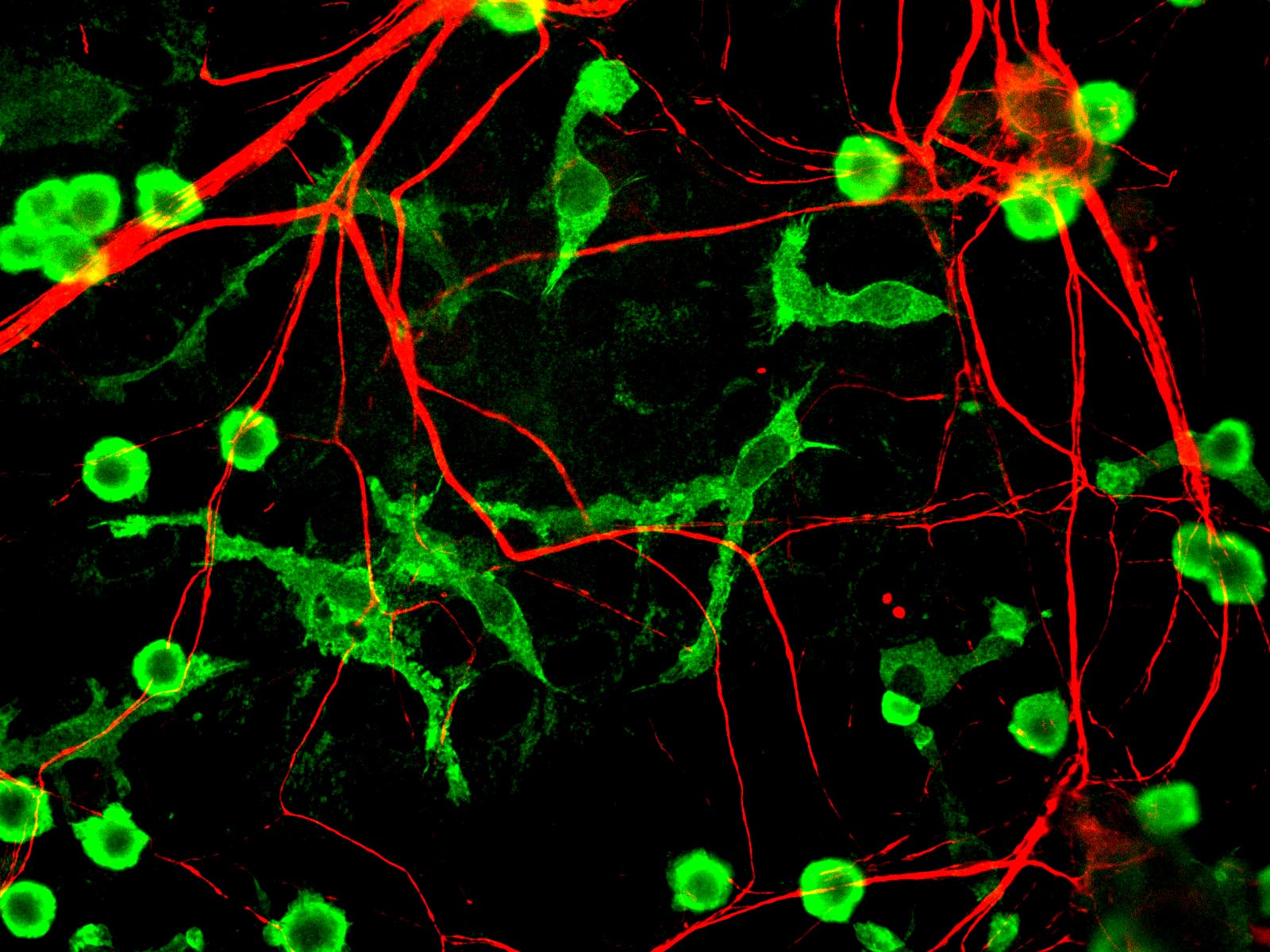
    Microglia account for 10–15% of all cells found within the brain. they act as the first and main form of active immune defense in the central nervous system. Microglia here in green, and alpha-internexin, in red. Credit: GerryShaw | EnCor Biotechnology Inc.

    We now know that a lot of cleansing work is done in the brain every night we sleep. Special immune cells cleanse the brain by removing waste substances and recycling unnecessary connections. But if you do not get enough sleep, a malfunction ensues in the cleaning operation.

    Italian researchers kept mice awake for five days to examine the effects of insomnia. They discovered that in particular, two cell types are important for the brain to be able to perform a nightly cleansing: Astrocytes seal old connections in the brain while microglial cells vacuum old and dead cells as waste materials.

    The researchers, among other things, examined the brains of three groups of mice. The first group was allowed to sleep for as long as they wanted. The other group was kept awake for eight hours to imitate what happens when our sleep disappears for a certain shorter period. The third group was subjected to chronic sleep deprivation and deprived of its sleep for five days.

    Both types of remediation cells responded to sleep deprivation. In the rested mice, astrocytes, which seal old connections, were active in six percent of the brain’s synapses – the points where the brain cells meet.

    Mice that lost some of their sleep had active astrocytes in eight percent of the synapses, while chronic sleep deprivation resulted in the cells cleaning up in 13.5 percent of the synapses.

    What was worst, however, was that the mice exposed to chronic sleep insufficiency had more active microglial cells – and for a long time, researchers have linked them to a variety of brain diseases, including Alzheimer’s disease.

    We find that astrocytic phagocytosis of synaptic elements, mostly of presynaptic origin and in large synapses, is upregulated already after a few hours of sleep deprivation and shows a further significant increase after prolonged and severe sleep loss, suggesting that it may promote the housekeeping of heavily used and strong synapses in response to the increased neuronal activity of extended wake. By contrast, chronic sleep restriction but not acute sleep loss activates microglia, promotes their phagocytic activity, and does so in the absence of overt signs of neuroinflammation, suggesting that like many other stressors, extended sleep disruption may lead to a state of sustained microglia activation, perhaps increasing the brain’s susceptibility to other forms of damage.

    The finding could explain why a lack of sleep seems to make people more vulnerable to developing Alzheimer’s or similar conditions.

    Reference:

    Michele Bellesi, Luisa de Vivo, Mattia Chini, Francesca Gilli, Giulio Tononi and Chiara Cirelli Sleep Loss Promotes Astrocytic Phagocytosis and Microglial Activation in Mouse Cerebral Cortex Journal of Neuroscience 24 May 2017, 37 (21) 5263-5273; DOI: https://doi.org/10.1523/JNEUROSCI.3981-16.2017

    Human Brain Sleep
    Share. Facebook Twitter Pinterest LinkedIn Tumblr Email Copy Link

    Related Posts

    Groundbreaking Breakthrough: A Potential Cure for Cancer Targets Proliferating Cell Nuclear Antigen (PCNA)

    August 3, 2023

    Data Modeling Can Predict How COVID-19 Will Spread in a Big City

    November 13, 2020

    2020 Nobel Prize in Medicine Jointly Awarded to Scientists Who Discovered the Hepatitis C Virus

    October 6, 2020

    Air Pollution May Be a Contributing Factor behind High Death Rates in COVID-19

    June 8, 2020

    Evidence of Stray Dogs as Possible Intermediate Host of COVID-19 Pandemic

    April 28, 2020

    Promising Progress on Urine Tests for Prostate Cancer

    March 23, 2020
    Recent Posts
    • How the End of Bretton Woods Reshaped Our Economies — and Our Politics
    • Can the U.S. Really Handle 250% Debt-to-GDP? Why Jackson Hole’s Daring Paper Is Wrong
    • Japan’s Fiscal Trap: What Happens If Austerity Is No Longer an Option?
    • The Rise of Range Extended Electric Vehicles (REEVs): A New Era of Hybrid Mobility
    • The Great Capital Rotation: A Shift from U.S. Treasuries to Gold and Real Assets
    • The Hidden Risks of Short-Term Debt: A Balancing Act in U.S. Fiscal Policy
    • The Looming U.S. Debt Spiral: Understanding the Risks
    • The Looming Recession: Seven Economic Indicators Flashing Red for 2025
    • Europa Clipper: NASA’s Mission to Unlock the Secrets of Jupiter’s Icy Moon
    • Could Hedge Funds Cause Chaos in the U.S. Treasury Market? And What About Inflation?
    © 2025 Illustrated Curiosity

    Type above and press Enter to search. Press Esc to cancel.

    This website uses cookies to improve your experience. We'll assume you're ok with this, but you can opt-out if you wish.Accept Reject Read More
    Privacy & Cookies Policy

    Privacy Overview

    This website uses cookies to improve your experience while you navigate through the website. Out of these, the cookies that are categorized as necessary are stored on your browser as they are essential for the working of basic functionalities of the website. We also use third-party cookies that help us analyze and understand how you use this website. These cookies will be stored in your browser only with your consent. You also have the option to opt-out of these cookies. But opting out of some of these cookies may affect your browsing experience.
    Necessary
    Always Enabled
    Necessary cookies are absolutely essential for the website to function properly. This category only includes cookies that ensures basic functionalities and security features of the website. These cookies do not store any personal information.
    Non-necessary
    Any cookies that may not be particularly necessary for the website to function and is used specifically to collect user personal data via analytics, ads, other embedded contents are termed as non-necessary cookies. It is mandatory to procure user consent prior to running these cookies on your website.
    SAVE & ACCEPT