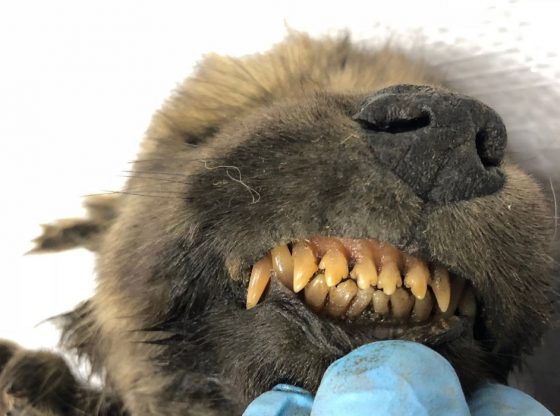

Russian scientists have revealed a perfectly preserved cave-lion cub that lived between 20,000 and 50,000 years ago near the Tirekhtykh River in Siberia.
The cave cub was found on the bank of the Tirekhtykh River by a local resident, according to The Siberian Times.
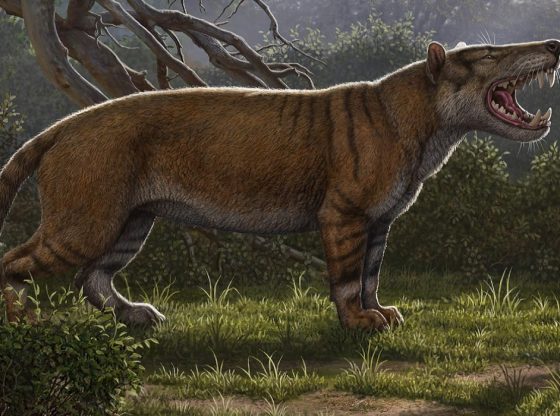
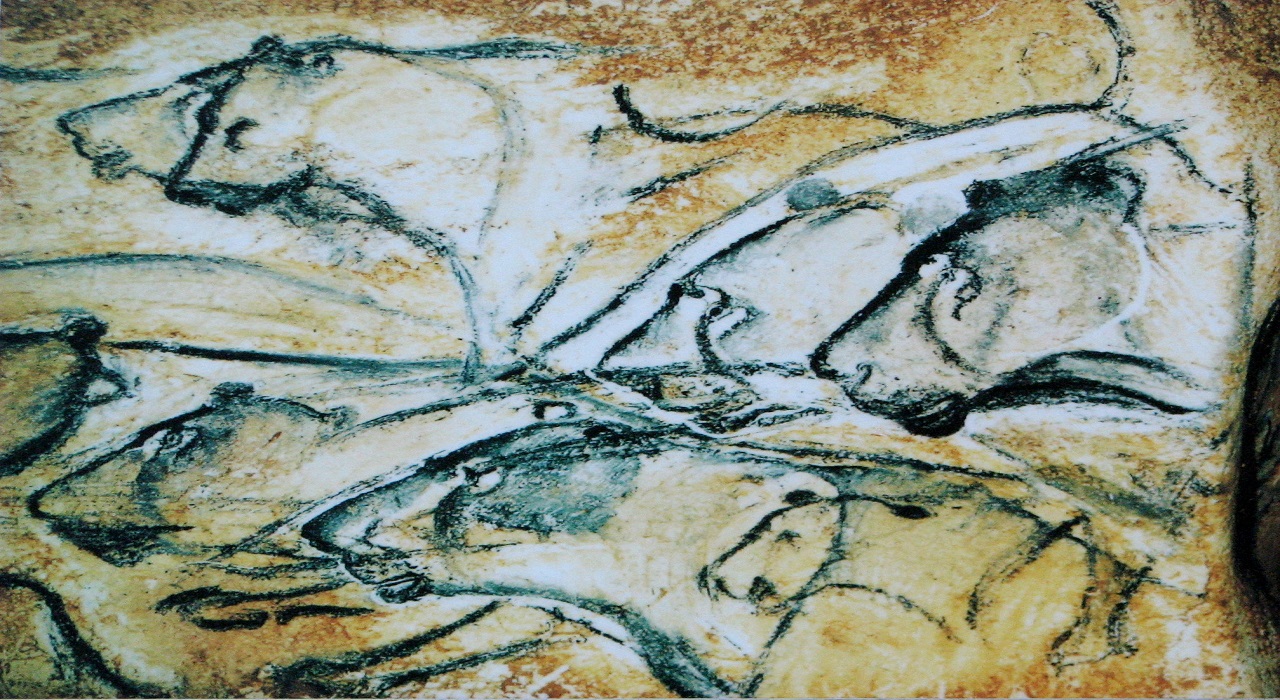
The cave lion (Panthera leo spelaea) roamed the planet, from Europe to Alaska over the Bering land bridge until the late Pleistocene, about 300,000 years ago until they suddenly went extinct about 10,000 years ago. Considered to be one of the largest lions to have ever existed. The skeleton of an adult male, which was found in 1985 near Siegsdorf (Germany), had a shoulder height of around 1.2 m (3.9 ft) and a head-body length of 2.1 m (6.9 ft) without the tail. A large specimen is estimated to weigh 317-362 kg (700-800 lb).
The newfound lion cub is believed to have died when it was about 2 months old and it is described to be in such a good condition that it would be possible to clone it. One of the researchers told the Siberian paper its “perfect” condition makes it a potential candidate for cloning.
“It is a perfectly preserved lion cub, all the limbs have survived. There are no traces of external injuries on the skin.”
“The preservation is so good that it raises hopes of cloning the species back to life”
– Dr. Albert Protopopov said to The Siberian Times.