Close Menu
Illustrated Curiosity
    Facebook X (Twitter) Instagram YouTube
    Illustrated Curiosity
    • Earth
    • Economics
    • Environment
      • Climate
      • Environmental Tech
      • Pollution
      • Wildlife
    • Health
      • Health Tech
      • Medicine
      • Nutrition
      • Exercise
    • History
      • Prehistory
      • Ancient History
      • Postclassical Era
      • Modern History
    • Humans
      • Human Brain
      • Psychology
    • Life
      • Animals & Plants
      • Genetics
      • Paleontology
      • Evolution
      • Genetic Engineering
    • Physics
    • Space
      • Astrobiology
      • Astronomy
      • Extrasolar Planets
      • Space Tech
      • Spaceflight
    • Technology
      • Artificial Intelligence
      • Energy
      • Engineering
      • Materials
      • Robotics
      • Vehicles
    Illustrated Curiosity
    Home » The Nobel Prize in chemistry 2016: What are molecular machines?
    Physics

    The Nobel Prize in chemistry 2016: What are molecular machines?

    October 5, 2016No Comments3 Mins Read
    Share
    Facebook Twitter LinkedIn Pinterest Email

    The Nobel Prize in chemistry goes to Jean-Pierre Sauvage, Sir J. Fraser Stoddart, and Bernard L. Feringa. They receive the award for “Design and synthesis of molecular machines.”
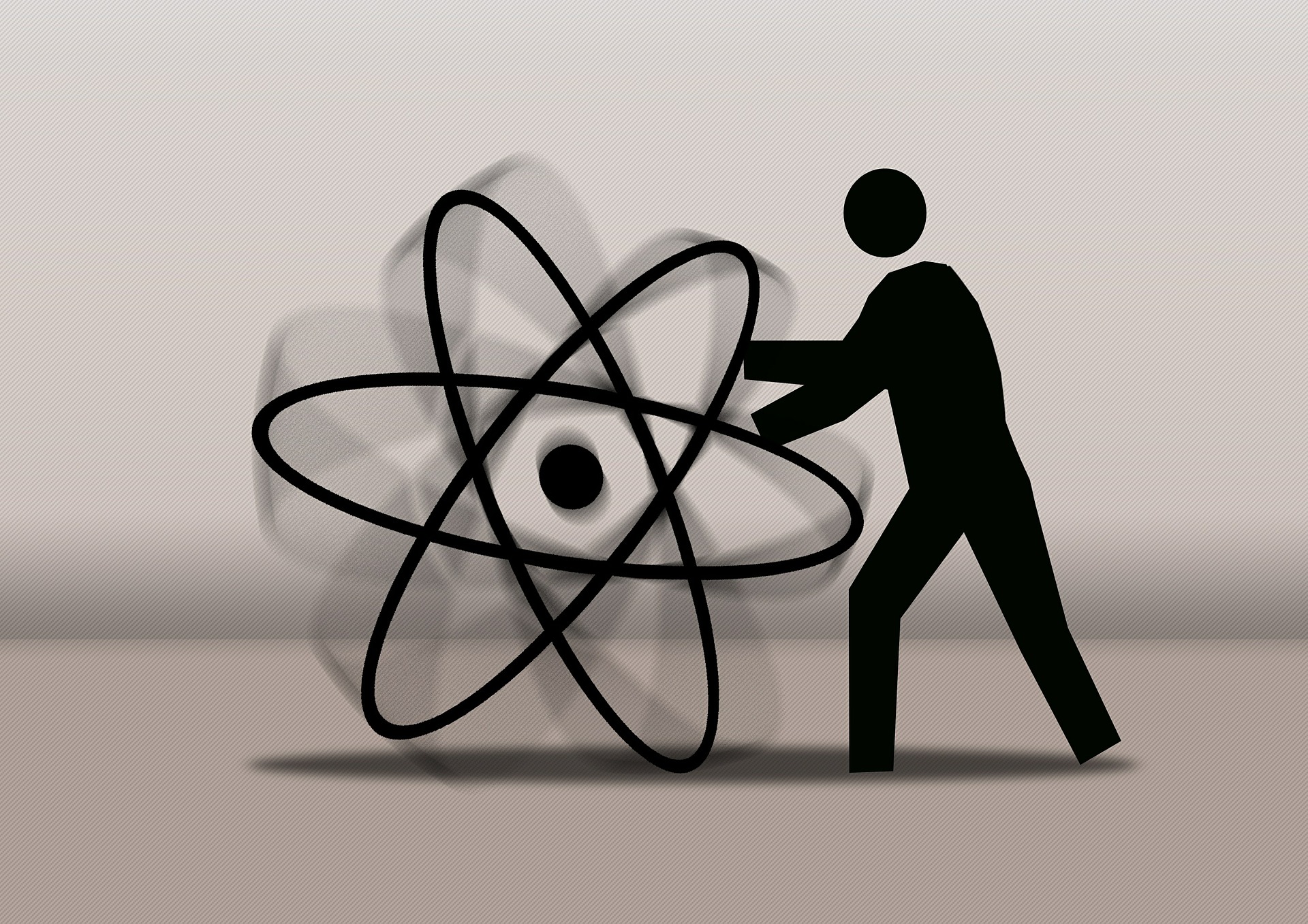
    We have lots of biological ‘machines’ in our bodies, not least in our cells. The smallest of these is usually said to consist of only about 10,000 small molecules. The molecular machines that this year’s Nobel Laureates in Chemistry is awarded for is much smaller, though, some 100 molecules small.

    The idea to build things at the smallest scale – the molecular level – is a concept first introduced during the 1950s. Various attempts were made both during the 50s and 60s, which managed to chain together molecules with one another, but the rather crude methods were too energy intensive.

    This was about to change in 1983, when one of this year’s Nobel Laureates in Chemistry, Jean-Pierre Sauvage, managed to put together two molecules so that they formed two rings put together. The trick was to have a U-shaped “half-ring” attached to the middle of a full ring with a copper ion. Adding another half a ring, you have two rings joined together and then proceed from there.

    The second prize winner, Sir J. Fraser Stoddart, took the next step in 1991. He managed to attach a molecular ring on a shaft using the attraction between electrons.

    A classic definition of a machine is just a device that converts energy into mechanical movements and thus performs a job. It was just what the ring around the shaft did when they exposed it to heat.

    Soddart more recent research have managed to produce information-carrying computer memory in miniature size, that would make today’s computer memory to look like giant boulders in comparison.

    The third and last Nobel Prize winner, Dutchman Bernard L. Feringa, took the final step and built a machine that could be compared to a car engine.

    Usually, atoms behave a little random as they spin to one side or the other. But Feringa’s small machine circumvented this problem by connecting two U-shaped molecules so that they formed a ring. Straight through the ring, there is still a bond – joined by a double bond between two carbon atoms.

    When Feringa subjected the entire molecule to UV light, one of the U-shaped molecules began rotating 180 degrees but was firmly held at the bottom of the U-shaped molecule with the help of the stronger bond right through the ring.

    Chemistry Molecules Nobel Prize
    Share. Facebook Twitter Pinterest LinkedIn Tumblr Email Copy Link

    Related Posts

    Scientists Race to Test Claimed Room-Temperature Superconductor

    August 3, 2023

    2020 Nobel Prize in Physics Awarded to Trio for Work on Black Hole Formation

    October 6, 2020

    Atomic Clocks So Precise, They Could Detect Space-Time Distortion

    December 4, 2018

    The World Just Redefined the Kilogram

    November 21, 2018

    China Plans to Build a Particle Collider Five Times More Powerful Than the LHC

    November 19, 2018

    Nobel Prize in Physics 2018 Awarded to Scientists Who Put Light to Work

    October 2, 2018
    Recent Posts
    • How the End of Bretton Woods Reshaped Our Economies — and Our Politics
    • Can the U.S. Really Handle 250% Debt-to-GDP? Why Jackson Hole’s Daring Paper Is Wrong
    • Japan’s Fiscal Trap: What Happens If Austerity Is No Longer an Option?
    • The Rise of Range Extended Electric Vehicles (REEVs): A New Era of Hybrid Mobility
    • The Great Capital Rotation: A Shift from U.S. Treasuries to Gold and Real Assets
    • The Hidden Risks of Short-Term Debt: A Balancing Act in U.S. Fiscal Policy
    • The Looming U.S. Debt Spiral: Understanding the Risks
    • The Looming Recession: Seven Economic Indicators Flashing Red for 2025
    • Europa Clipper: NASA’s Mission to Unlock the Secrets of Jupiter’s Icy Moon
    • Could Hedge Funds Cause Chaos in the U.S. Treasury Market? And What About Inflation?
    © 2025 Illustrated Curiosity

    Type above and press Enter to search. Press Esc to cancel.

    This website uses cookies to improve your experience. We'll assume you're ok with this, but you can opt-out if you wish.Accept Reject Read More
    Privacy & Cookies Policy

    Privacy Overview

    This website uses cookies to improve your experience while you navigate through the website. Out of these, the cookies that are categorized as necessary are stored on your browser as they are essential for the working of basic functionalities of the website. We also use third-party cookies that help us analyze and understand how you use this website. These cookies will be stored in your browser only with your consent. You also have the option to opt-out of these cookies. But opting out of some of these cookies may affect your browsing experience.
    Necessary
    Always Enabled
    Necessary cookies are absolutely essential for the website to function properly. This category only includes cookies that ensures basic functionalities and security features of the website. These cookies do not store any personal information.
    Non-necessary
    Any cookies that may not be particularly necessary for the website to function and is used specifically to collect user personal data via analytics, ads, other embedded contents are termed as non-necessary cookies. It is mandatory to procure user consent prior to running these cookies on your website.
    SAVE & ACCEPT