Close Menu
Illustrated Curiosity | Economics, History, Science, Space, Technology, Health, Physics, Earth
    Facebook X (Twitter) Instagram YouTube
    Illustrated Curiosity | Economics, History, Science, Space, Technology, Health, Physics, Earth
    • Earth
    • Economics
    • Environment
      • Environmental Tech
      • Pollution
      • Wildlife
    • Health
      • Health Tech
      • Medicine
      • Nutrition
      • Exercise
    • History
      • Prehistory
      • Ancient History
      • Postclassical Era
      • Modern History
    • Humans
      • Human Brain
      • Psychology
    • Life
      • Animals & Plants
      • Genetics
      • Paleontology
      • Evolution
      • Genetic Engineering
    • Physics
    • Space
      • Astrobiology
      • Astronomy
      • Extrasolar Planets
      • Space Tech
      • Spaceflight
    • Technology
      • Artificial Intelligence
      • Energy
      • Engineering
      • Materials
      • Robotics
      • Vehicles
    Illustrated Curiosity | Economics, History, Science, Space, Technology, Health, Physics, Earth
    Home » Signs of an Approaching Major Volcanic Eruptions on Iceland
    Earth

    Signs of an Approaching Major Volcanic Eruptions on Iceland

    November 23, 20173 Mins Read
    Illustration: Illustrated Curiosity
    Share
    Facebook Twitter LinkedIn Pinterest Email

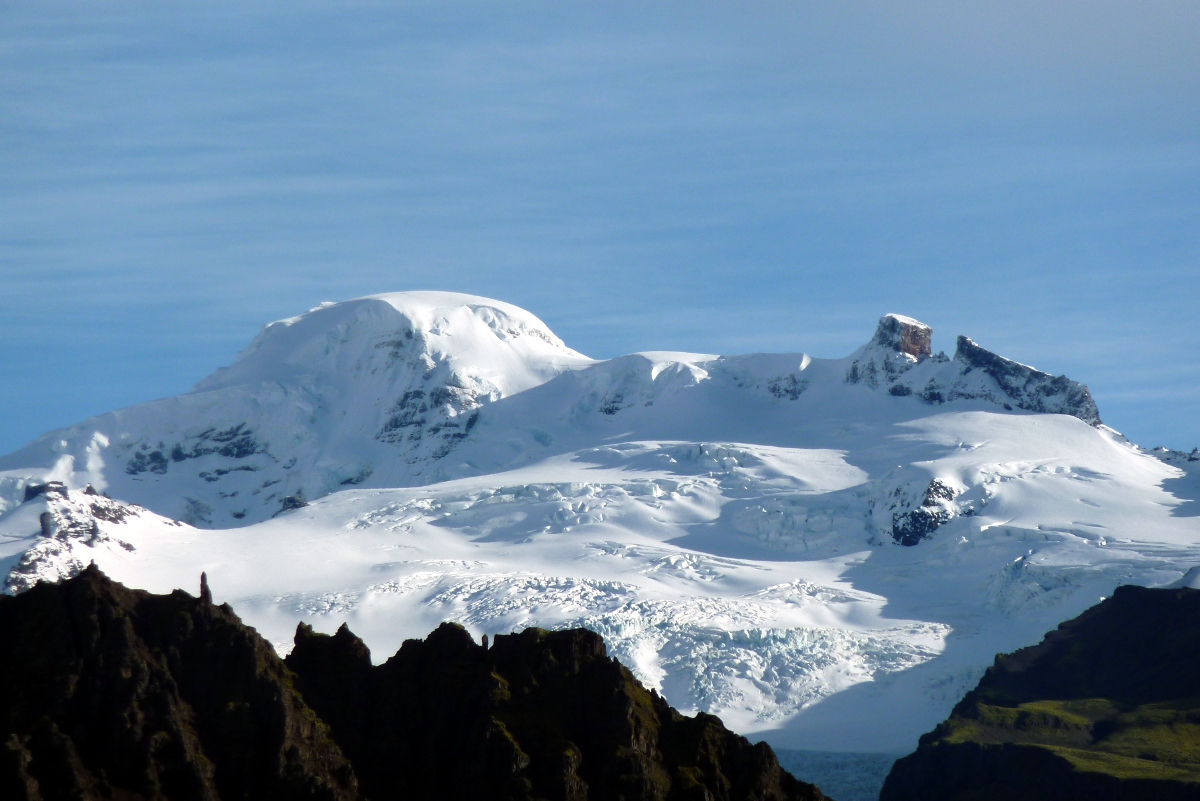
    One of Iceland’s largest volcanoes may be stirring after nearly three centuries of dormancy. New monitoring data suggest that activity is increasing beneath the ice-covered Öræfajökull volcano in southeastern Iceland—raising concerns about the potential for a future eruption.
    Öræfajökull lies beneath a thick glacier and has remained largely quiet since its last recorded eruption in 1727. Historical records also document a major eruption in 1362. In recent months, however, scientists have begun detecting renewed signs of unrest beneath the ice.

    Researchers have observed a rise in seismic activity in the area, alongside increased meltwater flowing from the glacier. Elevated sulfur odors have also been reported—another indicator often associated with volcanic gas release.

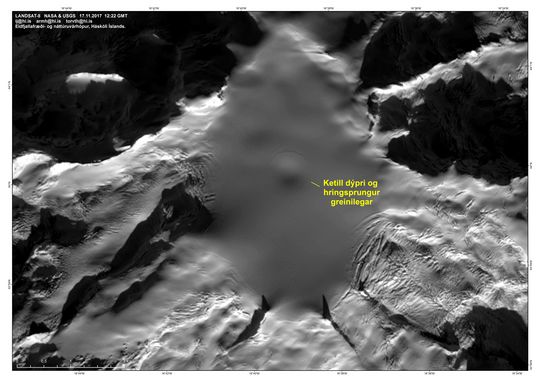
    Aerial surveys have added to the concern. Photographs show the formation of a growing ice cauldron—a bowl-shaped depression in the glacier—directly above the volcano. Such features typically form when heat from below melts ice from the underside, and they are widely considered a warning sign of escalating volcanic activity.

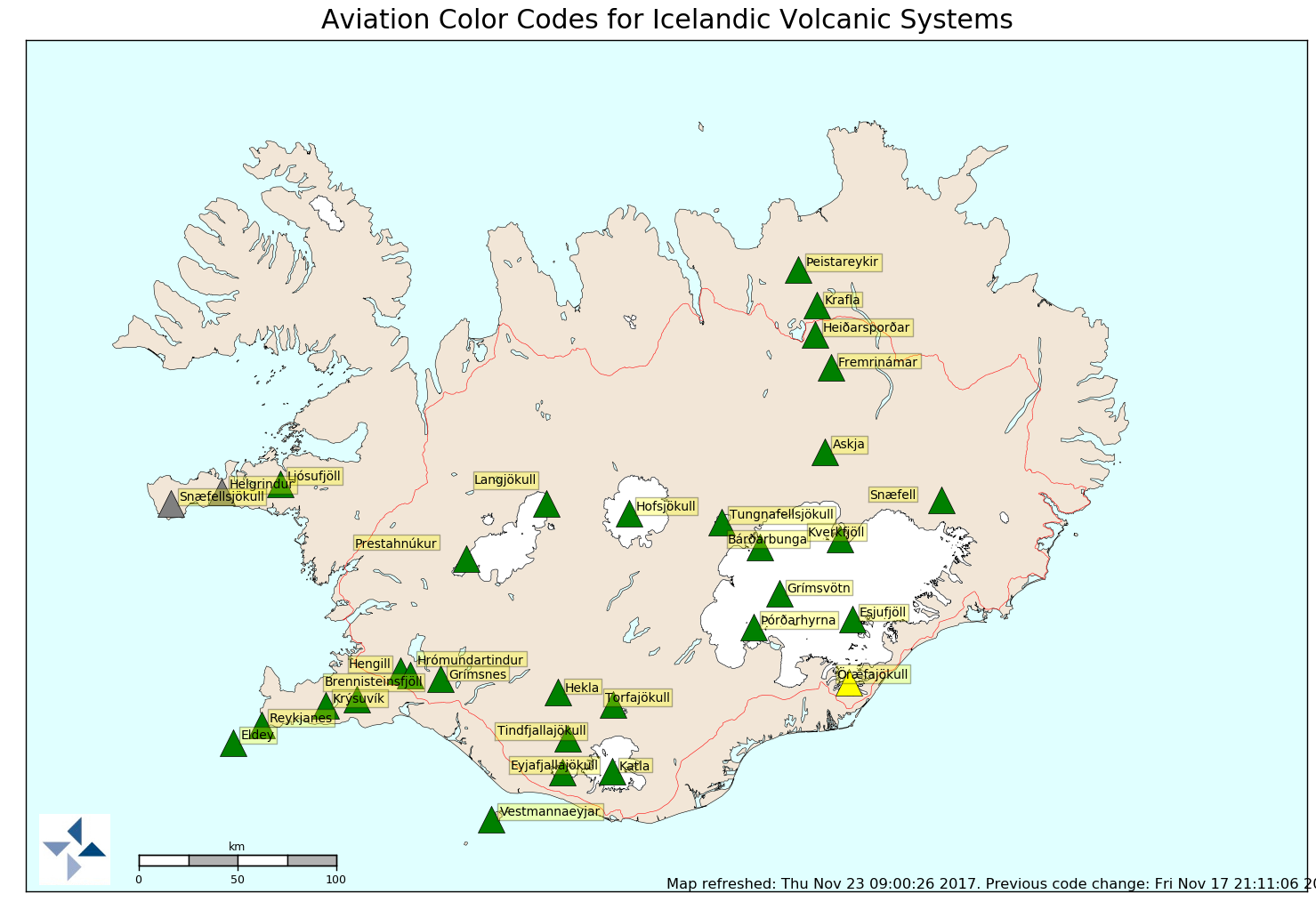
    The volcano’s location makes the situation particularly serious. Several communities lie close to the glacier, placing residents within reach of potential eruption hazards. In response, the Icelandic Meteorological Office raised the aviation and hazard alert level to Code Yellow on its five-tier scale.

    Volcanic alert levels:

    • Grey: Volcano appears quiet, but monitoring is insufficient; unrest cannot be ruled out.

    • Green: Activity has ceased; the volcano is in a normal, non-eruptive state.

    • Yellow: Elevated unrest; activity increasing and closely monitored.

    • Orange: Eruption underway with little or no ash emission.

    • Red: Major eruption in progress with significant ash release.

    Öræfajökull forms part of Vatnajökull, Iceland’s largest glacier. An eruption here would pose multiple hazards beyond lava and ash. Subglacial eruptions can trigger violent glacial outburst floods—sudden torrents of meltwater capable of devastating nearby infrastructure and landscapes.

    A few thousand people live in the immediate vicinity of the volcano, and any confirmed eruption would likely require rapid evacuation.

    Concerns are heightened by activity elsewhere in Iceland. Two additional volcanoes have also shown signs of unrest: Bárðarbunga—the country’s largest volcanic system, which last erupted in 2014—and Hekla, located roughly 150 kilometers southeast of Reykjavík.

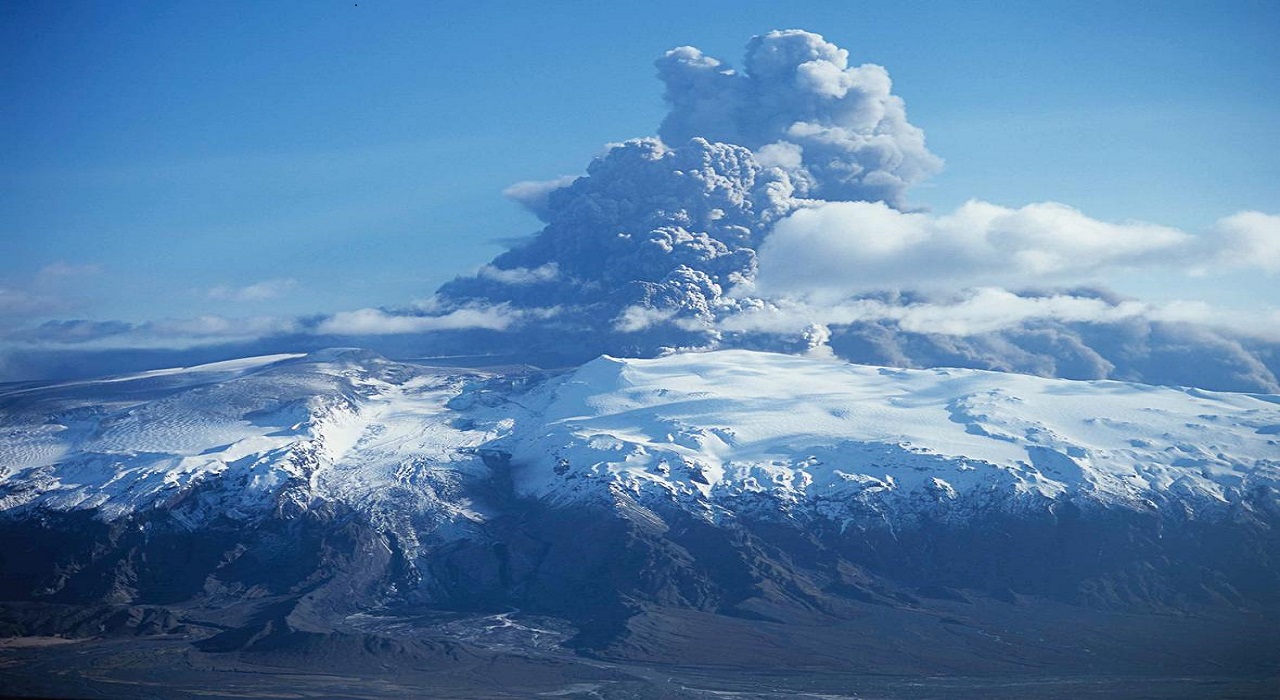
    Past eruptions underscore the broader risks. When Eyjafjallajökull erupted in 2010, vast ash clouds disrupted air travel across Europe and parts of North America for days, grounding flights and affecting millions of passengers.

    With multiple Icelandic volcanoes showing renewed signs of activity, scientists continue to monitor the situation closely, watching for any escalation that could signal an impending eruption.

    Reference:
    Icelandic Meteorological Office — A new ice cauldron in Öræfajökull volcano.

    Iceland Vulcano
    Share. Facebook Twitter Pinterest LinkedIn Tumblr Email Copy Link

    Related Posts

    The Looming Giant: Grindavik’s Potential Volcanic Eruption and its Global Implications

    November 13, 2023

    Small Warning Signs Can Reveal Volcano Eruption – before the Disaster

    October 3, 2019

    Earth’s Core Is Actually Solid According to New Research

    October 22, 2018

    Tree Ring Dating Confirms Historical Accounts of ‘Blood Aurora’ as Extreme Cosmic Radiation

    October 18, 2018

    Scientists Offer Clues to What Caused the Mass Extinction 250 Million Years Ago

    October 12, 2018

    Geoengineering, to Combat Global Warming, May Harm Crop Production

    August 15, 2018
    Recent Posts
    • Oil Shocks, Policy Mistakes, and the Risk of a Second Inflation Wave (Part II)
    • Oil Shocks, Policy Mistakes, and the Risk of a Second Inflation Wave (Part I)
    • Microsoft Stored a Movie on Glass — And It Could Last Centuries
    • AI, Automatic Stabilizers & Inflation
    • Largest Battles in History: Cannae — Rome’s Darkest Day
    • The Day the Alliance Died
    • Evaluating Heart Disease: How Cumulative Diet Choices Compound Your Risk
    • What Would Happen If China Attacked Taiwan?
    • Geopoliticisation as a Structural Tailwind for Commodity Prices
    • America’s Economic Remodel: Who’s Really Paying the Bill?
    © 2025 Illustrated Curiosity

    Type above and press Enter to search. Press Esc to cancel.