

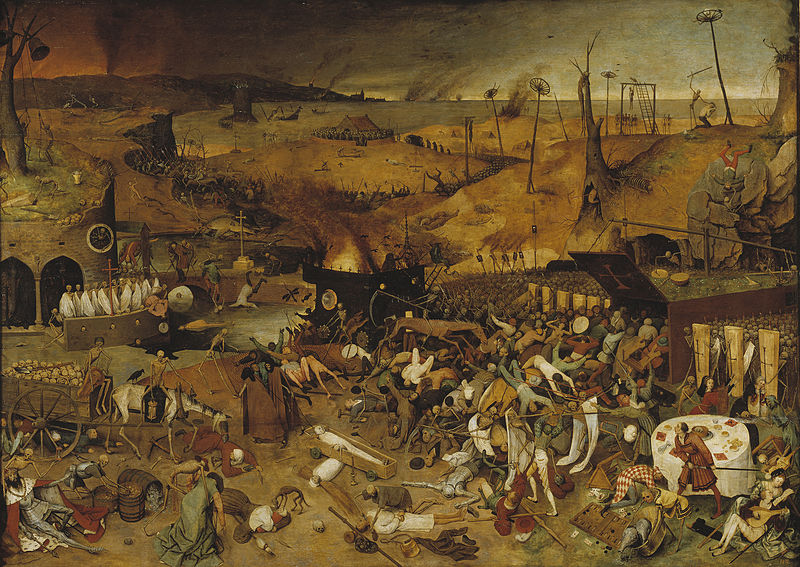
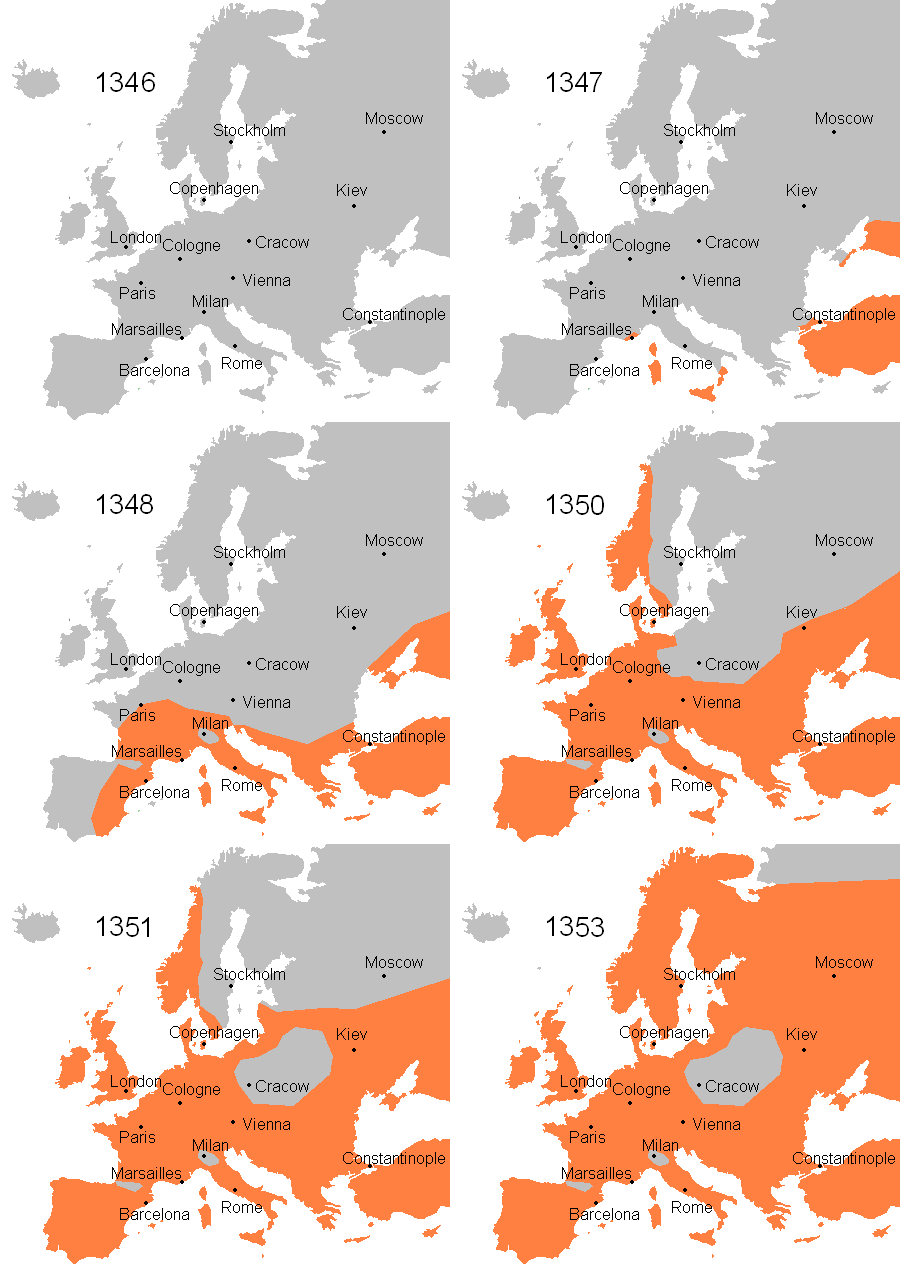
The so-called Black Death was a devastating pandemic that peaked in Europe between the years 1348 and 1350.
It killed between 75 million and 200 million people. An estimated 30 to 60 percent of Europe’s population. And reduced the total world population from 450 million from when the plague began to between 350 and 375 million in the 14th century.
The responsible pathogen bacteria named Yersinia pestis bacterium was probably carried by Oriental rat (or Desert Rat) fleas, spreading along the Silk Road from its origin in China or Central Asia – eventually reaching Europe.
“The seventh year after it began, it came to England and first began in the towns and ports joining on the seacoasts, in Dorsetshire, where, as in other countries, it made the country quite void of inhabitants so that there were almost none left alive.
… But at length, it came to Gloucester, yea even to Oxford and to London, and finally, it spread over all England and so wasted the people that scarce the tenth person of any sort was left alive.”
– Geoffrey the Baker (Chronicon Angliae)
The Production Function and the Margins
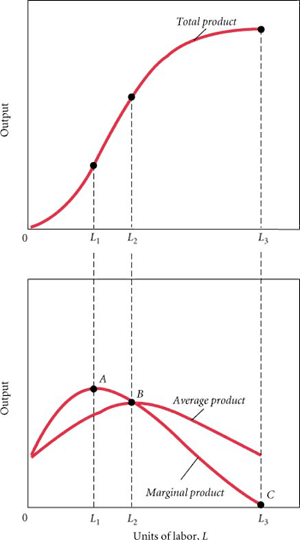
Economic models show that factor prices equal that of marginal products of the factors of production. With total production being a function of capital (K) and labor (L).

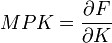
If we differentiate the above function, we get the marginal product of capital:
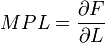
Then the marginal product of labor (the change in output that results from an added unit of labor):
This is one of the essentials in economics where the “law” of diminishing marginal return dictates that the marginal product of one input is assumed to fall as one considers higher and higher starting points of quantity for that particular input.
That is if a bakery has two ovens and two bakers, hiring more bakers will increase the output of bread to a certain level where output does not increase anymore. Only so many pieces of bread can be baked in two ovens. There is a need to increase capital (ovens). The curve reaches its maximum where the derivative equals zero.
Prices, Costs, and Wages
Since the marginal product depends on the quantities of the factors, a change in quantity changes the marginal product and thereby affects prices – and the distribution of income.
Economic theory links wages to output. In a market economy, a competitive firm has an incentive to alter the number of workers with adjustments that bring wages and productivity in line. Since if the wage level is below productivity, firms would find it profitable to hire more workers (upward pressure on wages).
Because of diminishing returns, there is downward pressure on productivity. And vice versa, if the wage level is above productivity, firms would find it profitable to reduce labor (putting downward pressure on wages and upward pressure on productivity).
Costs are equally linked to prices. Cost can be separated into fixed and variable costs. Fixed costs are costs that relate to a fixed input, capital, or rK where r is the rate of return and K is the quantity of capital.
Variable costs are the costs of the variable input, labor, or wL where w is the wage rate and L is the amount of labor employed.
Thus VC = wL (MC = ∆VC∕∆q – ∆VC = w∆L – ∆L∕∆q the change in quantity of labor to affect a one unit change in output = 1∕MPL – Therefore MC = w ∕ MPL.)
The Black Death and its economic impacts
The Black Death in Europe provides real evidence for the economic models described above. Via this grisly natural experiment, we see how to factor quantitive effect on factor prices.
Since the pandemic reduced Europe’s population by about one-third, and because the marginal product of labor would increase as the number of labor falls. This should also be evident in rising marginal product and thereby equilibrium real wages.
The real-world evidence for this confirms the theory. Real wages actually did rise and almost doubled. The reduction of labor also affected the return to the land – with fewer workers – an added unit of land would produce less additional output, and so, rents should fall. And also here we see confirmation of the theory, the rents fell by 50 percent or more.
The result made peasants better of and landowners less so. It also possibly led to technological developments where innovations to increase agricultural output were stimulated.
It is fascinating when economic models are proven accurate. Too bad however that the experiment, in this case, would require human deaths. But as Economics relates to human activity, history is often the economist’s only source of model validation.
____________________________
Before the Industrial Revolution: European Society and Economy, 1000-1700 by Carlo M. Cipolla
______________