Close Menu
Illustrated Curiosity
    Facebook X (Twitter) Instagram YouTube
    Illustrated Curiosity
    • Earth
    • Economics
    • Environment
      • Climate
      • Environmental Tech
      • Pollution
      • Wildlife
    • Health
      • Health Tech
      • Medicine
      • Nutrition
      • Exercise
    • History
      • Prehistory
      • Ancient History
      • Postclassical Era
      • Modern History
    • Humans
      • Human Brain
      • Psychology
    • Life
      • Animals & Plants
      • Genetics
      • Paleontology
      • Evolution
      • Genetic Engineering
    • Physics
    • Space
      • Astrobiology
      • Astronomy
      • Extrasolar Planets
      • Space Tech
      • Spaceflight
    • Technology
      • Artificial Intelligence
      • Energy
      • Engineering
      • Materials
      • Robotics
      • Vehicles
    Illustrated Curiosity
    Home » Carbohydrates Were Key for Evolution of Wolfs into Dogs
    Animals & Plants

    Carbohydrates Were Key for Evolution of Wolfs into Dogs

    January 24, 20133 Mins Read
    Share
    Facebook Twitter LinkedIn Pinterest Email
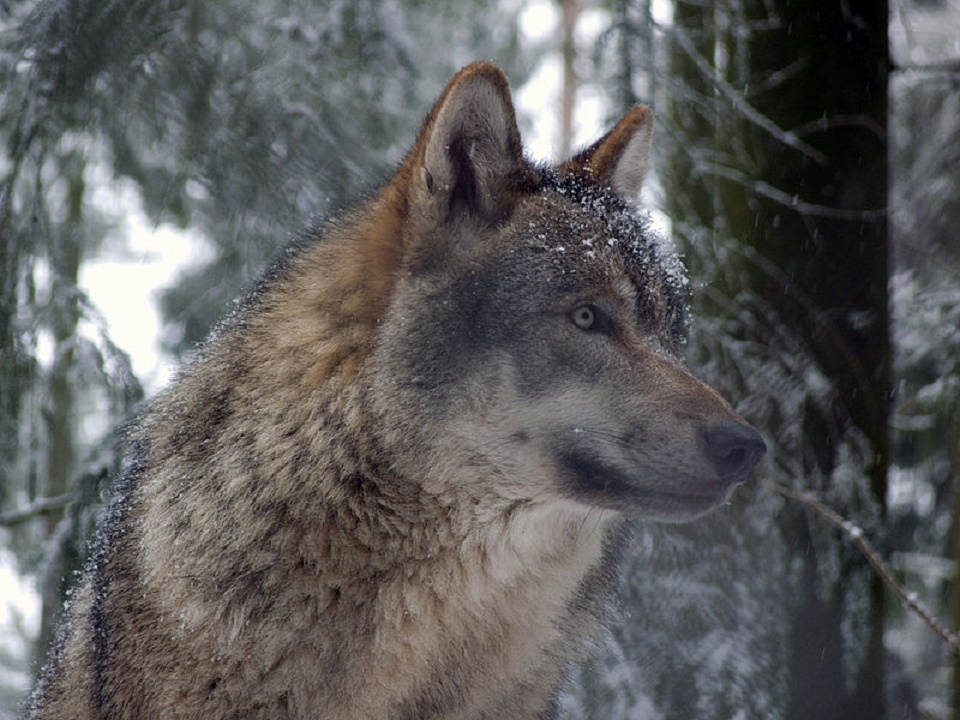
    Eurasian wolf (Canis lupus lupus). Image credit: Gunnar Ries Amphibol

    We all know that wolfs are the ancestors of all present-day dogs, but how did this evolution happen so fast and how did it initially begin?

    Science has established by using SNP (single-nucleotide polymorphism) comparison narrowed the likely ancestral subspecies of gray wolf to the Middle Eastern and South Asian wolf.

    Prehistoric Wolves

    But how the wolf evolved to present day dogs it is still a subject of debate. Fossils place the earliest dogs between around 33,000 years ago in Siberia to around 11,000 years ago in Israel. The above-mentioned DNA research of modern-day dogs places domestication of wolfs to at least 10,000 years ago, in Southeast Asia or the Middle East.

    But science does not yet confirm that all dogs, both big and small, more sociable and less aggressive, all are descendants of wolves. It could be that some other ancient ancestors were domesticated, perhaps foxes or some other prehistoric prairie dog.

    Human Selection or Natural Selection

    The actual process how humans domesticated the wolf is also still not clear, but it has been suggested that wolfs were selected for breeding with certain desirable aspects, such as that of obedience, sociability, and human corporation during hunting.

    But it is also suggested that the domestication of wolves was a process that occurred through natural selection without human direct involvement. Since when early humans created a new ecological niche of middens and landfills when we went from being hunter-gatherers to a stationary life of settlements and agriculture.

    Some wolves would begin to encroach on the settlements and form a special relationship with humans, feeding on their waste over many generations, with natural selection thereby favoring assertive wolves with tame characteristics.

    Carbs Separates Dogs from Wolves

    And now a new study published in Nature points in the direction of the latter evolutionary process as probable. Since the scientists noticed that carbohydrate digestion by dogs is a key element in their evolution. The study shows that dogs can break down starch into sugar to be used as energy much more easily than wolves. And these changes in genes made dogs more adapt in digesting the scraps that they scavenged from humans, thereby opening up an alternative food source and helping them thrive.

    Erik Axelsson, evolutionary geneticist at Uppsala University in Sweden was part of the study and said to Los Angeles Times, “That food was obviously the same kind of food that we were eating,” “It makes perfect sense that the most efficient scavengers were the wolves that could cope with this starch-rich diet,”.

    Kerstin Lindblad-Toh is also a geneticist at Uppsala University and led the research team. She mentions the apparent double evolution in Nature, where both humans evolved to more easily digest starches from around 10,000 years ago with the rise of farming, and also dogs at the same time; “This is a striking sign of parallel evolution,” she says. “It really shows how dogs and humans have evolved together to be able to eat starch.”

    This study adds to the evidence that dogs should not eat the same food as wolves, after all, dog-food does contain about 20% to 30% protein and 40% to 50% carbohydrates.

    _______________
    Dog’s dinner was key to domestication
    ______________________________

    Dogs Evolution Wolfs
    Share. Facebook Twitter Pinterest LinkedIn Tumblr Email Copy Link

    Related Posts

    Kindness To Dogs During Training Matters

    December 28, 2020

    Solar Storms May Throw off Whale Navigation and Cause Strandings

    May 5, 2020

    Why Bats Are Breeding Grounds for Deadly Viruses Like Ebola and SARS

    March 5, 2020

    Cats can express emotions with subtle facial expressions

    February 12, 2020

    Not Just Dogs, Study Reveals Cats Too Can Form Intense Bonds with Humans

    September 25, 2019

    Some Deep-Sea Fish Can See Color in Near Total Darkness

    May 13, 2019
    Recent Posts
    • America’s Quiet Shift Into Fiscal Dominance: Why Inflation May Be Preparing for a Second Act
    • How the End of Bretton Woods Reshaped Our Economies — and Our Politics
    • Can the U.S. Really Handle 250% Debt-to-GDP? Why Jackson Hole’s Daring Paper Is Wrong
    • Japan’s Fiscal Trap: What Happens If Austerity Is No Longer an Option?
    • The Rise of Range Extended Electric Vehicles (REEVs): A New Era of Hybrid Mobility
    • The Great Capital Rotation: A Shift from U.S. Treasuries to Gold and Real Assets
    • The Hidden Risks of Short-Term Debt: A Balancing Act in U.S. Fiscal Policy
    • The Looming U.S. Debt Spiral: Understanding the Risks
    • The Looming Recession: Seven Economic Indicators Flashing Red for 2025
    • Europa Clipper: NASA’s Mission to Unlock the Secrets of Jupiter’s Icy Moon
    © 2025 Illustrated Curiosity

    Type above and press Enter to search. Press Esc to cancel.

    This website uses cookies to improve your experience. We'll assume you're ok with this, but you can opt-out if you wish.Accept Reject Read More
    Privacy & Cookies Policy

    Privacy Overview

    This website uses cookies to improve your experience while you navigate through the website. Out of these, the cookies that are categorized as necessary are stored on your browser as they are essential for the working of basic functionalities of the website. We also use third-party cookies that help us analyze and understand how you use this website. These cookies will be stored in your browser only with your consent. You also have the option to opt-out of these cookies. But opting out of some of these cookies may affect your browsing experience.
    Necessary
    Always Enabled
    Necessary cookies are absolutely essential for the website to function properly. This category only includes cookies that ensures basic functionalities and security features of the website. These cookies do not store any personal information.
    Non-necessary
    Any cookies that may not be particularly necessary for the website to function and is used specifically to collect user personal data via analytics, ads, other embedded contents are termed as non-necessary cookies. It is mandatory to procure user consent prior to running these cookies on your website.
    SAVE & ACCEPT