Close Menu
Illustrated Curiosity
    Facebook X (Twitter) Instagram YouTube
    Illustrated Curiosity
    • Earth
    • Economics
    • Environment
      • Climate
      • Environmental Tech
      • Pollution
      • Wildlife
    • Health
      • Health Tech
      • Medicine
      • Nutrition
      • Exercise
    • History
      • Prehistory
      • Ancient History
      • Postclassical Era
      • Modern History
    • Humans
      • Human Brain
      • Psychology
    • Life
      • Animals & Plants
      • Genetics
      • Paleontology
      • Evolution
      • Genetic Engineering
    • Physics
    • Space
      • Astrobiology
      • Astronomy
      • Extrasolar Planets
      • Space Tech
      • Spaceflight
    • Technology
      • Artificial Intelligence
      • Energy
      • Engineering
      • Materials
      • Robotics
      • Vehicles
    Illustrated Curiosity
    Home » These Tiny Fish May Be as Self-Aware as Chimpanzees and Dolphins
    Animals & Plants

    These Tiny Fish May Be as Self-Aware as Chimpanzees and Dolphins

    February 18, 2019No Comments3 Mins Read
    Share
    Facebook Twitter LinkedIn Pinterest Email
    © A. Jordan
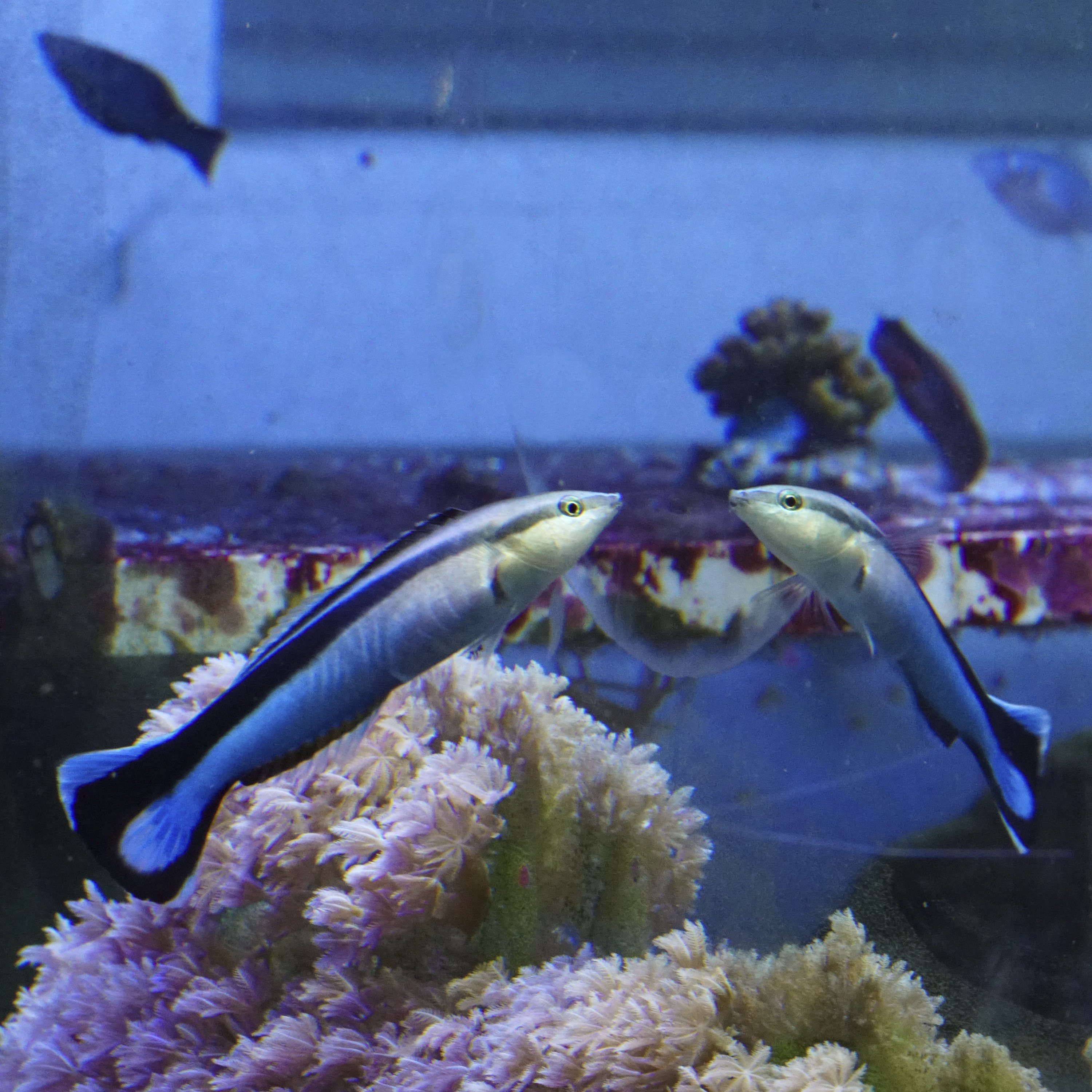
    A cleaner wrasse interacts with its reflection in a mirror placed on the outside of the aquarium glass. Note that the mirror itself cannot be seen in this photo because the aquarium glass itself becomes reflective at the viewing angle of the camera. This is not the case for the fish itself, which sees the aquarium glass as transparent because of its direct viewing angle.

    A controversial study shows that the fish ‘Bluestreak cleaner wrasse’ recognize themselves in mirrors — a key determiner of intelligence.

    So, yet another animal passes the so-called ‘mirror test’ but somewhat surprisingly, this time it’s a fish. The mirror test is a classic experiment used to determine animal self-awareness that only a handful of species have passed.

    The is widely considered the gold standard of intelligence and as far as we can tell, only a few of the most intelligent non-human animals pass this mirror self-recognition test: The great apes (gorillas, chimpanzees, bonobos, and orangutans), bottlenose dolphins, Asian elephants, and a handful of others.

    In a paper published in the journal PLOS Biology, an international team of researchers led by Masanori Kohda, Ph.D., a professor specializing in fish behavior at Osaka City University, shows how the cleaner wrasse (Labroides dimidiatus) shows signs of self-recognition while looking in a mirror.

    In doing so, the fish, known for its ability to live off of the parasites it cleans off of other fish, appears to pass the test for “mirror self-recognition” which is a long considered a hallmark of self-awareness in animals.

    The team of researchers installed mirrors in proximity to fish tanks. At first, seven out of 10 of the fish in the study attacked their own reflection, meaning that they probably viewed their reflections as rivals.

    But then over the course of a week, the attacks happened less often and eventually stopped almost entirely and the researchers noticed another behavior when ‘The wrasses’ began swimming upside-down, which has never been observed before. The fish seemed to be inspecting their reflections.

    Then the researchers put a mark on the fishes’ throats that they could only see in the mirror. Now, rather than biting at the reflection, as a cleaner wrasse would when cleaning another fish (a move that would mean the fish failed the test), the fish appeared to try to scrape the mark off themselves by diving to the bottom of the tank and scraping their own throats on the aquarium pebbles. This behavior was only seen when the mirror was installed and not when the researchers removed the mirror.
    © S. Gingins
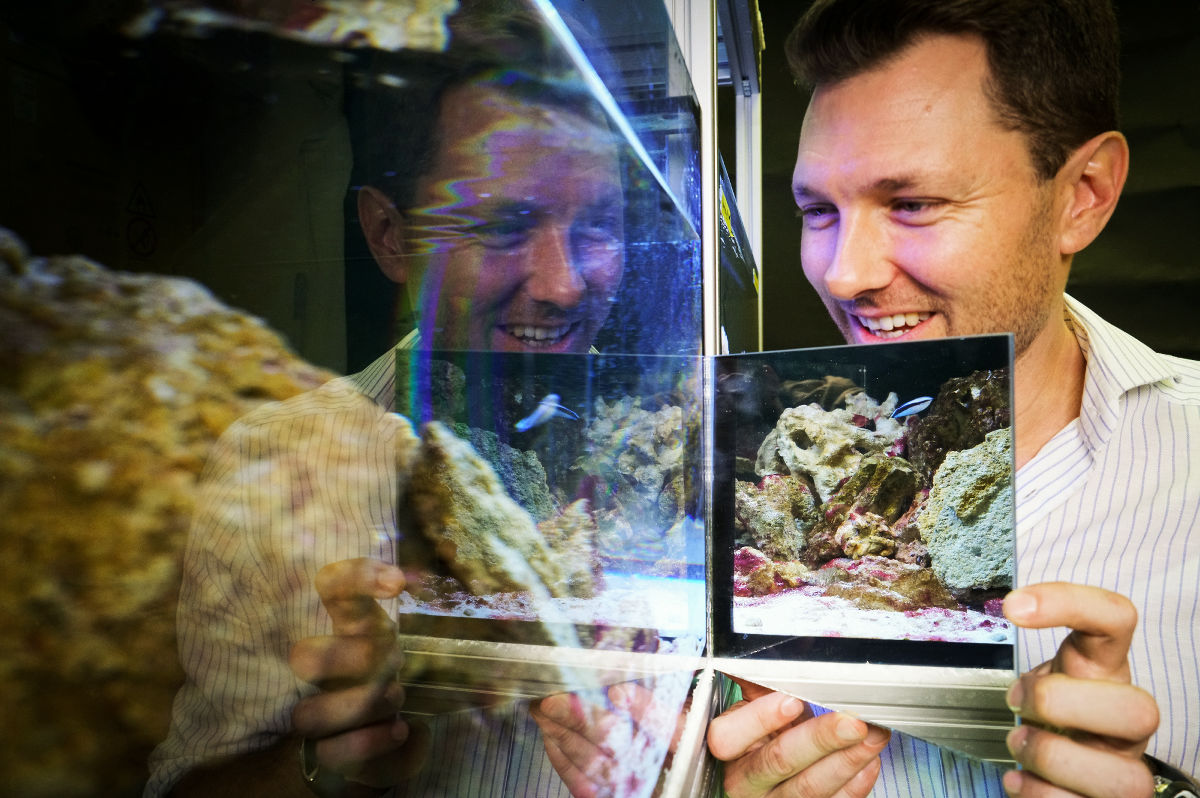
    Alex Jordan, a professor of animal behaviour at the University of Konstanz in Germany, holds a mirror up to some cleaner wrasse. (Submitted by Alex Jordan)

    The results have sparked controversy among the scientific community, but the study athoers are quite sure that what they have discovered is indeed an expression of self-awareness.

    “The behaviors we observe leave little doubt that this fish behaviorally fulfills all criteria of the mirror test as originally laid out,”

    “What is less clear is whether these behaviors should be considered as evidence that fish are self-aware — even though in the past these same behaviors have been interpreted as self-awareness in so many other animals.”

    – Dr. Alex Jordan, senior author on the study, said in a press release.

    Reference:

    Masanori Kohda, View ORCID ProfileHatta Takashi, Tmohiro Takeyama, Satoshi Awata, Hirokazu Tanaka, Jun-ya Asai, Alex Jordan Cleaner wrasse pass the mark test. What are the implications for consciousness and self-awareness testing in animals? doi: https://doi.org/10.1101/397067

    Share. Facebook Twitter Pinterest LinkedIn Tumblr Email Copy Link

    Related Posts

    Kindness To Dogs During Training Matters

    December 28, 2020

    Solar Storms May Throw off Whale Navigation and Cause Strandings

    May 5, 2020

    Why Bats Are Breeding Grounds for Deadly Viruses Like Ebola and SARS

    March 5, 2020

    Cats can express emotions with subtle facial expressions

    February 12, 2020

    Not Just Dogs, Study Reveals Cats Too Can Form Intense Bonds with Humans

    September 25, 2019

    Some Deep-Sea Fish Can See Color in Near Total Darkness

    May 13, 2019
    Recent Posts
    • How the End of Bretton Woods Reshaped Our Economies — and Our Politics
    • Can the U.S. Really Handle 250% Debt-to-GDP? Why Jackson Hole’s Daring Paper Is Wrong
    • Japan’s Fiscal Trap: What Happens If Austerity Is No Longer an Option?
    • The Rise of Range Extended Electric Vehicles (REEVs): A New Era of Hybrid Mobility
    • The Great Capital Rotation: A Shift from U.S. Treasuries to Gold and Real Assets
    • The Hidden Risks of Short-Term Debt: A Balancing Act in U.S. Fiscal Policy
    • The Looming U.S. Debt Spiral: Understanding the Risks
    • The Looming Recession: Seven Economic Indicators Flashing Red for 2025
    • Europa Clipper: NASA’s Mission to Unlock the Secrets of Jupiter’s Icy Moon
    • Could Hedge Funds Cause Chaos in the U.S. Treasury Market? And What About Inflation?
    © 2025 Illustrated Curiosity

    Type above and press Enter to search. Press Esc to cancel.

    This website uses cookies to improve your experience. We'll assume you're ok with this, but you can opt-out if you wish.Accept Reject Read More
    Privacy & Cookies Policy

    Privacy Overview

    This website uses cookies to improve your experience while you navigate through the website. Out of these, the cookies that are categorized as necessary are stored on your browser as they are essential for the working of basic functionalities of the website. We also use third-party cookies that help us analyze and understand how you use this website. These cookies will be stored in your browser only with your consent. You also have the option to opt-out of these cookies. But opting out of some of these cookies may affect your browsing experience.
    Necessary
    Always Enabled
    Necessary cookies are absolutely essential for the website to function properly. This category only includes cookies that ensures basic functionalities and security features of the website. These cookies do not store any personal information.
    Non-necessary
    Any cookies that may not be particularly necessary for the website to function and is used specifically to collect user personal data via analytics, ads, other embedded contents are termed as non-necessary cookies. It is mandatory to procure user consent prior to running these cookies on your website.
    SAVE & ACCEPT