Close Menu
Illustrated Curiosity
    Facebook X (Twitter) Instagram YouTube
    Illustrated Curiosity
    • Earth
    • Economics
    • Environment
      • Climate
      • Environmental Tech
      • Pollution
      • Wildlife
    • Health
      • Health Tech
      • Medicine
      • Nutrition
      • Exercise
    • History
      • Prehistory
      • Ancient History
      • Postclassical Era
      • Modern History
    • Humans
      • Human Brain
      • Psychology
    • Life
      • Animals & Plants
      • Genetics
      • Paleontology
      • Evolution
      • Genetic Engineering
    • Physics
    • Space
      • Astrobiology
      • Astronomy
      • Extrasolar Planets
      • Space Tech
      • Spaceflight
    • Technology
      • Artificial Intelligence
      • Energy
      • Engineering
      • Materials
      • Robotics
      • Vehicles
    Illustrated Curiosity
    Home » Global Atmospheric CO2 Levels Hit Record High
    Climate

    Global Atmospheric CO2 Levels Hit Record High

    October 30, 2017No Comments2 Mins Read
    Share
    Facebook Twitter LinkedIn Pinterest Email

    The concentration of carbon dioxide in the atmosphere increased at record speed in 2016, according to the Meteorological World Organization (WMO).
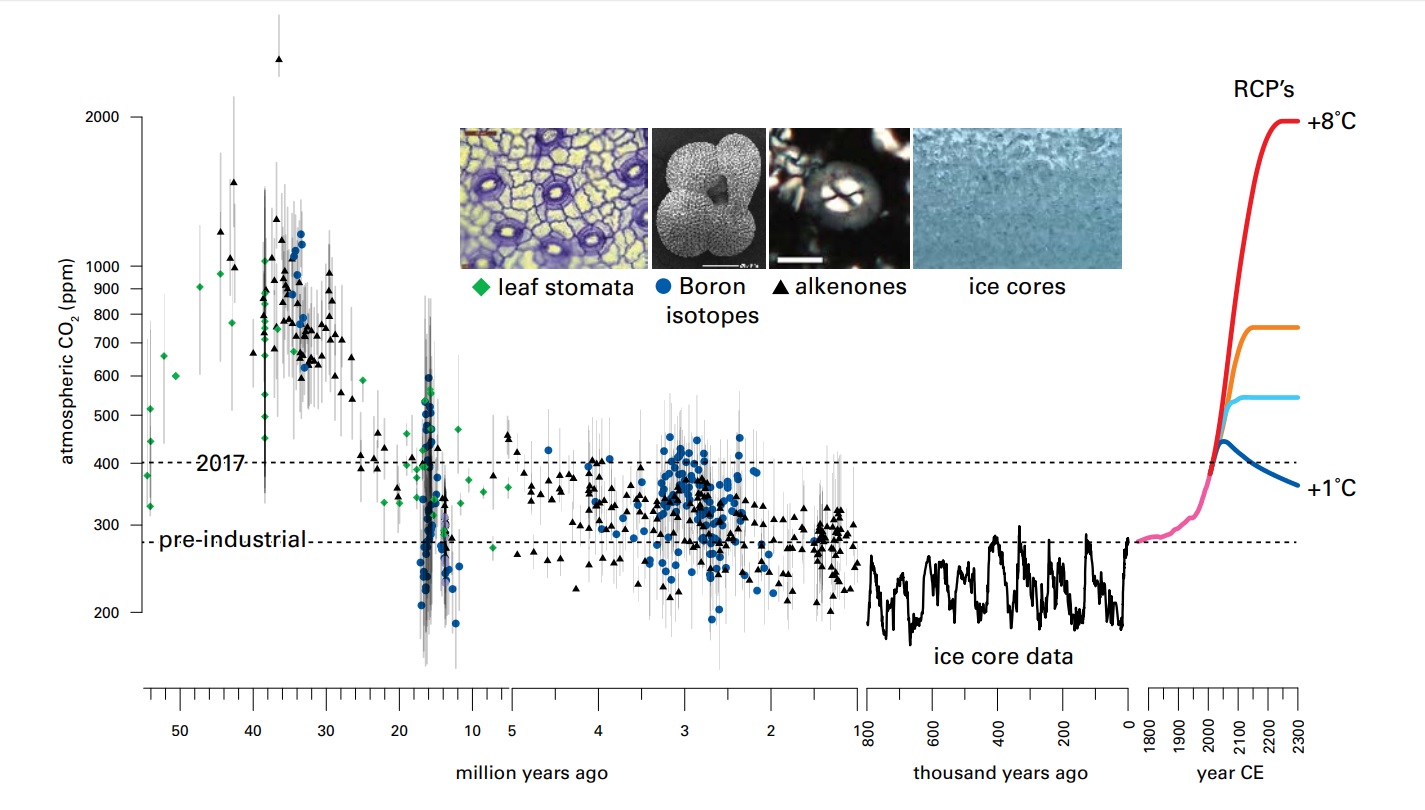
    The last time carbon dioxide levels were this high on Earth was during the Pliocene era 3-5 million years ago, according to measurements made of air bubbles in Antarctica’s ancient ice. Source: Meteorological World Organization (WMO)

    According to the United Nations organization, present carbon dioxide levels have not been this high for millions of years and may result in sea levels rising 20 meters and global mean temperature rising three degrees.

    A combination of human activities and the El Niño weather phenomenon drove CO2 levels 45 percent above pre-industrial levels and further outside the range of 180-280 ppm seen in recent cycles of ice ages and warmer periods. El Niño intensified droughts and weakened the ability of vegetation to absorb carbon dioxide.

    “Globally averaged concentrations of CO2 reached 403.3 parts per million (ppm) in 2016, up from 400.00 ppm in 2015 because of a combination of human activities and a strong El Niño event,”

    – The Report says.

    The WMO data is based on measurements taken in 51 countries. With research stations dotted around the globe that measure concentrations of greenhouse gases that include carbon dioxide, methane, and nitrous oxide.

    Carbon dioxide levels in the atmosphere reached 403.3 ppm (million parts) in 2016, an increase from 400 ppm the year before. It’s a 50 percent faster increase than the average pace over the past decade.

    At that time, the temperature of the earth was 2-3 degrees warmer than today, which resulted in melting ice, warmer water that expands, with sea levels 10-20 meters higher than today, according to the report.

    “Without rapid cuts in CO2 and other greenhouse gas emissions, we will be heading for dangerous temperature increases by the end of this century, well above the target set by the Paris climate change agreement,”

    – World Meteorological Organization Secretary-General Petteri Taalas in a statement.

    The World Meteorological Organisation predict that 2017 will again break records for concentrations of carbon dioxide and methane in the atmosphere, but the pace of growth will not be as fast because there is no El Niño effect this year.

    Reference:
    Carbon Dioxide CO2
    Share. Facebook Twitter Pinterest LinkedIn Tumblr Email Copy Link

    Related Posts

    COVID-19 Recovery Funds Dwarf Clean Energy Investment Needs

    October 26, 2020

    Mont Blanc Glacier in Danger of Collapse, Experts Warn

    September 26, 2019

    The Absorption of Carbon Dioxide by the Sea Is Increasing with Emissions

    March 19, 2019

    Antarctic Ice Is Melting Six Times Faster Than in 1979

    February 12, 2019

    U.N. Says 2018 Will Be Earth’s 4th-Warmest Year on Record, Predicts a 5- to 9-Degree Temperature Rise This Century

    December 12, 2018

    Temperatures to Rise 1.5 Degrees Celsius by 2030-2052 without Rapid Steps According to U.N. Report

    October 19, 2018
    Recent Posts
    • How the End of Bretton Woods Reshaped Our Economies — and Our Politics
    • Can the U.S. Really Handle 250% Debt-to-GDP? Why Jackson Hole’s Daring Paper Is Wrong
    • Japan’s Fiscal Trap: What Happens If Austerity Is No Longer an Option?
    • The Rise of Range Extended Electric Vehicles (REEVs): A New Era of Hybrid Mobility
    • The Great Capital Rotation: A Shift from U.S. Treasuries to Gold and Real Assets
    • The Hidden Risks of Short-Term Debt: A Balancing Act in U.S. Fiscal Policy
    • The Looming U.S. Debt Spiral: Understanding the Risks
    • The Looming Recession: Seven Economic Indicators Flashing Red for 2025
    • Europa Clipper: NASA’s Mission to Unlock the Secrets of Jupiter’s Icy Moon
    • Could Hedge Funds Cause Chaos in the U.S. Treasury Market? And What About Inflation?
    © 2025 Illustrated Curiosity

    Type above and press Enter to search. Press Esc to cancel.

    This website uses cookies to improve your experience. We'll assume you're ok with this, but you can opt-out if you wish.Accept Reject Read More
    Privacy & Cookies Policy

    Privacy Overview

    This website uses cookies to improve your experience while you navigate through the website. Out of these, the cookies that are categorized as necessary are stored on your browser as they are essential for the working of basic functionalities of the website. We also use third-party cookies that help us analyze and understand how you use this website. These cookies will be stored in your browser only with your consent. You also have the option to opt-out of these cookies. But opting out of some of these cookies may affect your browsing experience.
    Necessary
    Always Enabled
    Necessary cookies are absolutely essential for the website to function properly. This category only includes cookies that ensures basic functionalities and security features of the website. These cookies do not store any personal information.
    Non-necessary
    Any cookies that may not be particularly necessary for the website to function and is used specifically to collect user personal data via analytics, ads, other embedded contents are termed as non-necessary cookies. It is mandatory to procure user consent prior to running these cookies on your website.
    SAVE & ACCEPT