
Global carbon dioxide emissions have stopped increasing and instead leveled off during the last three years. This according to new data presented at the climate conference in Morocco.

Emissions have leveled off
This was not unexpected but is happening much earlier than many had dared hoped for. Between 2000 and 2009, global carbon dioxide emissions increased at a record rate – 3.4 percent per year.
In recent years, emissions have stagnated despite continued global economic growth. New figures from the Global Carbon Project confirms that emissions have plateaued over the last three years at about 36 billion tons per year.
Emissions are expected to increase by only 0.2 percent during 2016 despite an economic growth of over 3 percent. But it is far too early to definitely say that emissions have reached a peak, the researchers say.
“It’s far too early to say we’ve reached a peak in emissions,” co-author Glen Peters, of the Center for International Climate and Environmental Research in Oslo, told Reuters, referring to the findings issued at U.N. talks on climate change in Marrakesh, Morocco.
Decreasing emissions in China
The rapid increase of previous years was mainly due to a considerable growth of coal power in China. But this has now changed and the development in China has surprised all observers. Statistics from China is uncertain, but it shows that Chinese emissions from coal have decreased considerably during the last two years (-0.7% and -0.5%).
“It is hard to say whether the Chinese slowdown is due to a successful and smooth restructuring of the Chinese economy or a sign of economic instability,” said Glen Peters.
The country’s official goal is to turn emissions around by 2030. But that the emissions are already falling were unexpected. The reason for this is not entirely clear, the researchers say, but besides the reduction in coal, they point in the direction of reduced economic activity, measures against air pollution and huge investments in renewable energy.
Whatever the reasons are, it is certainly good news for the climate. “So far the slowdown has been driven by China,” Peters said, adding that Beijing’s climate change policies would also be a force in future since it accounts for almost 30 percent of global emissions.
The hope is now that the world’s biggest emitter may submit to more ambitious emissions reductions than they have already done in accordance with the Paris agreement.
The EU and US are slowly adapting
Besides China, there is also a trend of declining emissions in the US and the EU. European emissions increased but at a slower rate during last year (+ 1.4%). Emissions in the United States has dropped since 2007, and coal power share of emissions decreased especially during 2015 and this year, due to poor profitability.
“With all eyes focusing on the fallout of the US election result, it is worth noting that the wind, solar, and gas continue to displace coal in US electricity production,” said Dr. Peters. Adding that “Trump’s plans to revive the struggling coal industry might not be able to counteract the existing market forces leading to coal’s decline,”.
India and Africa: A source of concern
India is a major source of concern for the climate. Where emissions increase rapidly even though last year showed a slight slowdown: 5 percent against an average of 6 percent in the last decade. The country has a target to double electricity production from coal by 2020. D
Developments in India and other developing countries in Africa, for example, where emissions today are low, may counteract the decline in emissions we now see in the EU and the US. But what happens in China is most important.
Creative destruction
It is worth noting that ever since the industrial revolution our global carbon emissions have been tightly bound to economic growth. To tackle climate change those bonds must be broken.
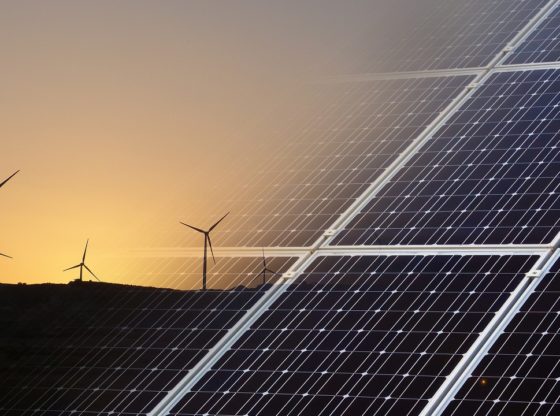
The idea is for new energy markets to do just that, breaking the bond by spurring economic growth in clean alternative energy sources, as a textbook example of Schumpeter’s gale and ‘Creative Destruction’ of economic innovation.
The data we know see might be the first signs that the bonds are at least starting to loosen.
“Braking is not enough”
It is worth noting that it is not primarily the climate negotiations that have slowed the emissions down. On the contrary, the voluntary climate plans that form the basis of the Paris agreement from last year would instead imply increasing emissions with one percent a year globally.
Scientists agree however that emissions have to turn around and fall very quickly if the world is to achieve the goal of keeping warming below two degrees.
To keep global warming below two degrees, emissions must be reduced by about one percent a year and to keep within the even tougher target of 1.5 degrees in the Paris agreement, this would require emissions to go down to zero within about ten years (between 3 and 13 years in different scenarios).
Although emissions appear to be curbed, for now, the concentration of carbon dioxide in the atmosphere is record high and continues to accumulate. This year is the first year in which the concentration is steadily kept above 400 parts per million.
Robert Watson, former head of the IPCC, says in a release, “if governments are serious about trying to achieve even the 2-degree goal, they will have to double and re-double their efforts—now.”
Even so, the new data is certainly good news. If emissions have reached a peak, it is earlier than what all observers thought a few years ago.
Reference: