Close Menu
Illustrated Curiosity
    Facebook X (Twitter) Instagram YouTube
    Illustrated Curiosity
    • Earth
    • Economics
    • Environment
      • Climate
      • Environmental Tech
      • Pollution
      • Wildlife
    • Health
      • Health Tech
      • Medicine
      • Nutrition
      • Exercise
    • History
      • Prehistory
      • Ancient History
      • Postclassical Era
      • Modern History
    • Humans
      • Human Brain
      • Psychology
    • Life
      • Animals & Plants
      • Genetics
      • Paleontology
      • Evolution
      • Genetic Engineering
    • Physics
    • Space
      • Astrobiology
      • Astronomy
      • Extrasolar Planets
      • Space Tech
      • Spaceflight
    • Technology
      • Artificial Intelligence
      • Energy
      • Engineering
      • Materials
      • Robotics
      • Vehicles
    Illustrated Curiosity
    Home » Rapid decline of Arctic sea ice caused by climate change and natural variability
    Climate

    Rapid decline of Arctic sea ice caused by climate change and natural variability

    March 14, 2017No Comments3 Mins Read
    Share
    Facebook Twitter LinkedIn Pinterest Email

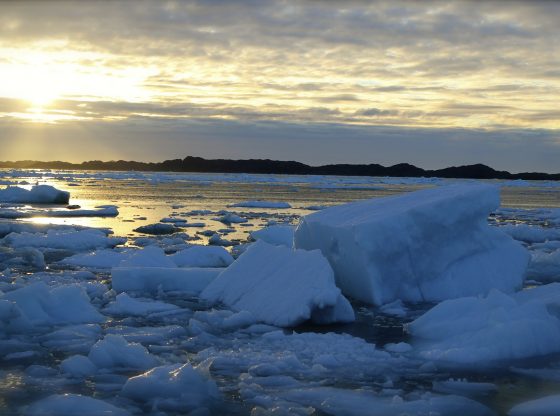
    The ice is melting in the Arctic – and natural variation could account for half of the decrease.
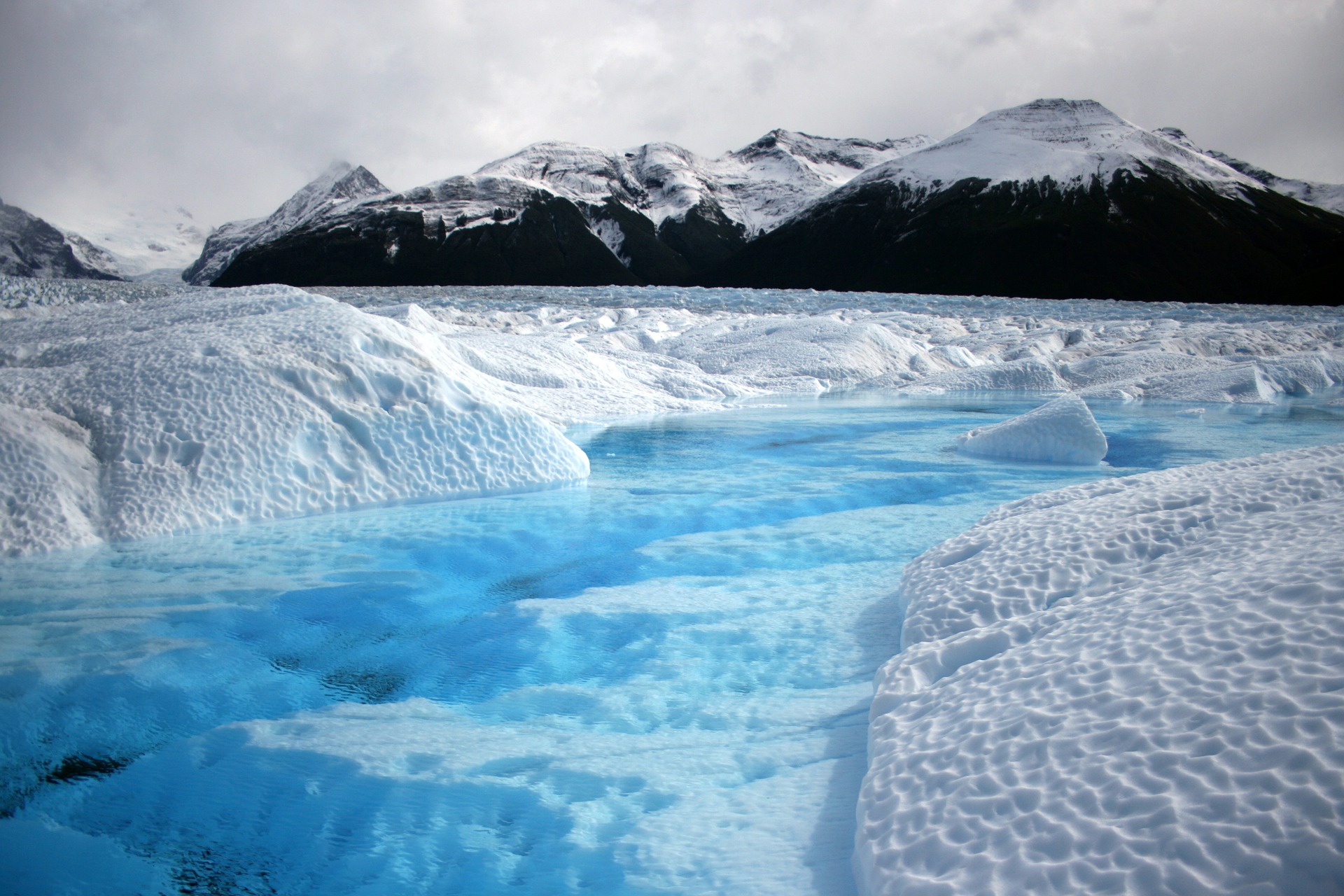
    CC0 Public Domain

    Natural variability of the climate accounts for almost half of the reduction of ice seen in the Arctic over the past 30 years, according to a new study published in Nature Climate Change.
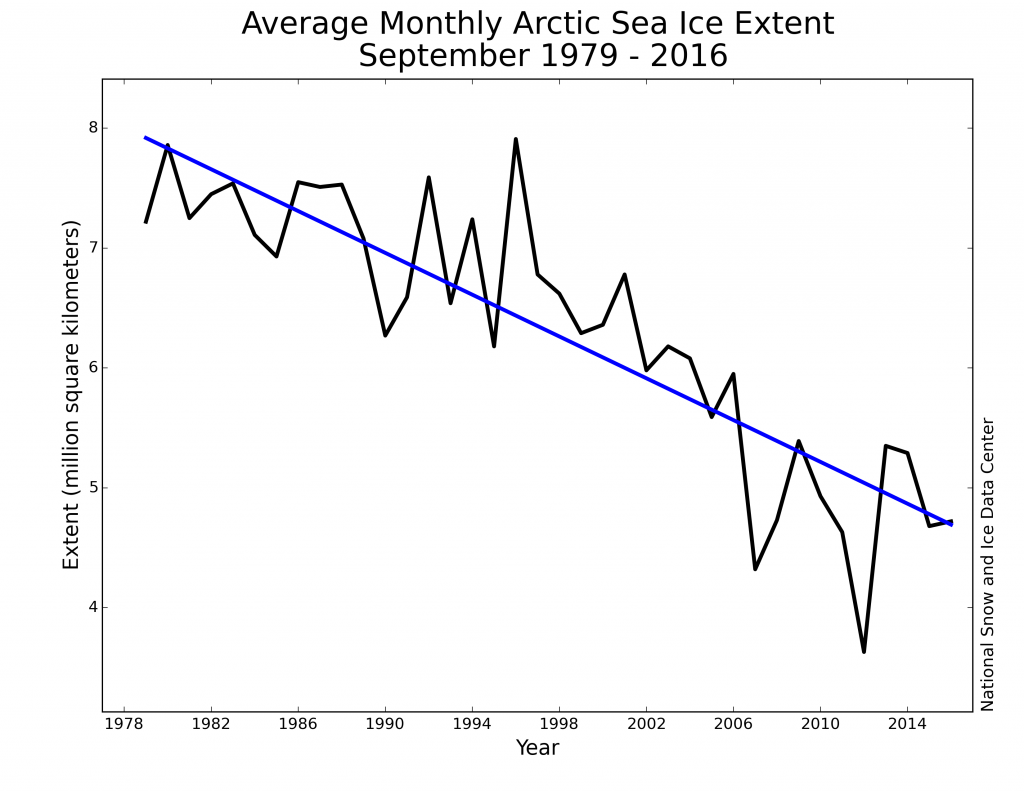
    Average Arctic sea ice extent for the month of September between 1979 and 2016. Black line shows annual data, and blue line shows the long-term trend. Credit: NSIDC

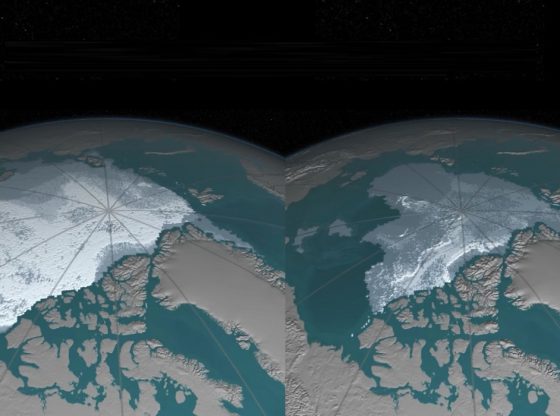
    The ice cover in the Arctic has decreased rapidly during the past three decades. The temperature in the arctic is increasing twice as fast compared to the global average.

    Changes in atmospheric circulation

    It is known that this effect is due to both human impacts, emissions of greenhouse gasses, but it is also due to natural variability of the winds circulating the atmosphere.

    The changes in atmospheric circulation in the Arctic is thought to originate in the tropical Pacific and leads to an increase of the amount of water vapor in the lower atmosphere. Together with a shift to fewer clouds, this combination increases the amount of solar radiation reaching the ice in the Arctic.

    The question is how much of the decline in ice cover is caused by natural variations in climate and how much is caused by greenhouse gas emissions.

    A team of American scientists has for the first time been able to show how large a proportion the change is due to natural variation.

    Here, we present evidence that trends in summertime atmospheric circulation may have contributed as much as 60% to the September sea-ice extent decline since 1979. A tendency towards a stronger anticyclonic circulation over Greenland and the Arctic Ocean with a barotropic structure in the troposphere increased the downwelling longwave radiation above the ice by warming and moistening the lower troposphere.

    The researchers have investigated the temperature, humidity and long-wave radiation affecting the ice. They conclude that natural variations account for between 30 and 50 percent of the ice cover decrease since 1979.

    Model experiments, with reanalysis data constraining atmospheric circulation, replicate the observed thermodynamic response and indicate that the near-surface changes are dominated by circulation changes rather than feedbacks from the changing sea-ice cover.
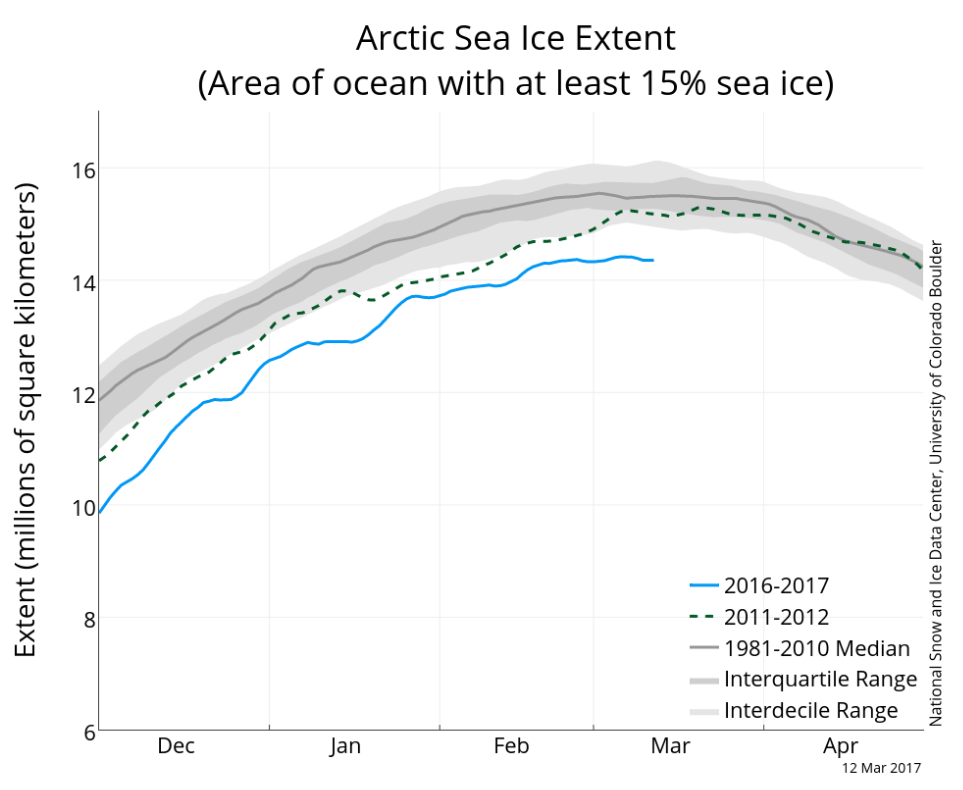
    As of 12 Mar, sea ice extent remains at a record low, following the lowest February extent in the 38-year satellite record. Source: NSIDC

    Controversial science

    Not all scientists are in agreement with the study’s authors conclusions, however. Pointing out that all factors in the climate system are linked. It is, therefore, difficult to know if the increase in atmospheric greenhouse gasses is also linked to the observed so-called natural variations.

    The study authors state, however, that their findings do not absolve human activity as a driver of Arctic sea ice loss. An article that accompanied the paper, by Dr Neil Swart from Environment and Climate Change Canada, adds that; “The results of Ding et al. do not call into question whether human-induced warming has led to Arctic sea-ice decline — a wide range of evidence shows that it has.”

    The research study was conducted by researchers from the University of Washington, the University of California Santa Barbara in collaboration with U.S. federal scientists and was published yesterday in Nature Climate Change.

    Reference:

    Ding Q. et al. “Influence of high-latitude atmospheric circulation changes on summertime Arctic sea ice” Nature Climate Change“, 2017. DOI: 10.1038 / nclimate3241
    Arctic Global Warming Ice
    Share. Facebook Twitter Pinterest LinkedIn Tumblr Email Copy Link

    Related Posts

    COVID-19 Recovery Funds Dwarf Clean Energy Investment Needs

    October 26, 2020

    Mont Blanc Glacier in Danger of Collapse, Experts Warn

    September 26, 2019

    The Absorption of Carbon Dioxide by the Sea Is Increasing with Emissions

    March 19, 2019

    Antarctic Ice Is Melting Six Times Faster Than in 1979

    February 12, 2019

    U.N. Says 2018 Will Be Earth’s 4th-Warmest Year on Record, Predicts a 5- to 9-Degree Temperature Rise This Century

    December 12, 2018

    Temperatures to Rise 1.5 Degrees Celsius by 2030-2052 without Rapid Steps According to U.N. Report

    October 19, 2018
    Recent Posts
    • How the End of Bretton Woods Reshaped Our Economies — and Our Politics
    • Can the U.S. Really Handle 250% Debt-to-GDP? Why Jackson Hole’s Daring Paper Is Wrong
    • Japan’s Fiscal Trap: What Happens If Austerity Is No Longer an Option?
    • The Rise of Range Extended Electric Vehicles (REEVs): A New Era of Hybrid Mobility
    • The Great Capital Rotation: A Shift from U.S. Treasuries to Gold and Real Assets
    • The Hidden Risks of Short-Term Debt: A Balancing Act in U.S. Fiscal Policy
    • The Looming U.S. Debt Spiral: Understanding the Risks
    • The Looming Recession: Seven Economic Indicators Flashing Red for 2025
    • Europa Clipper: NASA’s Mission to Unlock the Secrets of Jupiter’s Icy Moon
    • Could Hedge Funds Cause Chaos in the U.S. Treasury Market? And What About Inflation?
    © 2025 Illustrated Curiosity

    Type above and press Enter to search. Press Esc to cancel.

    This website uses cookies to improve your experience. We'll assume you're ok with this, but you can opt-out if you wish.Accept Reject Read More
    Privacy & Cookies Policy

    Privacy Overview

    This website uses cookies to improve your experience while you navigate through the website. Out of these, the cookies that are categorized as necessary are stored on your browser as they are essential for the working of basic functionalities of the website. We also use third-party cookies that help us analyze and understand how you use this website. These cookies will be stored in your browser only with your consent. You also have the option to opt-out of these cookies. But opting out of some of these cookies may affect your browsing experience.
    Necessary
    Always Enabled
    Necessary cookies are absolutely essential for the website to function properly. This category only includes cookies that ensures basic functionalities and security features of the website. These cookies do not store any personal information.
    Non-necessary
    Any cookies that may not be particularly necessary for the website to function and is used specifically to collect user personal data via analytics, ads, other embedded contents are termed as non-necessary cookies. It is mandatory to procure user consent prior to running these cookies on your website.
    SAVE & ACCEPT