Close Menu
Illustrated Curiosity
    Facebook X (Twitter) Instagram YouTube
    Illustrated Curiosity
    • Earth
    • Economics
    • Environment
      • Climate
      • Environmental Tech
      • Pollution
      • Wildlife
    • Health
      • Health Tech
      • Medicine
      • Nutrition
      • Exercise
    • History
      • Prehistory
      • Ancient History
      • Postclassical Era
      • Modern History
    • Humans
      • Human Brain
      • Psychology
    • Life
      • Animals & Plants
      • Genetics
      • Paleontology
      • Evolution
      • Genetic Engineering
    • Physics
    • Space
      • Astrobiology
      • Astronomy
      • Extrasolar Planets
      • Space Tech
      • Spaceflight
    • Technology
      • Artificial Intelligence
      • Energy
      • Engineering
      • Materials
      • Robotics
      • Vehicles
    Illustrated Curiosity
    Home » A New Phase of Mass Extinction on Earth?
    Wildlife

    A New Phase of Mass Extinction on Earth?

    June 21, 2015No Comments3 Mins Read
    Share
    Facebook Twitter LinkedIn Pinterest Email
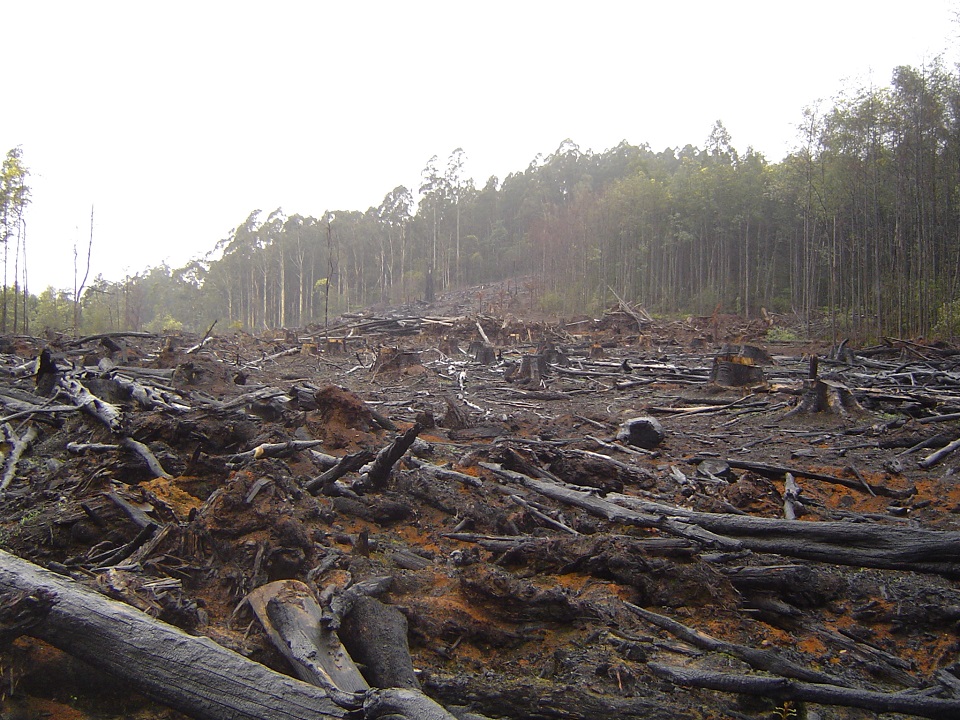
    Deforestation destroys forests and the habitat for animals at an increasing rate. An estimated 18 million acres (7.3 million hectares) of the forest, which is roughly the size of the country of Panama, are lost each year, according to the United Nations’ Food and Agriculture Organization (FAO). Credit: Crustmania / Flickr

    Earth may be entering a new phase of extinction according to a new study. The study is a warning that species will become extinct 114 times faster than normal and that we are in the sixth stage of life destruction on earth.

    The study was done by researchers at Stanford, Berkeley, and Princeton and it does indeed confirm previous findings indicating a faster die-off of many species.

    The Sixths Stage

    The study “Accelerated modern human-induced species losses: Entering the sixth mass extinction” has been published in the journal Science Advances. It provides compelling evidence that we are now into the sixth stage of extinction on Earth.

    One of those former extinctions was the famous event that made the dinosaurs disappear from the surface of Earth circa 65 million years ago. That event was probably caused by a meteor, but this modern extinction is caused by man.

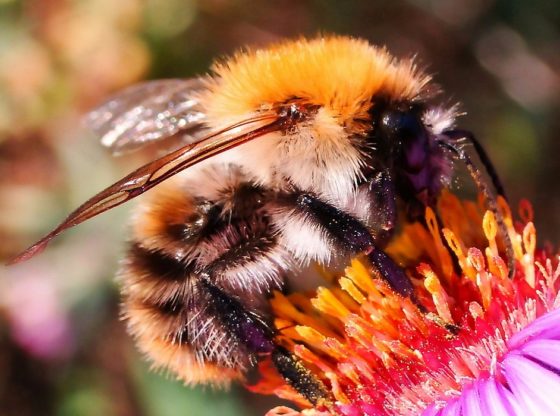
    The researchers argue that the biggest problem with the mass extinction of species is the loss of biodiversity. It affects whole ecosystems and can tip the balance to unforeseen consequences. It can also affect people’s lives, as pollination of crops and the natural water purification systems are disrupted. They warn that within three generations, perhaps we can no longer count on bees to do the important pollination.

    Faster Rate

    Professor Gerardo Ceballos from the Universidad Nacional Autónoma in Mexico is the lead author of the study, he states that “If this is allowed to continue, it will take many millions of years for life on Earth to recover and even humans will probably die out in an early stage,”.

    Since 1900 over 450 species have disappeared, including 69 mammals, 80 birds, 24 reptiles and 158 species of fish. If the extermination rate instead would have followed a normal curve, only 9 vertebrates would have disappeared during the same period.

    So, with this faster rate of extinction, the same number of vertebrate species disappeared during the last 114 years as otherwise would have disappeared during the last 10,000 years. The researchers have actually been quite moderate in their calculations and other researchers believe that the extinction of species will goes faster.

    The authors, however, points to that there are still ways to prevent and mitigate the rate of extinction by reducing restrictions on wildlife habitats, over-exploitation for financial gain and addressing climate change. But they also note that the possibility of preventing continued rapid extinction decreases for each day that passes.

    ________________
    Accelerated modern human–induced species losses: Entering the sixth mass extinction
    ________________________________
    Deforestation Enviromental Protection Extinction Nature Reserves Over-Exploitation
    Share. Facebook Twitter Pinterest LinkedIn Tumblr Email Copy Link

    Related Posts

    Researchers Warn: The Bumblebees Are Heading for Extinction

    March 9, 2020

    Veramaris Opens USD 200 Million Algal Oil Facility

    December 10, 2019

    Seven Million Oysters Find New Home on Restored Reef

    December 2, 2019

    More and More Fishing Vessels Are Chasing Fewer Fish

    June 3, 2019

    Earth is Seeing ‘Catastrophic Collapse’ of Insects

    February 13, 2019

    Study Finds Flying Insect Numbers Have Plunged up to 80% in 30 Years

    November 11, 2017
    Recent Posts
    • How the End of Bretton Woods Reshaped Our Economies — and Our Politics
    • Can the U.S. Really Handle 250% Debt-to-GDP? Why Jackson Hole’s Daring Paper Is Wrong
    • Japan’s Fiscal Trap: What Happens If Austerity Is No Longer an Option?
    • The Rise of Range Extended Electric Vehicles (REEVs): A New Era of Hybrid Mobility
    • The Great Capital Rotation: A Shift from U.S. Treasuries to Gold and Real Assets
    • The Hidden Risks of Short-Term Debt: A Balancing Act in U.S. Fiscal Policy
    • The Looming U.S. Debt Spiral: Understanding the Risks
    • The Looming Recession: Seven Economic Indicators Flashing Red for 2025
    • Europa Clipper: NASA’s Mission to Unlock the Secrets of Jupiter’s Icy Moon
    • Could Hedge Funds Cause Chaos in the U.S. Treasury Market? And What About Inflation?
    © 2025 Illustrated Curiosity

    Type above and press Enter to search. Press Esc to cancel.

    This website uses cookies to improve your experience. We'll assume you're ok with this, but you can opt-out if you wish.Accept Reject Read More
    Privacy & Cookies Policy

    Privacy Overview

    This website uses cookies to improve your experience while you navigate through the website. Out of these, the cookies that are categorized as necessary are stored on your browser as they are essential for the working of basic functionalities of the website. We also use third-party cookies that help us analyze and understand how you use this website. These cookies will be stored in your browser only with your consent. You also have the option to opt-out of these cookies. But opting out of some of these cookies may affect your browsing experience.
    Necessary
    Always Enabled
    Necessary cookies are absolutely essential for the website to function properly. This category only includes cookies that ensures basic functionalities and security features of the website. These cookies do not store any personal information.
    Non-necessary
    Any cookies that may not be particularly necessary for the website to function and is used specifically to collect user personal data via analytics, ads, other embedded contents are termed as non-necessary cookies. It is mandatory to procure user consent prior to running these cookies on your website.
    SAVE & ACCEPT