Close Menu
Illustrated Curiosity
    Facebook X (Twitter) Instagram YouTube
    Illustrated Curiosity
    • Earth
    • Economics
    • Environment
      • Climate
      • Environmental Tech
      • Pollution
      • Wildlife
    • Health
      • Health Tech
      • Medicine
      • Nutrition
      • Exercise
    • History
      • Prehistory
      • Ancient History
      • Postclassical Era
      • Modern History
    • Humans
      • Human Brain
      • Psychology
    • Life
      • Animals & Plants
      • Genetics
      • Paleontology
      • Evolution
      • Genetic Engineering
    • Physics
    • Space
      • Astrobiology
      • Astronomy
      • Extrasolar Planets
      • Space Tech
      • Spaceflight
    • Technology
      • Artificial Intelligence
      • Energy
      • Engineering
      • Materials
      • Robotics
      • Vehicles
    Illustrated Curiosity
    Home » Bacteria Learn to Deceive Hand Sanitizer
    Medicine

    Bacteria Learn to Deceive Hand Sanitizer

    August 6, 20183 Mins Read
    Share
    Facebook Twitter LinkedIn Pinterest Email
    CC0 Creative Commons
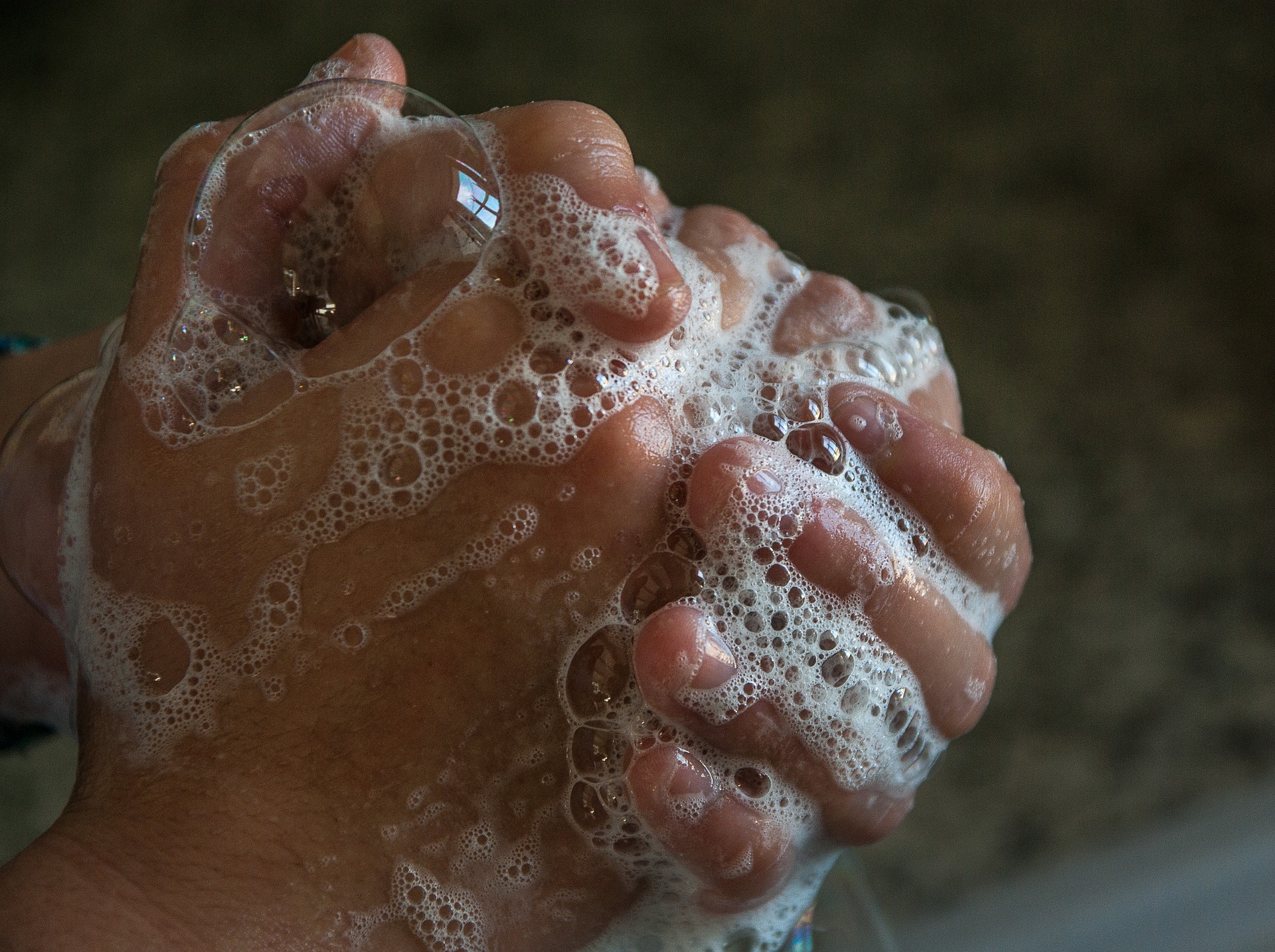
    Formulations of the alcohol-based type are preferable to hand washing with soap and water in most situations in the healthcare setting as it is generally more effective at killing microorganisms and better tolerated than soap and water.

    For the first time, researchers can show that a severe type of bacteria developed resistance to disinfectants over a few years.

    It has become ever more common to spot hand sanitizer in public restrooms. The hand sanitizer is the gel – often alcohol-based – used to decrease infectious agents on the hands.

    Alcohol-based disinfectants are generally more effective at killing microorganisms than simply using soap and water that merely aim to wash away the microorganisms rather them kill them. These disinfectants are therefore preferable to hand washing with soap and water in most situations in healthcare settings especially. They are a key way may hospitals control infections all around the world.

    Now, for the first time, Australian scientists have seen that a particular kind of bacteria is able to evolve to survive and resist the disinfectants.

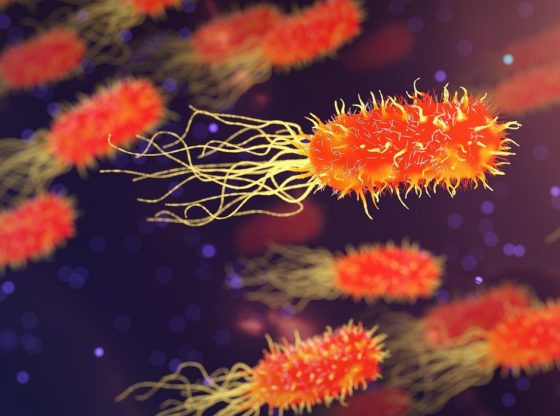
    They have investigated a bacterium called enterococci that are common in the intestines. This bacterial strain is especially difficult because it is also resistant to antibiotics, a strain named Vancomycin-resistant Enterococcus (VRE).

    In many cases, VRE infections are hard to treat because the bacteria are already resistant to other classes of antibiotics. As a result, hospitals in Australia and around the globe have implemented strict hand-washing procedures to protect themselves and patients against the bugs. Hand rubs and washing containing isopropyl and ethyl alcohol disinfectants are commonly used.

    The researchers have looked at strains of bacteria for an 18-year period and noticed how this particular strain of resistant enterococci has developed in the past years to resist disinfectants. They analyzed 139 enterococcus samples from two hospitals between 1997 and 2015 to examine how bugs were affected by isopropyl exposure. Interestingly, researchers found samples collected after 2009 were more tolerant to disinfectant that samples collected earlier.

    The researchers are yet to establish how the bacteria has managed this feat. The bacteria may have become more tolerant to acid and therefore survive better in our intestines. It is thus not given that it is the disinfectant itself that has caused the bacterium to change behavior.

    The results, published in the Science Translational Medicine Journal, explained that scientists made the discovery after testing bacterial samples over a period of 19 years.

    Reference:

    Sacha J. Pidot et al., Increasing tolerance of hospital Enterococcus faecium to handwash alcohols “Sci. Transl. Med. 10, eaar6115, August 1, 2018 DOI: 10.1126/scitranslmed.aar6115

    Share. Facebook Twitter Pinterest LinkedIn Tumblr Email Copy Link

    Related Posts

    Groundbreaking Breakthrough: A Potential Cure for Cancer Targets Proliferating Cell Nuclear Antigen (PCNA)

    August 3, 2023

    Data Modeling Can Predict How COVID-19 Will Spread in a Big City

    November 13, 2020

    2020 Nobel Prize in Medicine Jointly Awarded to Scientists Who Discovered the Hepatitis C Virus

    October 6, 2020

    Air Pollution May Be a Contributing Factor behind High Death Rates in COVID-19

    June 8, 2020

    Evidence of Stray Dogs as Possible Intermediate Host of COVID-19 Pandemic

    April 28, 2020

    Promising Progress on Urine Tests for Prostate Cancer

    March 23, 2020
    Recent Posts
    • America’s Quiet Shift Into Fiscal Dominance: Why Inflation May Be Preparing for a Second Act
    • How the End of Bretton Woods Reshaped Our Economies — and Our Politics
    • Can the U.S. Really Handle 250% Debt-to-GDP? Why Jackson Hole’s Daring Paper Is Wrong
    • Japan’s Fiscal Trap: What Happens If Austerity Is No Longer an Option?
    • The Rise of Range Extended Electric Vehicles (REEVs): A New Era of Hybrid Mobility
    • The Great Capital Rotation: A Shift from U.S. Treasuries to Gold and Real Assets
    • The Hidden Risks of Short-Term Debt: A Balancing Act in U.S. Fiscal Policy
    • The Looming U.S. Debt Spiral: Understanding the Risks
    • The Looming Recession: Seven Economic Indicators Flashing Red for 2025
    • Europa Clipper: NASA’s Mission to Unlock the Secrets of Jupiter’s Icy Moon
    © 2025 Illustrated Curiosity

    Type above and press Enter to search. Press Esc to cancel.

    This website uses cookies to improve your experience. We'll assume you're ok with this, but you can opt-out if you wish.Accept Reject Read More
    Privacy & Cookies Policy

    Privacy Overview

    This website uses cookies to improve your experience while you navigate through the website. Out of these, the cookies that are categorized as necessary are stored on your browser as they are essential for the working of basic functionalities of the website. We also use third-party cookies that help us analyze and understand how you use this website. These cookies will be stored in your browser only with your consent. You also have the option to opt-out of these cookies. But opting out of some of these cookies may affect your browsing experience.
    Necessary
    Always Enabled
    Necessary cookies are absolutely essential for the website to function properly. This category only includes cookies that ensures basic functionalities and security features of the website. These cookies do not store any personal information.
    Non-necessary
    Any cookies that may not be particularly necessary for the website to function and is used specifically to collect user personal data via analytics, ads, other embedded contents are termed as non-necessary cookies. It is mandatory to procure user consent prior to running these cookies on your website.
    SAVE & ACCEPT