
Close Menu
Illustrated Curiosity
    Facebook X (Twitter) Instagram YouTube
    Illustrated Curiosity
    • Earth
    • Economics
    • Environment
      • Climate
      • Environmental Tech
      • Pollution
      • Wildlife
    • Health
      • Health Tech
      • Medicine
      • Nutrition
      • Exercise
    • History
      • Prehistory
      • Ancient History
      • Postclassical Era
      • Modern History
    • Humans
      • Human Brain
      • Psychology
    • Life
      • Animals & Plants
      • Genetics
      • Paleontology
      • Evolution
      • Genetic Engineering
    • Physics
    • Space
      • Astrobiology
      • Astronomy
      • Extrasolar Planets
      • Space Tech
      • Spaceflight
    • Technology
      • Artificial Intelligence
      • Energy
      • Engineering
      • Materials
      • Robotics
      • Vehicles
    Illustrated Curiosity
    Home » Physical Activity Counteracts Health Risks from Sedentary Lifestyle
    Exercise

    Physical Activity Counteracts Health Risks from Sedentary Lifestyle

    February 13, 20182 Mins Read
    Share
    Facebook Twitter LinkedIn Pinterest Email

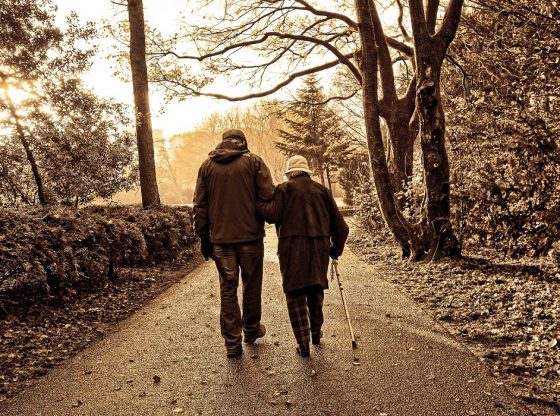
    CC0 Creative Commons Pixabay

    The health risks associated with sitting for eight or more hours a day – whether at work, home or commuting – can be mitigated with 20 minutes or more of physical activity a day, according to a new study.

    We all know that an excessively sedentary life is unhealthy. But the health risks associated with prolonged sitting can be reduced and even eliminated by physical activity, according to new research.

    The study shows that just half an hour of walking or biking is enough to mitigate the negative effects and an hour’s exercise completely eliminates the risks.

    A sedentary life increases the risk of dying from cardiovascular disease and cancer, this has long been known to science. Until recently there has been clear evidence that physical activity could decrease or even completely eliminate the risks associated with sitting still for many hours at work or home.

    A new study provides compelling evidence that biking or just walking for more than 20 minutes a day, or 150 minutes a week, reduces the risk of both morbidity and premature death, compared to someone who is physically inactive.

    Those who prefer to run or to do other more intensive cardio training need to be active for half as long, 75 minutes a week is enough to acquire the same corresponding effect.

    However, to completely eliminate the risks associated with a sedentary life, you need to exercise much more extensively. The study shows that 60 minutes a day, at least, is required to eliminate the risks.

    The Swedish research study is a comprehensive overview study of which one million peoples habits have been analyzed. It clearly shows that those who were physically active for at least an hour each day had no increased risk of mortality in either cardiovascular disease or cancer, even though they sat still for eight hours each day.

    The research also suggests that the total accumulated amount of exercise each day is what is relevant, not when or how it is performed. So, taking the stairs instead of the elevator, biking or walking, everything counts.

    Reference:

    Prof Ulf Ekelund et al. Does physical activity attenuate, or even eliminate, the detrimental association of sitting time with mortality? A harmonised meta-analysis of data from more than 1 million men and women DOI: https://doi.org/10.1016/S0140-6736(16)30370-1


    Cardiovascular Disease Sedentary Lifestyle
    Share. Facebook Twitter Pinterest LinkedIn Tumblr Email Copy Link

    Related Posts

    Sedentary Mice Received Blood Plasma from Exercising mice and Boosted Memory

    January 12, 2022

    Why Sumo Wrestlers Don’t Typically Suffer from Symptoms of Obesity

    September 14, 2020

    Newfound Reason to Why Exercise Benefit the Brain

    July 20, 2020

    How Music Can Enhance the Effect of Exercise

    March 11, 2020

    Regular Exercise Is Good for Your Heart, No Matter How Old You Are

    October 14, 2019

    Study Shows Spending Two Hours a Week in Nature Can Improve Health

    September 2, 2019
    Recent Posts
    • America’s Quiet Shift Into Fiscal Dominance: Why Inflation May Be Preparing for a Second Act
    • How the End of Bretton Woods Reshaped Our Economies — and Our Politics
    • Can the U.S. Really Handle 250% Debt-to-GDP? Why Jackson Hole’s Daring Paper Is Wrong
    • Japan’s Fiscal Trap: What Happens If Austerity Is No Longer an Option?
    • The Rise of Range Extended Electric Vehicles (REEVs): A New Era of Hybrid Mobility
    • The Great Capital Rotation: A Shift from U.S. Treasuries to Gold and Real Assets
    • The Hidden Risks of Short-Term Debt: A Balancing Act in U.S. Fiscal Policy
    • The Looming U.S. Debt Spiral: Understanding the Risks
    • The Looming Recession: Seven Economic Indicators Flashing Red for 2025
    • Europa Clipper: NASA’s Mission to Unlock the Secrets of Jupiter’s Icy Moon
    © 2025 Illustrated Curiosity

    Type above and press Enter to search. Press Esc to cancel.

    This website uses cookies to improve your experience. We'll assume you're ok with this, but you can opt-out if you wish.Accept Reject Read More
    Privacy & Cookies Policy

    Privacy Overview

    This website uses cookies to improve your experience while you navigate through the website. Out of these, the cookies that are categorized as necessary are stored on your browser as they are essential for the working of basic functionalities of the website. We also use third-party cookies that help us analyze and understand how you use this website. These cookies will be stored in your browser only with your consent. You also have the option to opt-out of these cookies. But opting out of some of these cookies may affect your browsing experience.
    Necessary
    Always Enabled
    Necessary cookies are absolutely essential for the website to function properly. This category only includes cookies that ensures basic functionalities and security features of the website. These cookies do not store any personal information.
    Non-necessary
    Any cookies that may not be particularly necessary for the website to function and is used specifically to collect user personal data via analytics, ads, other embedded contents are termed as non-necessary cookies. It is mandatory to procure user consent prior to running these cookies on your website.
    SAVE & ACCEPT