Close Menu
Illustrated Curiosity
    Facebook X (Twitter) Instagram YouTube
    Illustrated Curiosity
    • Earth
    • Economics
    • Environment
      • Climate
      • Environmental Tech
      • Pollution
      • Wildlife
    • Health
      • Health Tech
      • Medicine
      • Nutrition
      • Exercise
    • History
      • Prehistory
      • Ancient History
      • Postclassical Era
      • Modern History
    • Humans
      • Human Brain
      • Psychology
    • Life
      • Animals & Plants
      • Genetics
      • Paleontology
      • Evolution
      • Genetic Engineering
    • Physics
    • Space
      • Astrobiology
      • Astronomy
      • Extrasolar Planets
      • Space Tech
      • Spaceflight
    • Technology
      • Artificial Intelligence
      • Energy
      • Engineering
      • Materials
      • Robotics
      • Vehicles
    Illustrated Curiosity
    Home » Humans lived in North America 130,000 years ago, according to new study
    Prehistory

    Humans lived in North America 130,000 years ago, according to new study

    April 30, 2017No Comments4 Mins Read
    Share
    Facebook Twitter LinkedIn Pinterest Email

    The first people in North America may have arrived more than 100,000 years earlier than scientists have believed.
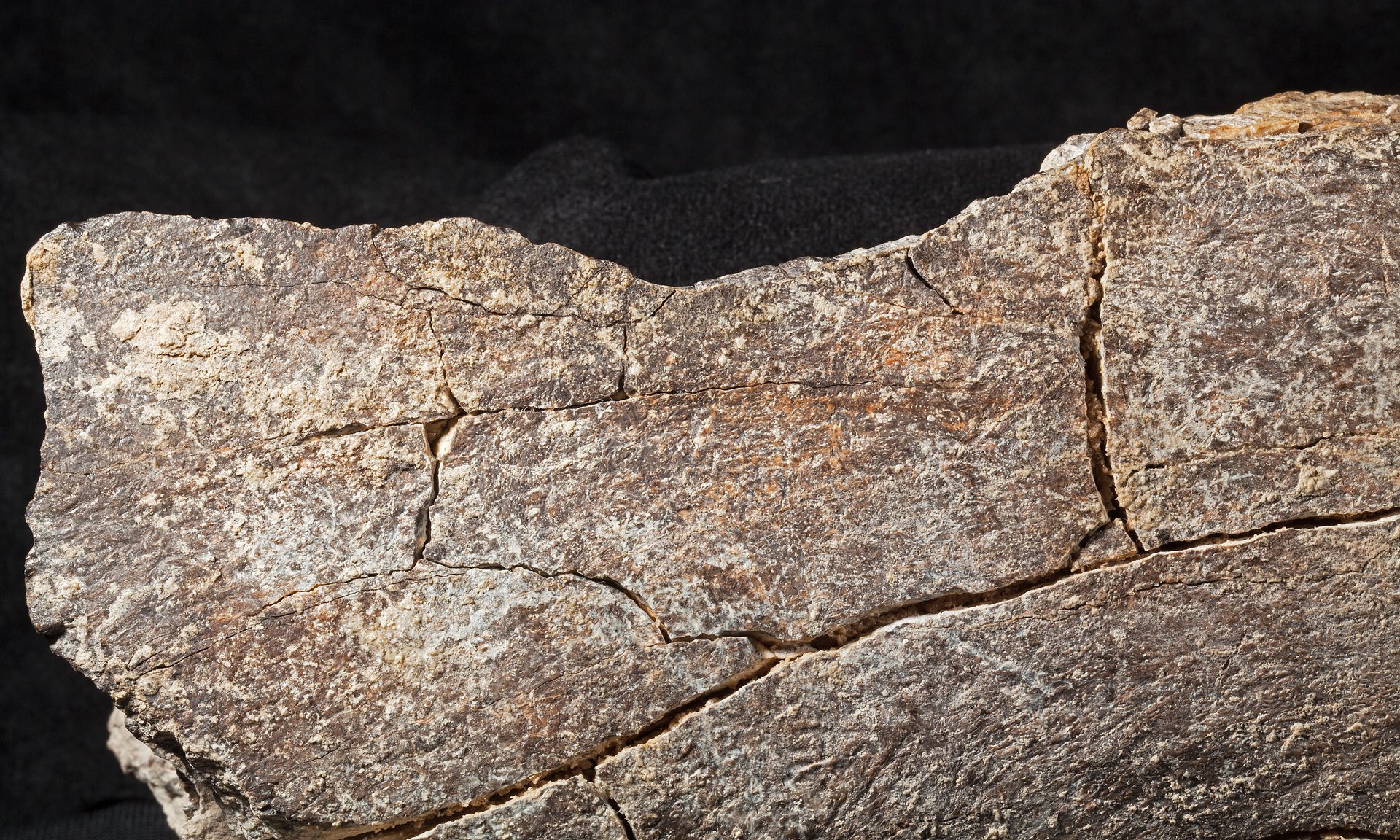
    The surface of mastodon bone showing half impact notch on a segment of femur. Photograph: Tom Deméré, San Diego Natural History Museum
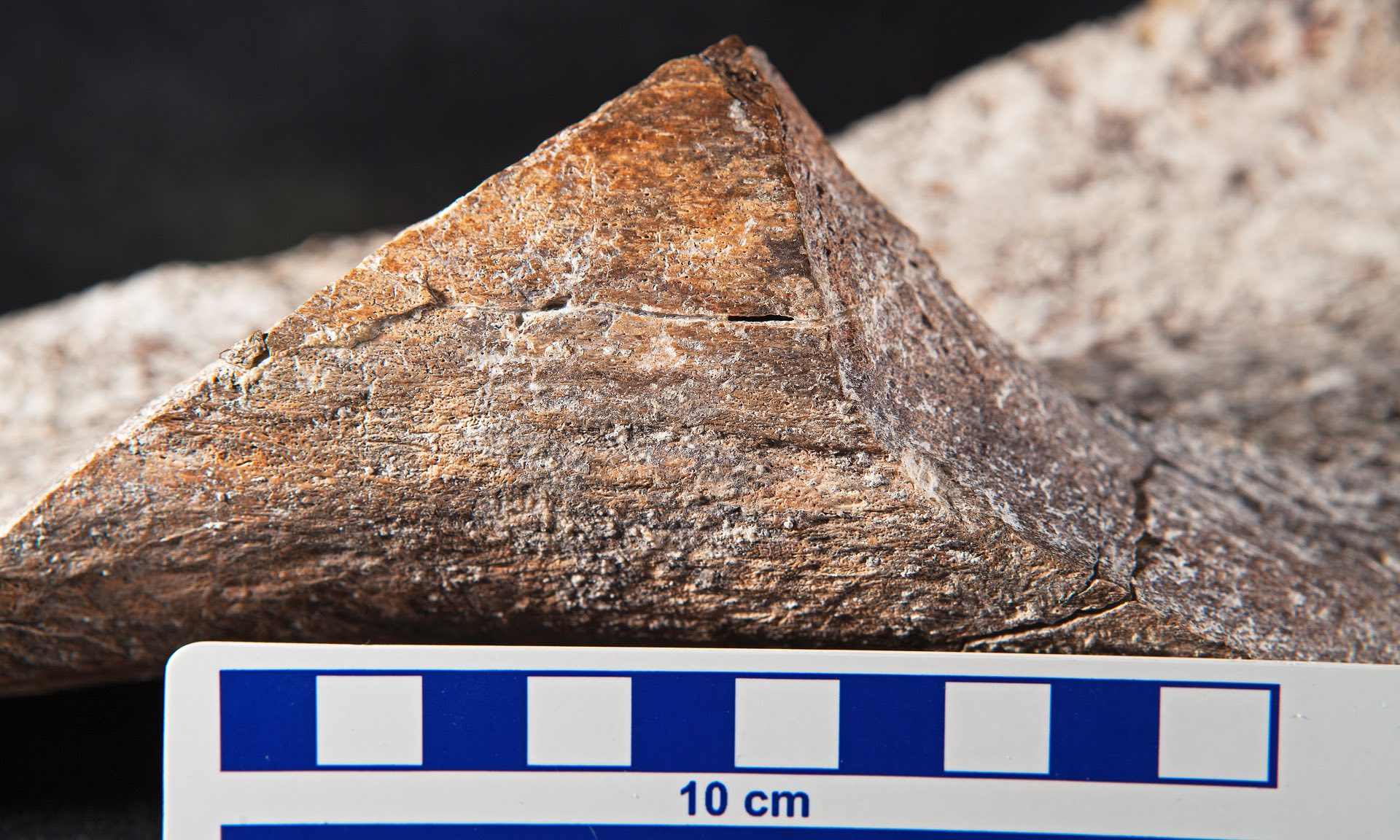
    A close-up view of a spirally fractured mastodon femur bone. Photograph: Tom Deméré, San Diego Natural History Museum
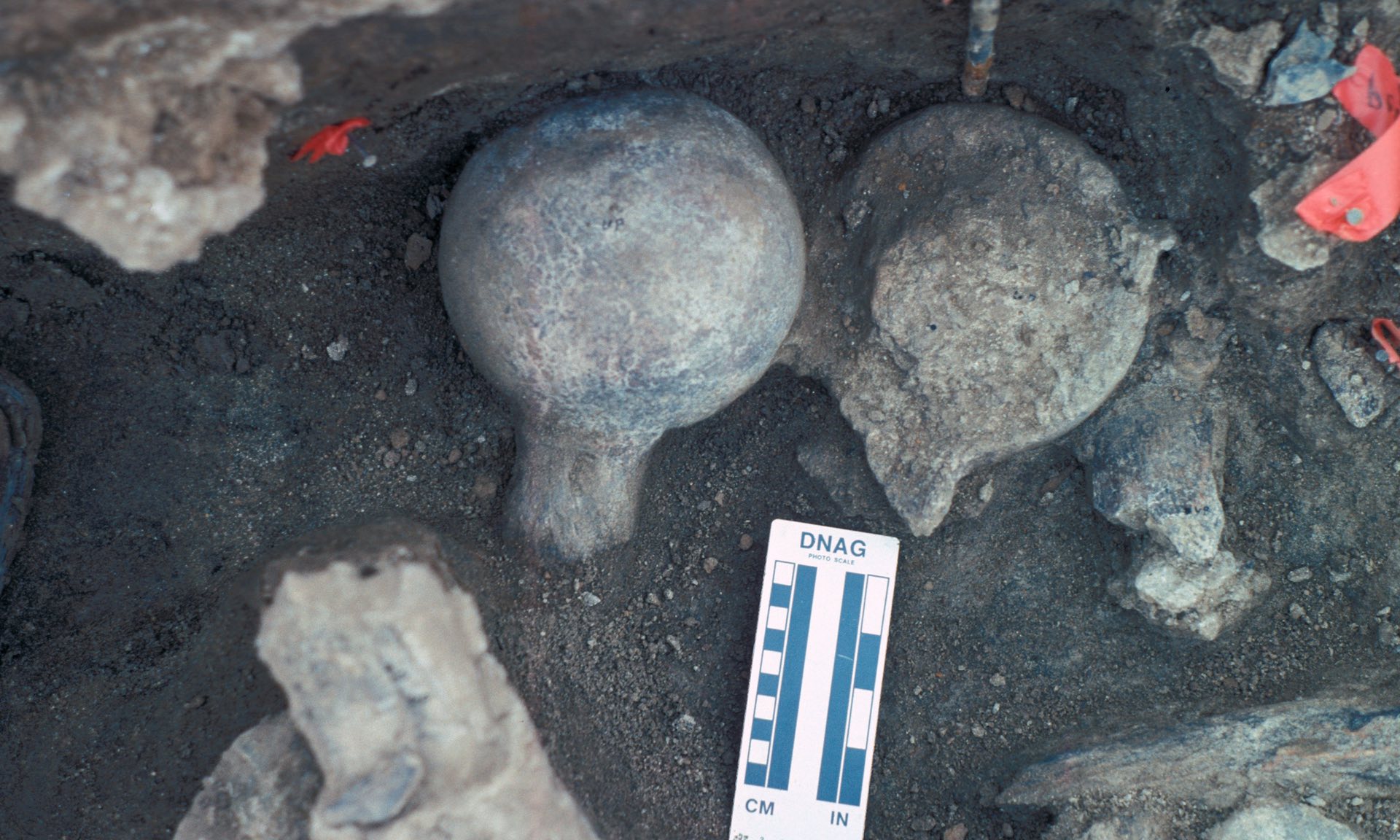
    A view of two mastodon femur balls, one faced up and once faced down. Photograph: San Diego Natural History Museum

    There should not have been any humans the Americas until about 30,000 years ago. But now scientists have found conflicting evidence of a much older human presence in an animal skeleton.

    Researchers analyzed the skeleton of a so-called mastodon – a relative of today’s elephants – found 1992 in California. The skeleton marks indicate that the mastodon may have been killed by people, who would have reached North America 100,000 years earlier than previously thought.

    The team of researcher updated previous age estimates using the more precise method of uranium-thorium, which measures the radioactive decomposition of uranium isotopes to thorium. A method considered reliable for estimation within this window in time.

    The mastodon legs show clear signs of having been broken by man-made tools, perhaps to gain access to the bone marrow within. The researchers also found different types of stones at the excavation site around the skeleton, which may have been used as tools to process the mastodon.
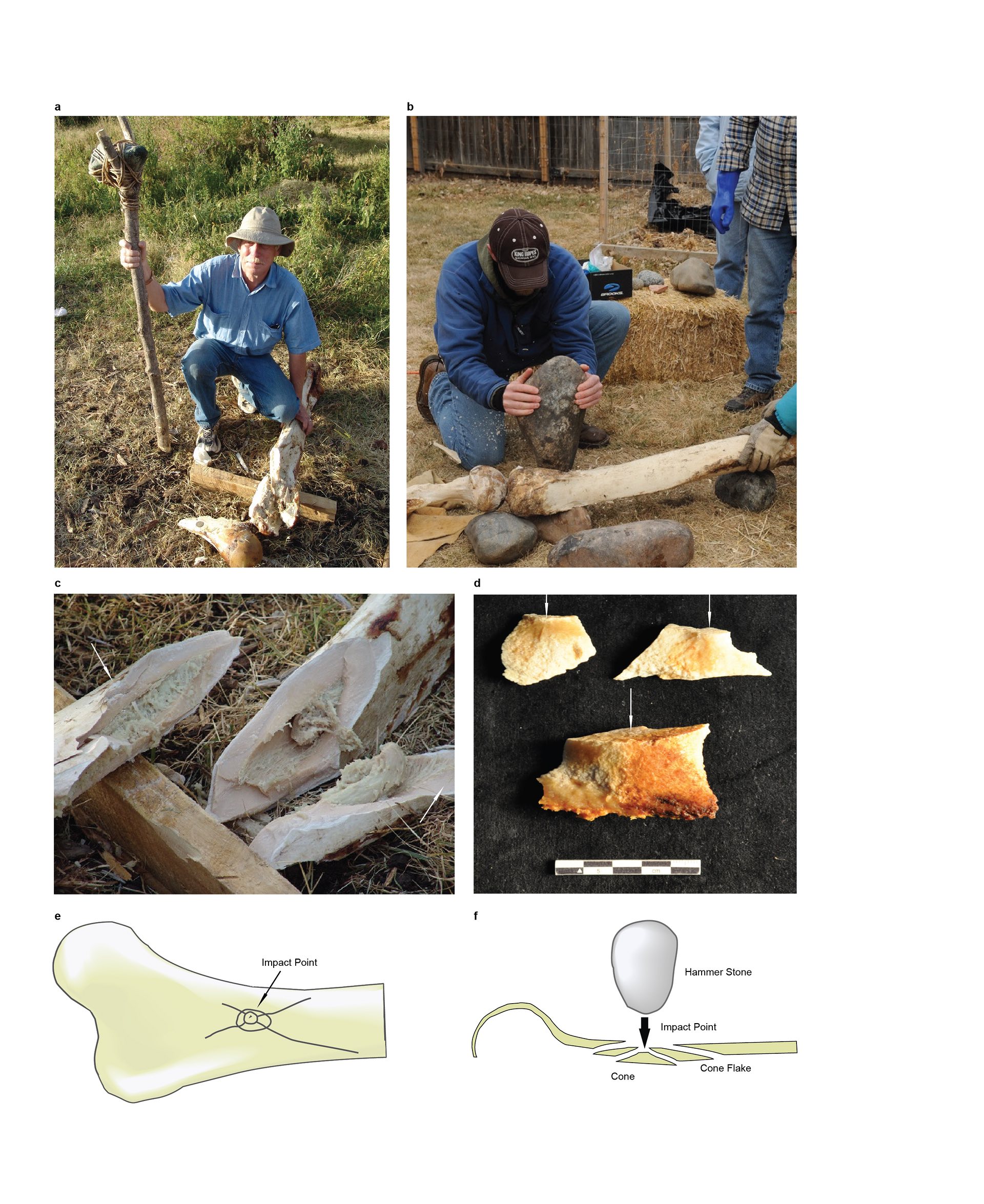
    Using leg bone used from an elephant that had recently died of natural causes, a breakage experiment was carried out in an attempt to determine the kinds of breakage patterns that might result from hammerstone percussion. Photograph: Kate Johnson, San Diego Natural History MuseumCMS-Figure-2

    The rocks show clear marks of having been used as hammers and an anvil and the scientists believe the stones are too heavy to have been carried there in the flow of a stream.

    “in association with sharply broken bones of this mastodon and then we also found a large rock in association with these bones which poses a puzzle, because the remains of this mastodon were found in a silt layer and geological processes that deposit silt are not going to be carrying rocks of this size,”

    – Study leader Tom Deméré, paleontologist at the San Diego Natural History Museum

    ‘Humans’ as in Homo Sapiens?

    It is uncertain what kind of human species that did this, if these were, in fact, modern humans in the form of Homo sapiens or any other human species, possibly Denisovian, Homo erectus, or even Neanderthal.

    “if it is modern people, we suddenly have additional signs that indicate that they traveled from Africa much earlier than we have thought so far.”

    – Tom Deméré

    The generally accepted theory for the early human migration and settlement of North America has modern humans, Homo sapiens, entering across a land bridge connecting Siberia and Alaska between about twenty-seven thousand and eleven thousand years ago.

    There is a genetic technique that uses mutations in a population’s genome as a sort of a “clock”, it provides us with an estimation of the first common ancestor of Native Americans to have lived about 20,000 years ago. So if these are indeed early settlers of Homo Sapiens, they would have died out without leaving any genetic traces in later settlers.

    More evidence is required and more data is needed that clearly points to the fact that the rocks were actually used by humans. For example, an age estimate of the sediment layer in which the mastodon was found, or even greater, of course, would be direct evidence such as human remains.

    These findings present many interesting questions, however. The results are presented this week in the scientific journal Nature. Click here to view an interview with Tom Deméré.

    When humans first migrated to the Americas has long been a controversial issue. The oldest clear evidence is about 15,000 years old. In addition, there are a few older sites with what appears to be man-made tools in Calico Hills in California and Pedra Furada in Brazil. These are between 80,000 and 20,000 years old, but it is highly uncertain if these remains are real tools. The new discovery in California will certainly also be questioned. But if the information turns out to be correct, if would force a full revise of what we know about the first Americans and early human migration.

    Reference:

    Steven R. Holen et al. A 130,000-year-old archaeological site in southern California, USA. Nature April 26, 2017. DOI: 10.1038 / nature22065

    Americas Early Human Migration Native Americans
    Share. Facebook Twitter Pinterest LinkedIn Tumblr Email Copy Link

    Related Posts

    Northern Europeans’ Genetic Pre-Historic is Repeated Genocide

    February 6, 2024

    The teeth of the Neanderthals show how similar they were to us

    November 12, 2020

    Sets of 120,000-Year-Old Footprints Belonging to Humans Have Been Discovered in Saudi Arabia

    September 29, 2020

    Ancient Footprints Show Neanderthals May Have Been Taller than Thought

    May 14, 2020

    Fascinating Discovery Suggests Neanderthals Invented String

    April 13, 2020

    The Worlds Oldest Cave Art Found in Indonesia

    December 12, 2019
    Recent Posts
    • How the End of Bretton Woods Reshaped Our Economies — and Our Politics
    • Can the U.S. Really Handle 250% Debt-to-GDP? Why Jackson Hole’s Daring Paper Is Wrong
    • Japan’s Fiscal Trap: What Happens If Austerity Is No Longer an Option?
    • The Rise of Range Extended Electric Vehicles (REEVs): A New Era of Hybrid Mobility
    • The Great Capital Rotation: A Shift from U.S. Treasuries to Gold and Real Assets
    • The Hidden Risks of Short-Term Debt: A Balancing Act in U.S. Fiscal Policy
    • The Looming U.S. Debt Spiral: Understanding the Risks
    • The Looming Recession: Seven Economic Indicators Flashing Red for 2025
    • Europa Clipper: NASA’s Mission to Unlock the Secrets of Jupiter’s Icy Moon
    • Could Hedge Funds Cause Chaos in the U.S. Treasury Market? And What About Inflation?
    © 2025 Illustrated Curiosity

    Type above and press Enter to search. Press Esc to cancel.

    This website uses cookies to improve your experience. We'll assume you're ok with this, but you can opt-out if you wish.Accept Reject Read More
    Privacy & Cookies Policy

    Privacy Overview

    This website uses cookies to improve your experience while you navigate through the website. Out of these, the cookies that are categorized as necessary are stored on your browser as they are essential for the working of basic functionalities of the website. We also use third-party cookies that help us analyze and understand how you use this website. These cookies will be stored in your browser only with your consent. You also have the option to opt-out of these cookies. But opting out of some of these cookies may affect your browsing experience.
    Necessary
    Always Enabled
    Necessary cookies are absolutely essential for the website to function properly. This category only includes cookies that ensures basic functionalities and security features of the website. These cookies do not store any personal information.
    Non-necessary
    Any cookies that may not be particularly necessary for the website to function and is used specifically to collect user personal data via analytics, ads, other embedded contents are termed as non-necessary cookies. It is mandatory to procure user consent prior to running these cookies on your website.
    SAVE & ACCEPT