Close Menu
Illustrated Curiosity
    Facebook X (Twitter) Instagram YouTube
    Illustrated Curiosity
    • Earth
    • Economics
    • Environment
      • Climate
      • Environmental Tech
      • Pollution
      • Wildlife
    • Health
      • Health Tech
      • Medicine
      • Nutrition
      • Exercise
    • History
      • Prehistory
      • Ancient History
      • Postclassical Era
      • Modern History
    • Humans
      • Human Brain
      • Psychology
    • Life
      • Animals & Plants
      • Genetics
      • Paleontology
      • Evolution
      • Genetic Engineering
    • Physics
    • Space
      • Astrobiology
      • Astronomy
      • Extrasolar Planets
      • Space Tech
      • Spaceflight
    • Technology
      • Artificial Intelligence
      • Energy
      • Engineering
      • Materials
      • Robotics
      • Vehicles
    Illustrated Curiosity
    Home » Mouse tells ancient tale of early human settlement
    Prehistory

    Mouse tells ancient tale of early human settlement

    March 31, 20172 Mins Read
    Share
    Facebook Twitter LinkedIn Pinterest Email

    Man’s best friend is the dog. But man’s oldest companion in the animal kingdom is the mouse, a new study suggests.
    CC0 Public Domain
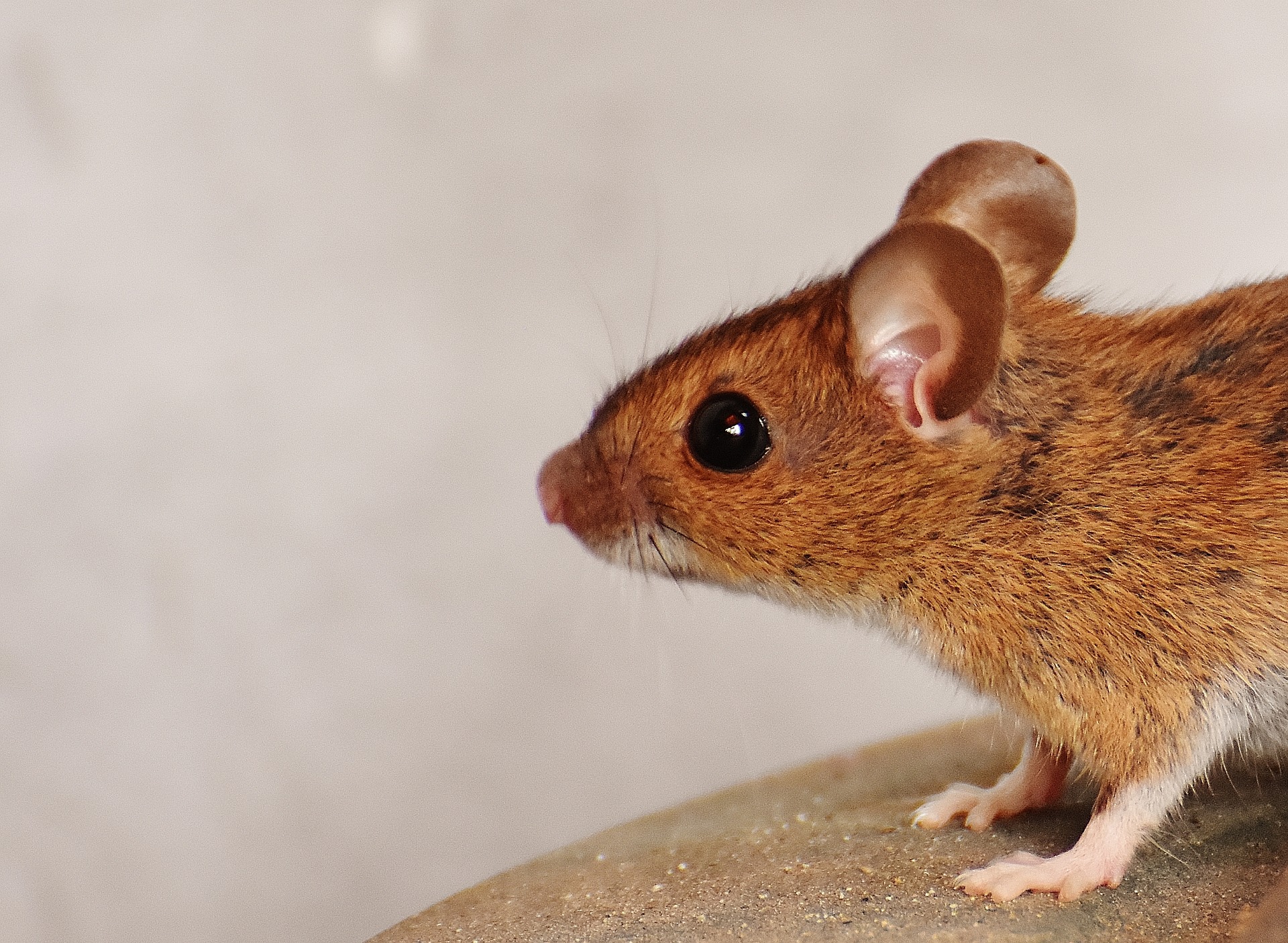
    The house mouse (Mus musculus) is one of the most numerous species of the genus Mus. Although wild, the house mouse mainly lives in association with humans and a new study sheds light on our ancient common history.

    About 15,000 years, this is how long mice have been around human settlements. According to researchers from Washington University in St. Louis.

    The researchers examined samples from a series of excavations in Israel, among others, and in doing so, they have concluded that the mice were drawn to humans long before we became sedentary farmers.

    We humans slowly became more sedentary about 15,000 years ago, when hunter-gatherers began putting down roots in the Middle East and this is when mice found human presence as an opportunity to get food and shelter.

    The findings indicate that house mice began to live close by semi-settled humans in the Jordan Valley of Natufian hunter-gatherers about 15,000 years ago.

    “These findings suggest that hunter-gatherers of the Natufian culture, rather than later Neolithic farmers, were the first to adopt a sedentary way of life and unintentionally initiated a new type of ecological interaction — close coexistence with commensal species such as the house mouse,”

    – Lior Weissbrod of the University of Haifa in Israel

    Reference:

    Marshall et al, “Origins of house mice in ecological niches created by hunter-gatherers settled in the Levant 15,000 y ago Proceedings of the National Academy of Sciences, March 2017 DOI: 10.1073/pnas.1619137114

    mouse
    Share. Facebook Twitter Pinterest LinkedIn Tumblr Email Copy Link

    Related Posts

    Northern Europeans’ Genetic Pre-Historic is Repeated Genocide

    February 6, 2024

    The teeth of the Neanderthals show how similar they were to us

    November 12, 2020

    Sets of 120,000-Year-Old Footprints Belonging to Humans Have Been Discovered in Saudi Arabia

    September 29, 2020

    Ancient Footprints Show Neanderthals May Have Been Taller than Thought

    May 14, 2020

    Fascinating Discovery Suggests Neanderthals Invented String

    April 13, 2020

    The Worlds Oldest Cave Art Found in Indonesia

    December 12, 2019
    Recent Posts
    • America’s Quiet Shift Into Fiscal Dominance: Why Inflation May Be Preparing for a Second Act
    • How the End of Bretton Woods Reshaped Our Economies — and Our Politics
    • Can the U.S. Really Handle 250% Debt-to-GDP? Why Jackson Hole’s Daring Paper Is Wrong
    • Japan’s Fiscal Trap: What Happens If Austerity Is No Longer an Option?
    • The Rise of Range Extended Electric Vehicles (REEVs): A New Era of Hybrid Mobility
    • The Great Capital Rotation: A Shift from U.S. Treasuries to Gold and Real Assets
    • The Hidden Risks of Short-Term Debt: A Balancing Act in U.S. Fiscal Policy
    • The Looming U.S. Debt Spiral: Understanding the Risks
    • The Looming Recession: Seven Economic Indicators Flashing Red for 2025
    • Europa Clipper: NASA’s Mission to Unlock the Secrets of Jupiter’s Icy Moon
    © 2025 Illustrated Curiosity

    Type above and press Enter to search. Press Esc to cancel.

    This website uses cookies to improve your experience. We'll assume you're ok with this, but you can opt-out if you wish.Accept Reject Read More
    Privacy & Cookies Policy

    Privacy Overview

    This website uses cookies to improve your experience while you navigate through the website. Out of these, the cookies that are categorized as necessary are stored on your browser as they are essential for the working of basic functionalities of the website. We also use third-party cookies that help us analyze and understand how you use this website. These cookies will be stored in your browser only with your consent. You also have the option to opt-out of these cookies. But opting out of some of these cookies may affect your browsing experience.
    Necessary
    Always Enabled
    Necessary cookies are absolutely essential for the website to function properly. This category only includes cookies that ensures basic functionalities and security features of the website. These cookies do not store any personal information.
    Non-necessary
    Any cookies that may not be particularly necessary for the website to function and is used specifically to collect user personal data via analytics, ads, other embedded contents are termed as non-necessary cookies. It is mandatory to procure user consent prior to running these cookies on your website.
    SAVE & ACCEPT