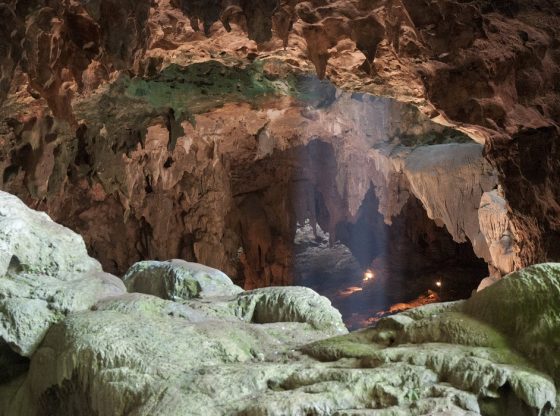

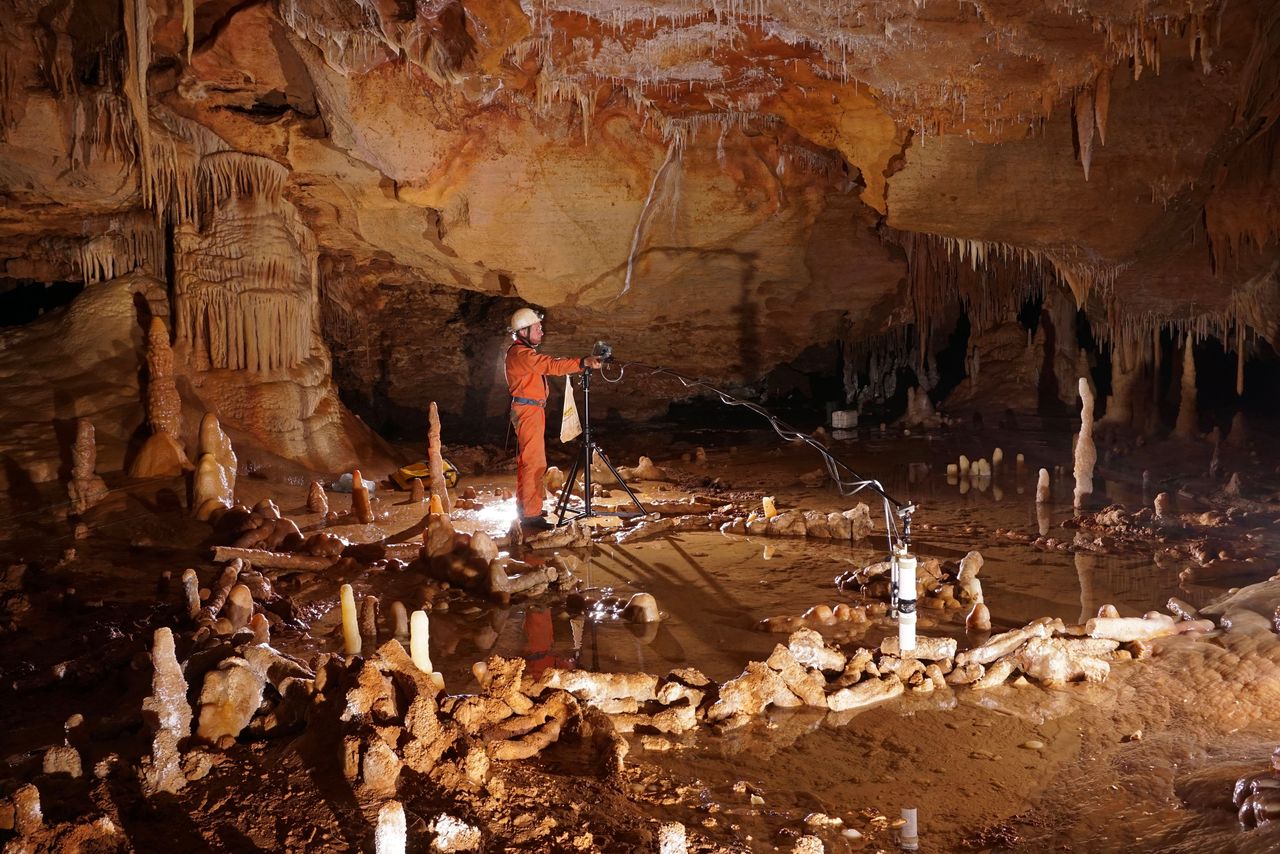
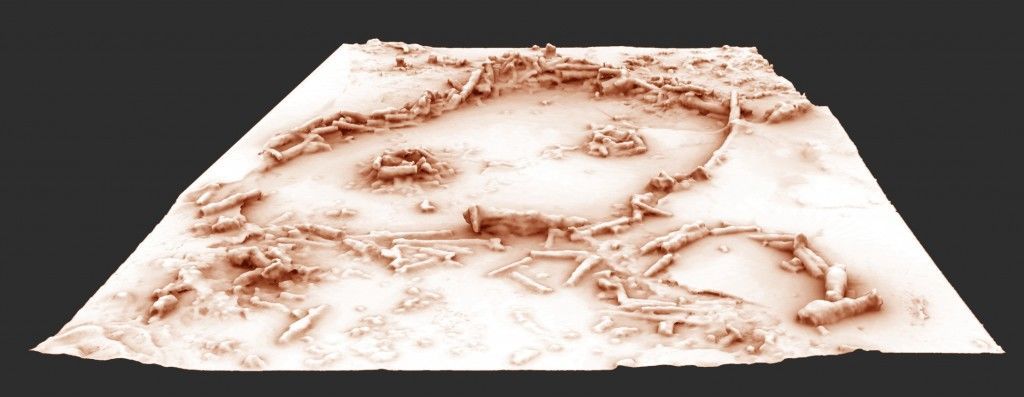
A completely new type of remains from the Neanderthals have been found in a cave in southwestern France. The archaeologists have found six ring-shaped stone structures.
These mysterious structures were found deep inside a French cave near the Pyrénées mountains in southwest France and must be the work of Neanderthal builders who lived in the region more than 100,000 years before modern humans even set foot in Europe.
Mysterious Structures in Complete Darkness
The extraordinary constructions are made from nearly 400 stalagmites that have been stacked on top of one another to produce rudimentary walls on the damp cave floor. The ring-shaped stone structures vary between half a meter across the smallest and up to seven meters for the largest.
Made by using stalactite formations, or stalagmites that are often found in limestone caves. Some parts of the walls show clear signs of fire damage, with some stalagmites blackened or reddened and fractured from the heat. This indicates that the Neanderthals embedded fireplaces in the structures to probably illuminate the cave.
Much Older Than First Thought
When the structures were first discovered in the mid-90s, they were believed to be 50,000 years old, the same age as burnt animal remains found nearby. But fresh tests on the structures, reported in the scientific journal Nature, reveal the simple walls to be much older than thought.
By sampling the calcite that had grown both before and after the stalagmite fragments were broken, the researchers could now constrain the dates when the structures were built to roughly 176,000 years, give or take 2,000 years.
Made by Neanderthal
Early Neanderthals were the only human population living in Europe during this period,” Jacques Jaubert at the University of Bordeaux writes in published article. Neanderthals lived in Eurasia from about 400,000 to 40,000 years ago and died out just as modern humans started to colonize Europe.
Our view of the Neanderthals has undergone a complete redefinition in recent years. Previously often dismissed as cave dwelling brutes, research has in recent years made us view the Neanderthals quite differently, as instead immensely capable. With evidence of halls of stone tools and other artifacts that they left behind.
“Building these structures was a project. It required an objective which has been discussed among several people and enough social organization to assign tasks,” Jaubert adds.
Redefining the Neanderthals
The Neanderthals were able to speak, they had harnessed fire, lived in shelters, wore clothes, and mastered the art of stone tool making. They probably deliberately buried their dead and even adorned the graves with offerings such as flowers. Evidence suggests that some had a fondness for sea shells, and turned scallop and cockle shells into jewelry by painting them with mineral pigments and probably threading them on strings to wear as necklaces. They made artificial glue by a careful burning of tree bark, using it to probably help fix their sharp stone tips to spear shafts.
They most certainly looked different than previously imagined as well, a 2007 genetic study suggested some Neanderthals may have had red hair and blond hair, along with a light skin tone. And modern genetic science spearheaded by the Max Plank institute in Germany has revealed modern humans to have an estimated 1 to 4 percent of the DNA in Europeans and Asians. And more recent findings suggest there may be even more Neanderthal genes in non-African humans than previously expected: with approximately 20% of the Neanderthal gene pool present in a broad sampling of non-African individuals, though each individual’s genome was on average only 2% Neanderthal.
But the discovery raises plenty of questions. What was the purpose of the structures? Perhaps some kind of ritual activity. Were the walls built when Neanderthals found themselves deep inside the cave by chance or was perhaps making underground structures a common practice for them?
Since the structures are located in a dark and difficult-to-access cavern 300 yards from the entrance of the cave, this group of Neanderthal’s must have already mastered the underground world.
Perhaps some kind of ritual activity may have been engaged there, more investigations will hopefully provide more information about this mysterious site.
_______________
Jacques Jaubert et al. Early Neanderthal constructions deep in Bruniquel Cave in southwestern France.
______________________________