Close Menu
Illustrated Curiosity | Economics, History, Science, Space, Technology, Health, Physics, Earth
    Facebook X (Twitter) Instagram YouTube
    Illustrated Curiosity | Economics, History, Science, Space, Technology, Health, Physics, Earth
    • Earth
    • Economics
    • Environment
      • Environmental Tech
      • Pollution
      • Wildlife
    • Health
      • Health Tech
      • Medicine
      • Nutrition
      • Exercise
    • History
      • Prehistory
      • Ancient History
      • Postclassical Era
      • Modern History
    • Humans
      • Human Brain
      • Psychology
    • Life
      • Animals & Plants
      • Genetics
      • Paleontology
      • Evolution
      • Genetic Engineering
    • Physics
    • Space
      • Astrobiology
      • Astronomy
      • Extrasolar Planets
      • Space Tech
      • Spaceflight
    • Technology
      • Artificial Intelligence
      • Energy
      • Engineering
      • Materials
      • Robotics
      • Vehicles
    Illustrated Curiosity | Economics, History, Science, Space, Technology, Health, Physics, Earth
    Home » Remains of Bread Baked 14,400 Years Ago Found in Jordan
    Prehistory

    Remains of Bread Baked 14,400 Years Ago Found in Jordan

    July 24, 20182 Mins Read
    Image: Pixabay
    Share
    Facebook Twitter LinkedIn Pinterest Email

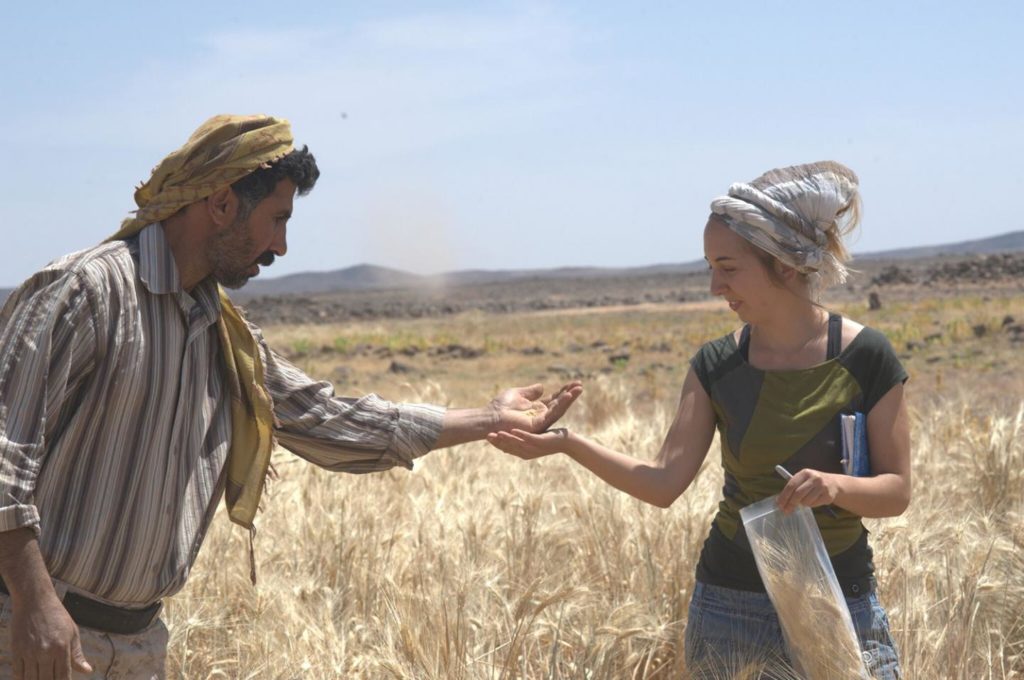
    A loaf of bread that was baked 14 400 years ago has been found during excavations in Jordan, according to research published in the Proceedings of the National Academy of Sciences. It is at least 4,000 years older than when humans began farming.

    The charcoal bread, similar to an unleavened flatbread, was found by a Danish-British research team.

    The flatbread was baked by a group of hunter-gatherers called the Natufians in a firepit at Shubayqa 1, an excavation site located about 130 miles northeast of the Jordanian capital of Amman.
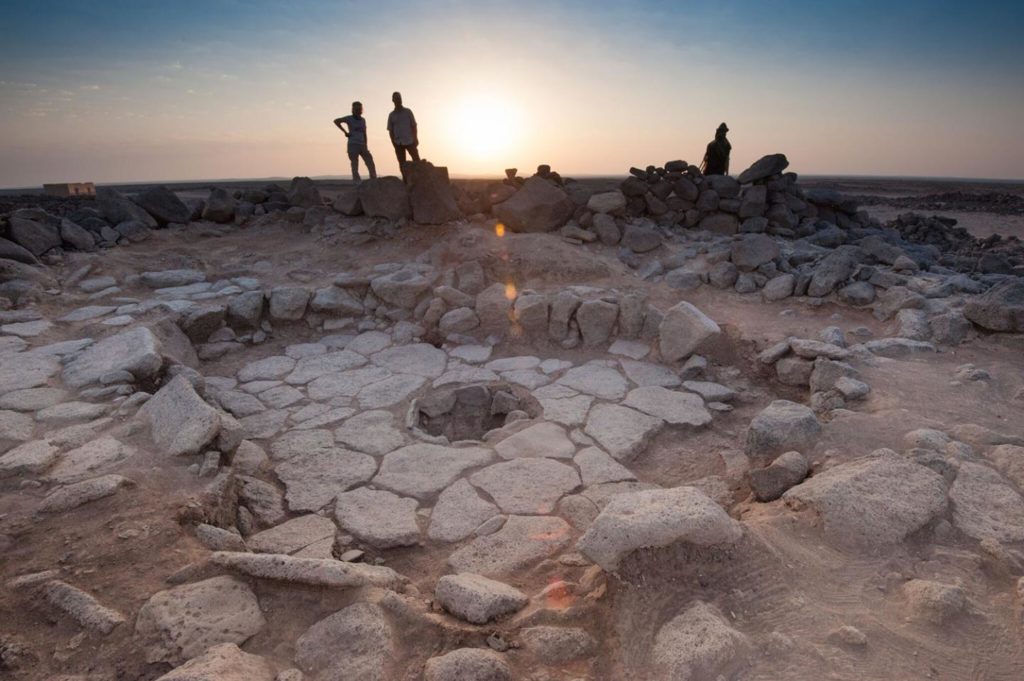
    The charred food remains were analyzed with electronic microscopy at a University College London lab by Ph.D. candidate Lara Gonzalez Carratero (UCL Institute of Archaeology), who is an expert on prehistoric bread.

    “The identification of ‘bread’ or other cereal-based products in archaeology is not straightforward. There has been a tendency to simplify classification without really testing it against an identification criteria. We have established a new set of criteria to identify flat bread, dough and porridge like products in the archaeological record. Using Scanning Electron Microscopy we identified the microstructures and particles of each charred food remain,”

    – Gonzalez Carratero

    The analysis shows a wide variety of wild ancestors of domesticated cereals, such as barley, einkorn, and oat, had been ground, sieved, and kneaded prior to cooking.

    “The remains are very similar to unleavened flatbreads identified at several Neolithic and Roman sites in Europe and Turkey,”
    “So we now know that bread-like products were produced long before the development of farming.”

    – First author Amaia Arranz Otaegui, a University of Copenhagen archaeobotanist, in a statement.

    Its exceptional age is significant because it predates the First Agricultural Revolution by four millennia, suggesting that hunter-gatherers produced bread by harvesting wild cereals.

    While the new study pushes back the timeline of empirically proven bread-baking, previous research suggested humans experimented with proto-flour as early as 30,000 years ago.

    Reference:

    Amaia Arranz-Otaegui et al., Archaeobotanical evidence reveals the origins of bread 14,400 years ago in northeastern Jordan. 2018. PNAS July 16, 2018. https://doi.org/10.1073/pnas.180107

    Share. Facebook Twitter Pinterest LinkedIn Tumblr Email Copy Link

    Related Posts

    Northern Europeans’ Genetic Pre-Historic is Repeated Genocide

    February 6, 2024

    Sets of 120,000-Year-Old Footprints Belonging to Humans Have Been Discovered in Saudi Arabia

    September 29, 2020

    Ancient Footprints Show Neanderthals May Have Been Taller than Thought

    May 14, 2020

    Fascinating Discovery Suggests Neanderthals Invented String

    April 13, 2020

    The oldest known Homo sapiens outside Africa was Greek

    July 15, 2019

    Jawbone Fossil Reveals More About the Denisovans

    May 6, 2019
    Recent Posts
    • Oil Shocks, Policy Mistakes, and the Risk of a Second Inflation Wave (Part II)
    • Oil Shocks, Policy Mistakes, and the Risk of a Second Inflation Wave (Part I)
    • Microsoft Stored a Movie on Glass — And It Could Last Centuries
    • AI, Automatic Stabilizers & Inflation
    • Largest Battles in History: Cannae — Rome’s Darkest Day
    • The Day the Alliance Died
    • Evaluating Heart Disease: How Cumulative Diet Choices Compound Your Risk
    • What Would Happen If China Attacked Taiwan?
    • Geopoliticisation as a Structural Tailwind for Commodity Prices
    • America’s Economic Remodel: Who’s Really Paying the Bill?
    © 2025 Illustrated Curiosity

    Type above and press Enter to search. Press Esc to cancel.