Close Menu
Illustrated Curiosity
    Facebook X (Twitter) Instagram YouTube
    Illustrated Curiosity
    • Earth
    • Economics
    • Environment
      • Climate
      • Environmental Tech
      • Pollution
      • Wildlife
    • Health
      • Health Tech
      • Medicine
      • Nutrition
      • Exercise
    • History
      • Prehistory
      • Ancient History
      • Postclassical Era
      • Modern History
    • Humans
      • Human Brain
      • Psychology
    • Life
      • Animals & Plants
      • Genetics
      • Paleontology
      • Evolution
      • Genetic Engineering
    • Physics
    • Space
      • Astrobiology
      • Astronomy
      • Extrasolar Planets
      • Space Tech
      • Spaceflight
    • Technology
      • Artificial Intelligence
      • Energy
      • Engineering
      • Materials
      • Robotics
      • Vehicles
    Illustrated Curiosity
    Home » The Oldest Human Footprints Outside Africa Found in England
    Prehistory

    The Oldest Human Footprints Outside Africa Found in England

    March 14, 2015No Comments3 Mins Read
    Share
    Facebook Twitter LinkedIn Pinterest Email
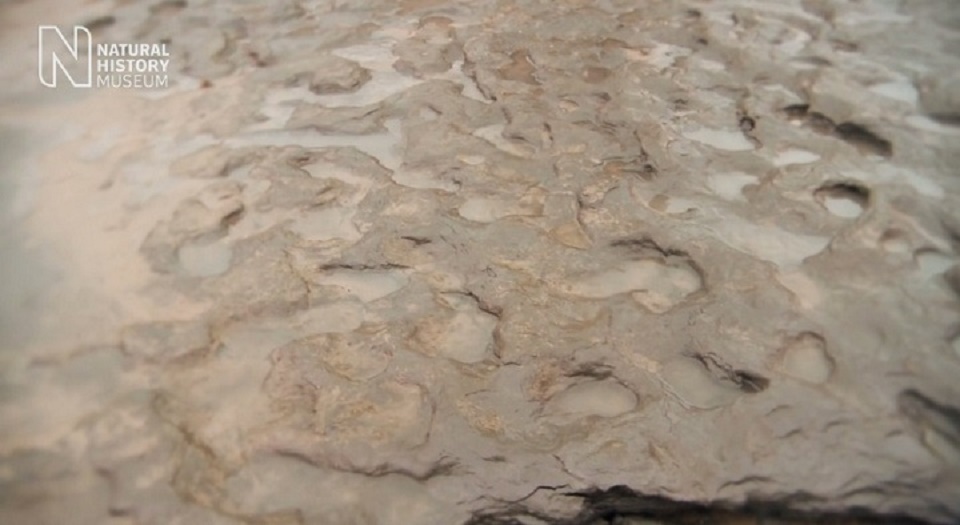
    A series of footprints that were left by early humans over 800,000 years ago have been discovered by a team of scientists led by the British Museum, Natural History Museum and the Queen Mary University of London.

    Since most scientists agree that humans and our ancestors originated in Africa and then migrated across the planet, the oldest footprints should therefore also be found in Africa.

    Scientists have now made the discovery of the oldest footprints outside of Africa on a beach in eastern England. According to researchers, the findings are the earliest evidence of human life outside the African continent.

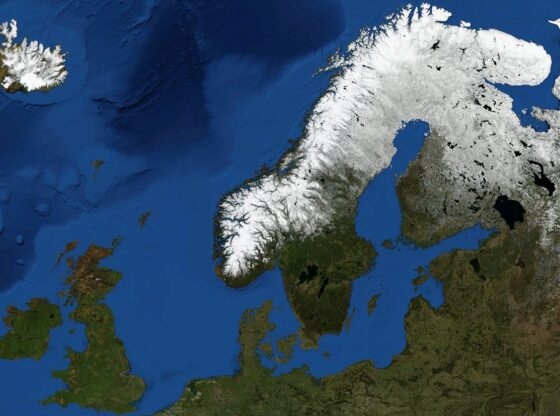
    The footprints have been estimated to be more than 800,000 years old and were found in a low-lying beach section at Happisburgh in Norfolk, close to Norwich.

    The findings have been published in the in the scientific journal PLoS One. With the researchers have studied the footprints since their discovery in May 2013. The sea had then eroded away sand to reveal the distant past beneath. With mud of just the right consistency and with a bit of perfect timing, this equally unlikely as astounding discovery may have a big impact on our understanding of early human migration in Europe and indeed the world.

    Dr. Nick Ashton at the British Museum told BBC news; “Initially we were unsure of what we saw. But it soon became clear that the cavities resembling human footprints”. “It will rewrite our understanding of the early human occupation of Britain and indeed of Europe”, he adds.

    But who were these human ancestors that made the footprints? The scholars speculate that they may have been related to the people from Atapuerca in Spain, who is believed to have belonged to the species Homo antecessor that went extinct in Europe by 600,000 years ago. Then possibly replaced by Homo Heidelbergensis and later Homo neanderthalensis (Neanderthals) about 400,000 years ago. With Homo Sapiens colonizing Europe about 40,000 years ago.

    The researchers were in a hurry since it was just a matter of time before the North Sea were to swallow the whole area again. But not before they had managed to study the footprints and videotape the findings with three-dimensional technology.

    The films can be seen at the London’s Natural History Museum. And click this link to view a video of The earliest human footprints outside Africa found in Norfolk, by Natural History Museum.

    _______________

    Hominin Footprints from Early Pleistocene Deposits at Happisburgh, UK

    ______________________________
    Early Human Migration Homo Antecessor Homo Heidelbergensis Homo Neanderthalensis Neanderthal
    Share. Facebook Twitter Pinterest LinkedIn Tumblr Email Copy Link

    Related Posts

    Northern Europeans’ Genetic Pre-Historic is Repeated Genocide

    February 6, 2024

    The teeth of the Neanderthals show how similar they were to us

    November 12, 2020

    Sets of 120,000-Year-Old Footprints Belonging to Humans Have Been Discovered in Saudi Arabia

    September 29, 2020

    Ancient Footprints Show Neanderthals May Have Been Taller than Thought

    May 14, 2020

    Fascinating Discovery Suggests Neanderthals Invented String

    April 13, 2020

    The Worlds Oldest Cave Art Found in Indonesia

    December 12, 2019
    Recent Posts
    • How the End of Bretton Woods Reshaped Our Economies — and Our Politics
    • Can the U.S. Really Handle 250% Debt-to-GDP? Why Jackson Hole’s Daring Paper Is Wrong
    • Japan’s Fiscal Trap: What Happens If Austerity Is No Longer an Option?
    • The Rise of Range Extended Electric Vehicles (REEVs): A New Era of Hybrid Mobility
    • The Great Capital Rotation: A Shift from U.S. Treasuries to Gold and Real Assets
    • The Hidden Risks of Short-Term Debt: A Balancing Act in U.S. Fiscal Policy
    • The Looming U.S. Debt Spiral: Understanding the Risks
    • The Looming Recession: Seven Economic Indicators Flashing Red for 2025
    • Europa Clipper: NASA’s Mission to Unlock the Secrets of Jupiter’s Icy Moon
    • Could Hedge Funds Cause Chaos in the U.S. Treasury Market? And What About Inflation?
    © 2025 Illustrated Curiosity

    Type above and press Enter to search. Press Esc to cancel.

    This website uses cookies to improve your experience. We'll assume you're ok with this, but you can opt-out if you wish.Accept Reject Read More
    Privacy & Cookies Policy

    Privacy Overview

    This website uses cookies to improve your experience while you navigate through the website. Out of these, the cookies that are categorized as necessary are stored on your browser as they are essential for the working of basic functionalities of the website. We also use third-party cookies that help us analyze and understand how you use this website. These cookies will be stored in your browser only with your consent. You also have the option to opt-out of these cookies. But opting out of some of these cookies may affect your browsing experience.
    Necessary
    Always Enabled
    Necessary cookies are absolutely essential for the website to function properly. This category only includes cookies that ensures basic functionalities and security features of the website. These cookies do not store any personal information.
    Non-necessary
    Any cookies that may not be particularly necessary for the website to function and is used specifically to collect user personal data via analytics, ads, other embedded contents are termed as non-necessary cookies. It is mandatory to procure user consent prior to running these cookies on your website.
    SAVE & ACCEPT