Close Menu
Illustrated Curiosity
    Facebook X (Twitter) Instagram YouTube
    Illustrated Curiosity
    • Earth
    • Economics
    • Environment
      • Climate
      • Environmental Tech
      • Pollution
      • Wildlife
    • Health
      • Health Tech
      • Medicine
      • Nutrition
      • Exercise
    • History
      • Prehistory
      • Ancient History
      • Postclassical Era
      • Modern History
    • Humans
      • Human Brain
      • Psychology
    • Life
      • Animals & Plants
      • Genetics
      • Paleontology
      • Evolution
      • Genetic Engineering
    • Physics
    • Space
      • Astrobiology
      • Astronomy
      • Extrasolar Planets
      • Space Tech
      • Spaceflight
    • Technology
      • Artificial Intelligence
      • Energy
      • Engineering
      • Materials
      • Robotics
      • Vehicles
    Illustrated Curiosity
    Home » The First Known Herbivorous Filter-feeding Marine Reptile had a Remarkable Jaw
    Paleontology

    The First Known Herbivorous Filter-feeding Marine Reptile had a Remarkable Jaw

    May 10, 2016No Comments3 Mins Read
    Share
    Facebook Twitter LinkedIn Pinterest Email
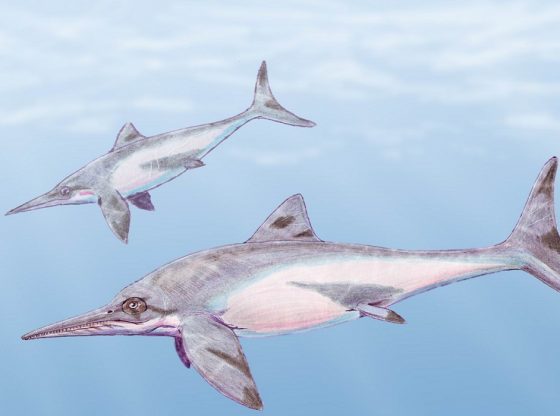
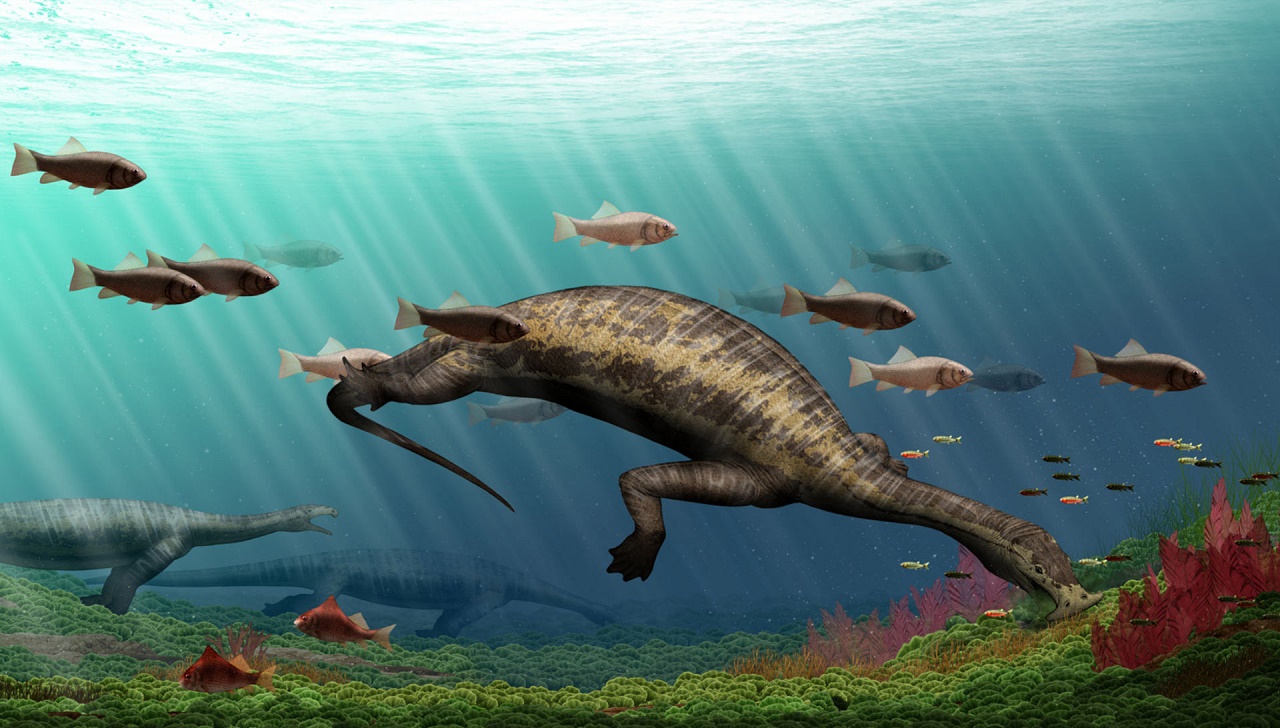
    Life restoration of Atopodentatus unicus. Image credit: Institute of Vertebrate Paleontology and Paleoanthropology.

    This animal lived 242 million years ago and it looks like nothing else. It is a three meter long crocodile-like aquatic reptile with a mouth that looked like a vacuum cleaner nozzle.

    The species’ name in latin, Atopodentatus Unicus, loosely translated means “unique strangely toothed”. This three-meter long aquatic reptile lived 242 million years ago in what is now southern China. As far as science know, it is the first aquatic and herbivorous reptile that ever lived on Earth.

    Previously, scientists believed that the Unicus Atopodentatus had a beak-like mouth. A downturned snout that was used to stir up and eat tiny invertebrate animals in the mud of the sea floor by sucking in water and then filtering it out through needle-like teeth. But this hypothesis was incorrect according to the American and Chinese researchers behind a newly published study in the journal Science Advances.
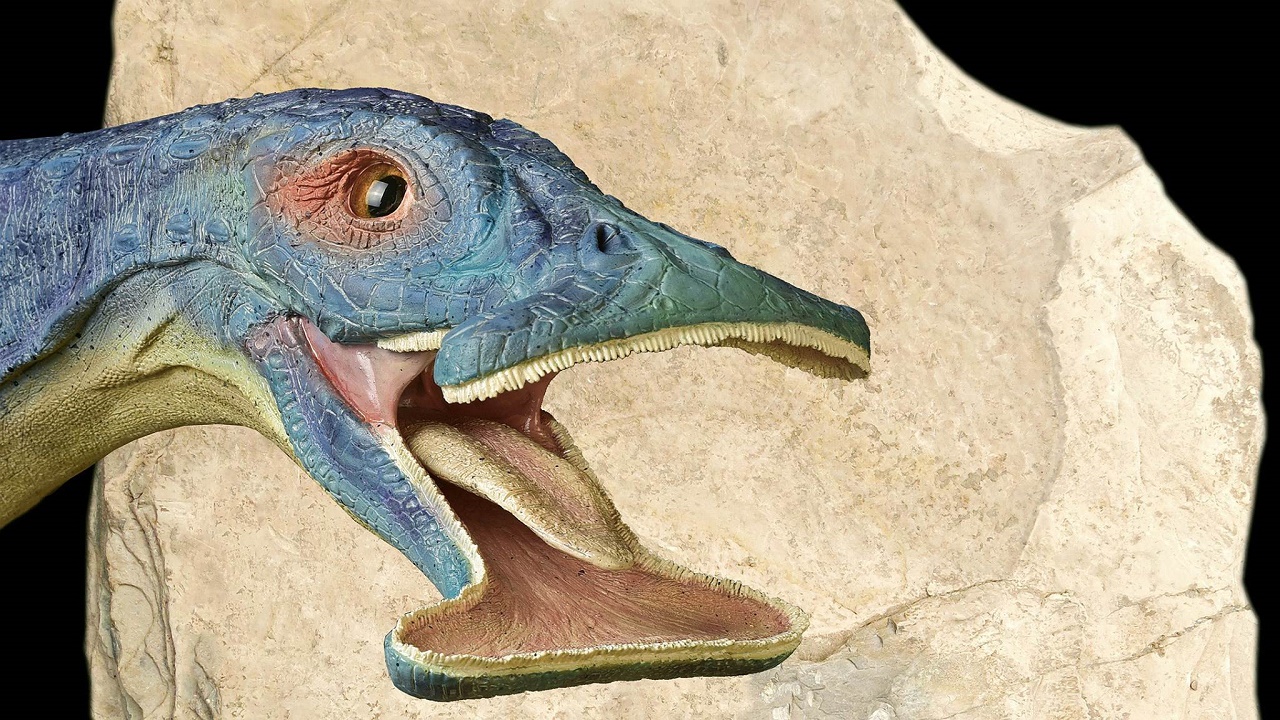
    Illustration: Y. Chen/IVPP.

    The animal instead had, according to recent studies of fossils, a horizontal and elongated jaw. Based on two new and mostly intact skulls, an international team of researchers was able to more accurately describe its face, shifting the snout into a hammerhead jaw. This jaw was filled with lots of teeth in various sizes. These teeth were adapted to life as a herbivore in the water. Some teeth were probably used to scrape up food from the bottom and others to sieve food.

    The animal lived shortly after the Permian–Triassic extinction event, a mass extinction that occurred 252 million years ago. It is the largest mass death of species in the planet’s history with about 90 percent of all life on our planet wiped out. The oceans were acidified and life must have been difficult.

    Life began spiraling back, but there are very few fossils from the period. Then suddenly we see an explosion of a lot of different species of animals, especially aquatic reptiles. Scientists are fairly sure that these large aquatic reptiles, some of them were several meters long, must have survived the great extinction event.

    As it certainly looks as if the big reptiles came out of nowhere, but these and similar species must have existed in the past – it’s just that there is no evidence of its ancestors in the form of fossils. The animal is a very specialized large animal and it must have taken a long time for it to develop into what we now see in the fossils.

    This period on Earth was when aquatic reptiles thrived, before dinosaurs, mammals or birds.

    ______________
    The earliest herbivorous marine reptile and its remarkable jaw apparatus

    ____________________________
    Extinction Extinction Events Reptiles
    Share. Facebook Twitter Pinterest LinkedIn Tumblr Email Copy Link

    Related Posts

    All Dogs Are Descended from the Same Wolf

    November 30, 2020

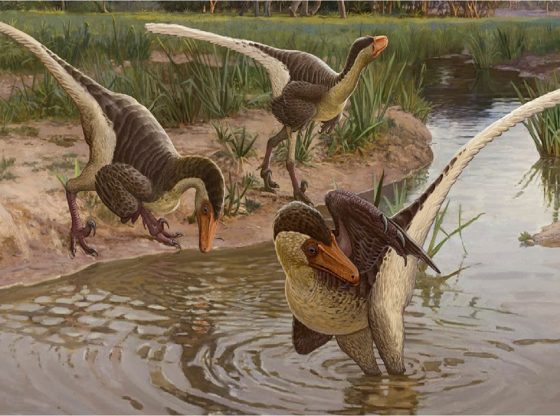
    A Newly Identified Raptor Hunted With The Terrifying Agility of a Cheetah

    June 16, 2020

    European Neanderthals Feasted on Fresh Seafood, Boosting Their Brain

    March 30, 2020

    Fishing in the Sahara? Yes – 10 000 Years Ago

    March 2, 2020

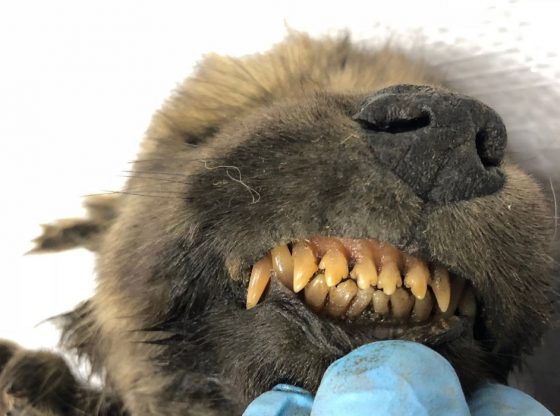
    18,000-Year-Old Frozen Puppy Found Perfectly Preserved in Siberian Permafrost

    December 9, 2019

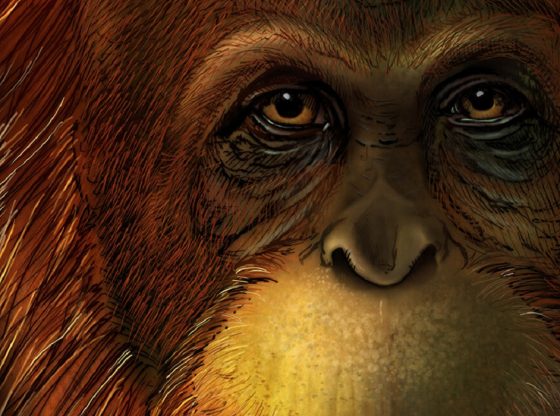
    Huge mysterious ape Gigantopithecus was a distant cousin of orangutans

    November 25, 2019
    Recent Posts
    • How the End of Bretton Woods Reshaped Our Economies — and Our Politics
    • Can the U.S. Really Handle 250% Debt-to-GDP? Why Jackson Hole’s Daring Paper Is Wrong
    • Japan’s Fiscal Trap: What Happens If Austerity Is No Longer an Option?
    • The Rise of Range Extended Electric Vehicles (REEVs): A New Era of Hybrid Mobility
    • The Great Capital Rotation: A Shift from U.S. Treasuries to Gold and Real Assets
    • The Hidden Risks of Short-Term Debt: A Balancing Act in U.S. Fiscal Policy
    • The Looming U.S. Debt Spiral: Understanding the Risks
    • The Looming Recession: Seven Economic Indicators Flashing Red for 2025
    • Europa Clipper: NASA’s Mission to Unlock the Secrets of Jupiter’s Icy Moon
    • Could Hedge Funds Cause Chaos in the U.S. Treasury Market? And What About Inflation?
    © 2025 Illustrated Curiosity

    Type above and press Enter to search. Press Esc to cancel.

    This website uses cookies to improve your experience. We'll assume you're ok with this, but you can opt-out if you wish.Accept Reject Read More
    Privacy & Cookies Policy

    Privacy Overview

    This website uses cookies to improve your experience while you navigate through the website. Out of these, the cookies that are categorized as necessary are stored on your browser as they are essential for the working of basic functionalities of the website. We also use third-party cookies that help us analyze and understand how you use this website. These cookies will be stored in your browser only with your consent. You also have the option to opt-out of these cookies. But opting out of some of these cookies may affect your browsing experience.
    Necessary
    Always Enabled
    Necessary cookies are absolutely essential for the website to function properly. This category only includes cookies that ensures basic functionalities and security features of the website. These cookies do not store any personal information.
    Non-necessary
    Any cookies that may not be particularly necessary for the website to function and is used specifically to collect user personal data via analytics, ads, other embedded contents are termed as non-necessary cookies. It is mandatory to procure user consent prior to running these cookies on your website.
    SAVE & ACCEPT