Close Menu
Illustrated Curiosity
    Facebook X (Twitter) Instagram YouTube
    Illustrated Curiosity
    • Earth
    • Economics
    • Environment
      • Climate
      • Environmental Tech
      • Pollution
      • Wildlife
    • Health
      • Health Tech
      • Medicine
      • Nutrition
      • Exercise
    • History
      • Prehistory
      • Ancient History
      • Postclassical Era
      • Modern History
    • Humans
      • Human Brain
      • Psychology
    • Life
      • Animals & Plants
      • Genetics
      • Paleontology
      • Evolution
      • Genetic Engineering
    • Physics
    • Space
      • Astrobiology
      • Astronomy
      • Extrasolar Planets
      • Space Tech
      • Spaceflight
    • Technology
      • Artificial Intelligence
      • Energy
      • Engineering
      • Materials
      • Robotics
      • Vehicles
    Illustrated Curiosity
    Home » An Inflatable Future in Space: From Earth Orbit to the Moon and Mars?
    Space Tech

    An Inflatable Future in Space: From Earth Orbit to the Moon and Mars?

    June 5, 2016No Comments3 Mins Read
    Share
    Facebook Twitter LinkedIn Pinterest Email
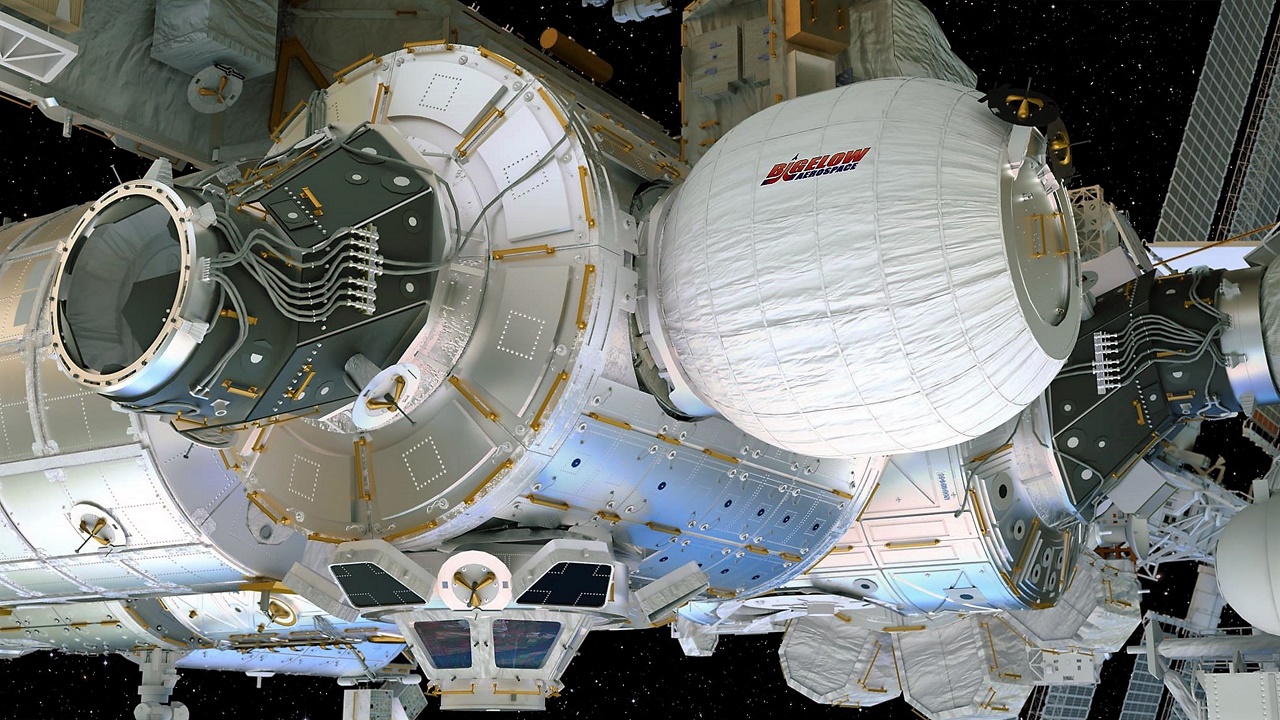
    The Bigelow Expandable Activity Module attached to the International Space Station’s Tranquility module. Credits: Bigelow Aerospace

    Last week’s attempt to inflate a flexible space station module connected to the International Space Station proved successful.

    For several hours NASA carefully pumped air intermittently into a valve to the expandable module named BEAM (Bigelow Expandable Activity Module), which is coupled to the ISS.

    Testing the BEAM is part of NASA’s future plan to establish settlements on the moon or Mars. The full-size Beam measuring four meters long and 3.2 meters wide.

    This short time-lapse video shows the complete Bigelow Aerospace BEAM expansion from start to finish to its full expanded, pressurized volume on Saturday, May 28. BEAM was installed May 16 on the Tranquility module after being delivered aboard the SpaceX Dragon cargo craft.

    Less Space is More

    BEAM will be tested for two years for use by astronauts visiting the ISS. They will test how it is to live inside Beam and monitor instruments measuring the module capability to resist radiation, space debris and the extremely low temperatures of space.

    There are good reasons for using inflatable modules as the gravity well of Earth makes every space launch expensive and complicated. The smaller and the lighter the modules are – the less expensive and complicated space launch is.

    Expandable habitats are the perfect solution in theory – designed to take up less space on a spacecraft but provide greater volume for a living and working in space once expanded.

    An Inflatable Future?
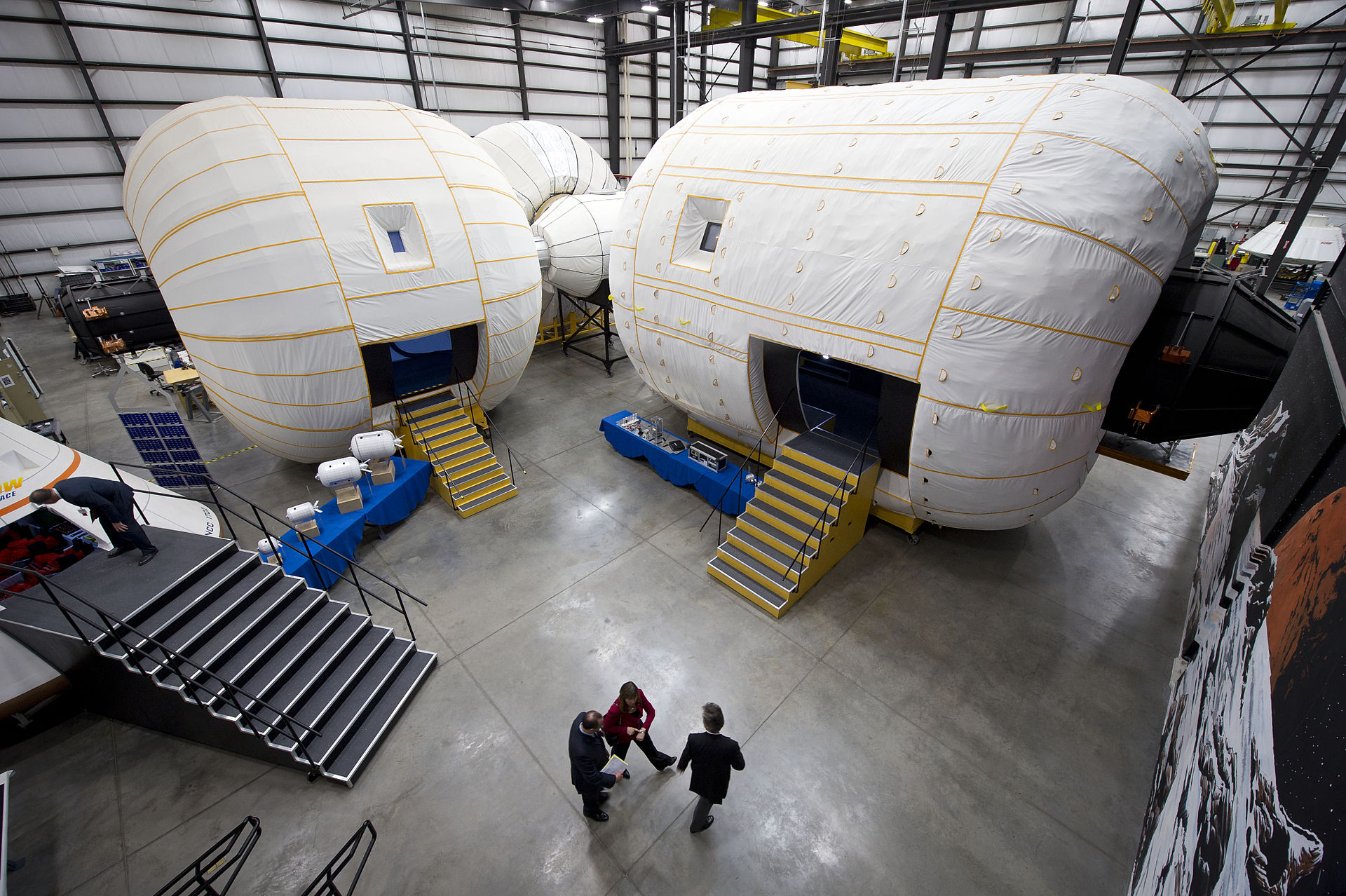
    NASA Deputy Administrator Lori Garver is given a tour of the Bigelow Aerospace facilities by the company's President Robert Bigelow. Credit: NASA/Bill Ingalls/Bigelow Aerospace
    A full-scale mockup of Bigelow Aerospace’s Space Station Alpha at the Bigelow Aerospace facility in Nevada.

    The American space technology startup company Bigelow Aerospace, founded by Robert Bigelow in 1998, developed BEAM under contract with NASA. If proven successful – Bigelow is developing and planning for two other much larger modules to be launched in the near future.

    • The BA 330 is a full-scale production module weighing approximately 43,000 pounds (20,000 kg). Inflatable dimensions of approximately 45 feet (14 m) in length and 22 ft (6.7 m) in diameter when expanded.
    • The BA 2100, or Olympus module, is a concept module that would require a heavy-lift launcher. Inflatable dimensions of approximately 2,100-cubic-meter (74,000 cu ft), over six times as large as the BA 330.

    Then the company plan to launch a privately owned space station; The Bigelow Next-Generation Commercial Space Station is currently under development by Bigelow. The first launches will not commence until there are commercial crew transportation systems operational which will be 2017 or later. The space station may be constructed of two B330 expandable spacecraft modules as well as a central docking node, propulsion, solar arrays, and attached crew capsules
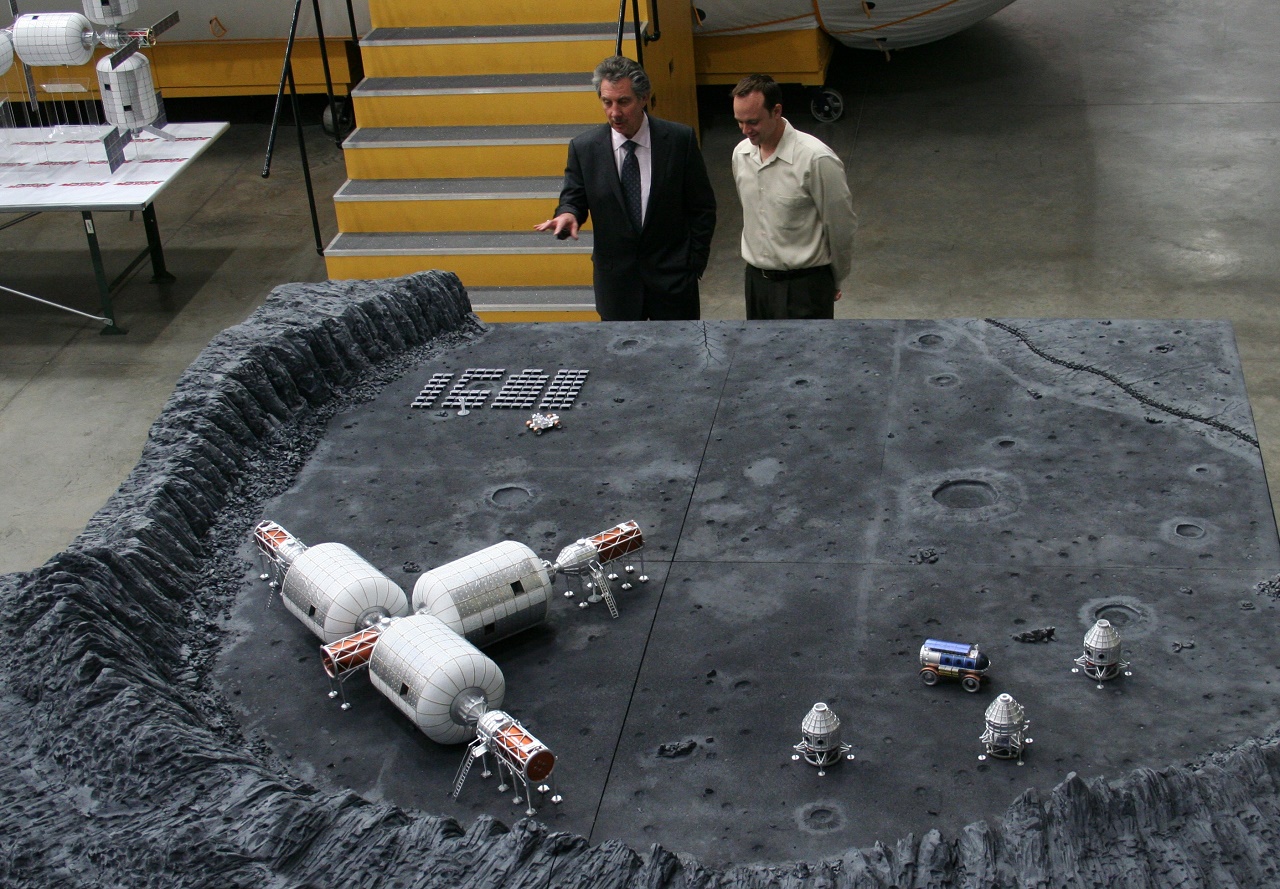
    Credit: NASA/Bill Ingalls/Bigelow Aerospace
    A model shows a moon base with inflatable modules.

    In November 2010, Bigelow indicated that the company would like to construct ten or more space stations and that there is a substantial commercial market to support such growth.

    But Bigelow is dreaming even bigger, according to Michael Gold, who is the director of operations and business growth at Bigelow Aerospace, with a few minor variations, the B330 module could also serve as the living quarters for astronauts during the long journey to Mars, as well as colonists’ homes on the surface of the moon, Mars or other worlds.

    _____________
    BEAM Fully Expanded and Pressurized
    __________________________
    Bigelow Aerospace Human Spaceflight Private Spaceflight Space Colonization Space Stations
    Share. Facebook Twitter Pinterest LinkedIn Tumblr Email Copy Link

    Related Posts

    NASA Unleashes the Future of Rocketry with the Rotating Detonation Rocket Engine

    December 25, 2023

    Follow the Journey of the James Webb Telescope to its Final Destination

    December 27, 2021

    NASA Designing Advanced Shapeshifting Robots for Saturn’s Moons

    October 21, 2019

    NASA’s InSight Lander Plops Seismometer on Mars to Hunt Marsquakes

    December 24, 2018

    Video | InSight Landing on Mars

    November 9, 2018

    Waning Martian Dust Storm Could Herald the Return of NASA’s Opportunity Rover

    September 4, 2018
    Recent Posts
    • How the End of Bretton Woods Reshaped Our Economies — and Our Politics
    • Can the U.S. Really Handle 250% Debt-to-GDP? Why Jackson Hole’s Daring Paper Is Wrong
    • Japan’s Fiscal Trap: What Happens If Austerity Is No Longer an Option?
    • The Rise of Range Extended Electric Vehicles (REEVs): A New Era of Hybrid Mobility
    • The Great Capital Rotation: A Shift from U.S. Treasuries to Gold and Real Assets
    • The Hidden Risks of Short-Term Debt: A Balancing Act in U.S. Fiscal Policy
    • The Looming U.S. Debt Spiral: Understanding the Risks
    • The Looming Recession: Seven Economic Indicators Flashing Red for 2025
    • Europa Clipper: NASA’s Mission to Unlock the Secrets of Jupiter’s Icy Moon
    • Could Hedge Funds Cause Chaos in the U.S. Treasury Market? And What About Inflation?
    © 2025 Illustrated Curiosity

    Type above and press Enter to search. Press Esc to cancel.

    This website uses cookies to improve your experience. We'll assume you're ok with this, but you can opt-out if you wish.Accept Reject Read More
    Privacy & Cookies Policy

    Privacy Overview

    This website uses cookies to improve your experience while you navigate through the website. Out of these, the cookies that are categorized as necessary are stored on your browser as they are essential for the working of basic functionalities of the website. We also use third-party cookies that help us analyze and understand how you use this website. These cookies will be stored in your browser only with your consent. You also have the option to opt-out of these cookies. But opting out of some of these cookies may affect your browsing experience.
    Necessary
    Always Enabled
    Necessary cookies are absolutely essential for the website to function properly. This category only includes cookies that ensures basic functionalities and security features of the website. These cookies do not store any personal information.
    Non-necessary
    Any cookies that may not be particularly necessary for the website to function and is used specifically to collect user personal data via analytics, ads, other embedded contents are termed as non-necessary cookies. It is mandatory to procure user consent prior to running these cookies on your website.
    SAVE & ACCEPT