Close Menu
Illustrated Curiosity | Economics, History, Science, Space, Technology, Health, Physics, Earth
    Facebook X (Twitter) Instagram YouTube
    Illustrated Curiosity | Economics, History, Science, Space, Technology, Health, Physics, Earth
    • Earth
    • Economics
    • Environment
      • Environmental Tech
      • Pollution
      • Wildlife
    • Health
      • Health Tech
      • Medicine
      • Nutrition
      • Exercise
    • History
      • Prehistory
      • Ancient History
      • Postclassical Era
      • Modern History
    • Humans
      • Human Brain
      • Psychology
    • Life
      • Animals & Plants
      • Genetics
      • Paleontology
      • Evolution
      • Genetic Engineering
    • Physics
    • Space
      • Astrobiology
      • Astronomy
      • Extrasolar Planets
      • Space Tech
      • Spaceflight
    • Technology
      • Artificial Intelligence
      • Energy
      • Engineering
      • Materials
      • Robotics
      • Vehicles
    Illustrated Curiosity | Economics, History, Science, Space, Technology, Health, Physics, Earth
    Home » NASA Designing Advanced Shapeshifting Robots for Saturn’s Moons
    Space Tech

    NASA Designing Advanced Shapeshifting Robots for Saturn’s Moons

    October 21, 20193 Mins Read
    Image: NASA/JPL-Caltech
    Share
    Facebook Twitter LinkedIn Pinterest Email
    Image: NASA/JPL-Caltech
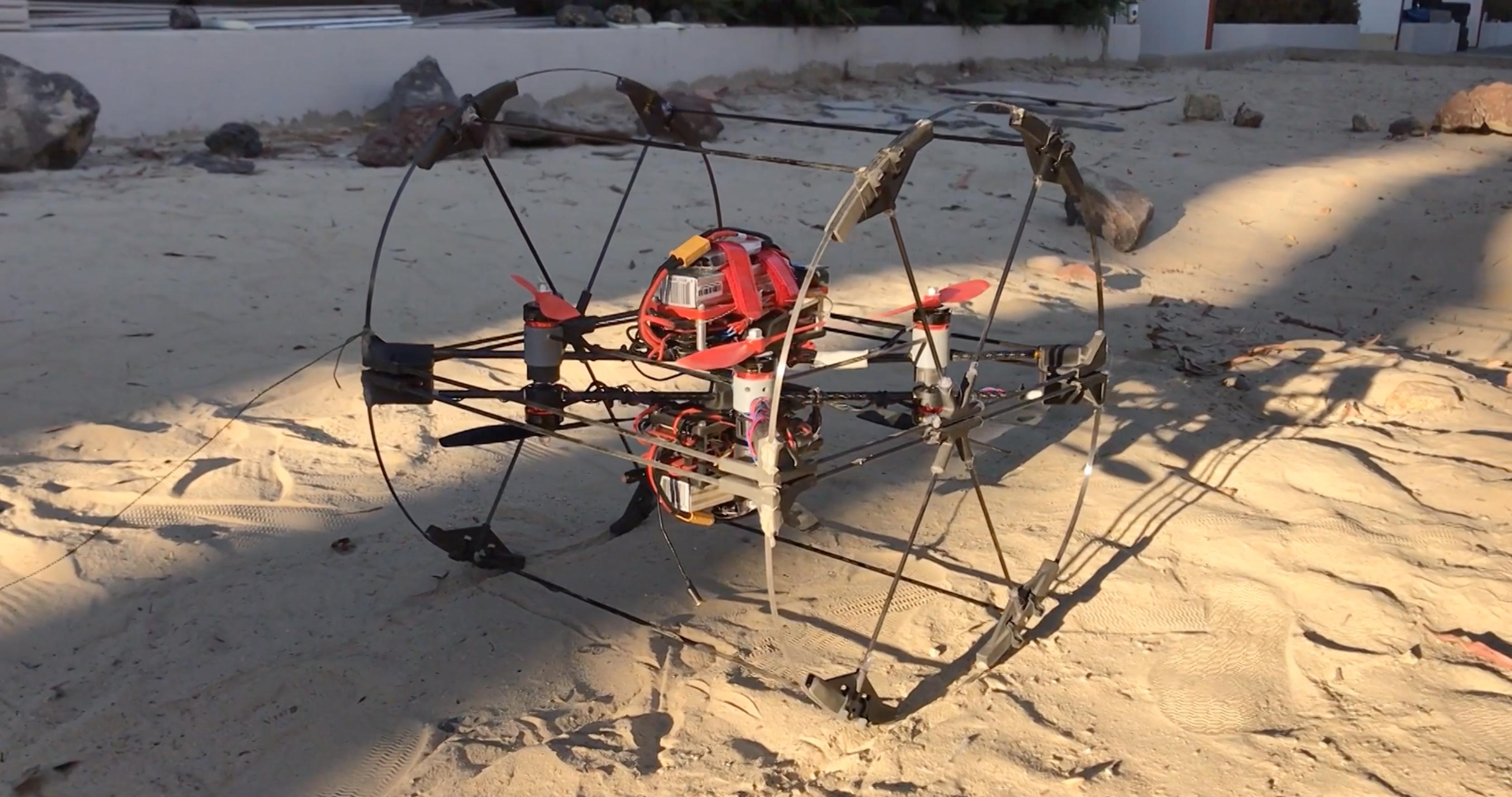
    The Shapeshifter prototype in its current form. Image: NASA/JPL-Caltech

    Mini robots that can roll, fly, float, and swim, then morph into a single machine? Together they form Shapeshifter, a developing NASA concept for a transformational vehicle to explore treacherous, distant worlds.

    NASA is figuring that you can send a whole bunch of robots in one -Shapeshifter— a modular, morphing, self-assembling robot capable of deploying several smaller machines.

    The Shapeshifter concept is currently being developed as part of NASA’s Innovative Advanced Concepts (NIAC) program, which encourages researchers to devise creative new ways of exploring distant worlds.

    The morphing robot is being designed and built at NASA’s Jet Propulsion Lab by roboticist Ali Agha and his collaborators from Stanford University and Cornell University, according to a NASA JPL press release.

    NASA describes the prototype as “a contraption that looks like a drone encased in an elongated hamster wheel.” The point is that it can split into two half-wheels, each of which is an independent drone armed with a propeller.


    The 3D-printed prototype looks like a drone encased in an elongated hamster wheel that can split in half, and once separated, the two halves rise on small propellers, effectively becoming flying drones for aerial exploration. Eventually, the team will equip the bot with components capable of swimming, floating, and navigating through caves, among other possibilities.

    The team imagines a series of up to 12 robots that could transform into a swimming probe or a team of cave explorers.

    “We have very limited information about the composition of the surface. Rocky terrain, methane lakes, cryovolcanoes—we potentially have all of these, but we don’t know for certain,”

    “So we thought about how to create a system that is versatile and capable of traversing different types of terrain but also compact enough to launch on a rocket.”

    – NASA’s Jet Propulsion Lab by roboticist Ali Agha in a NASA JPL press release.

    For now, Shapeshifter is semi-autonomous, but its future design will depend on cobots that can auto-assemble without needing commands from Earth.

    The bot would indeed be perfect for Titan, with its sprawling methane seas, flowing rivers, and complex topography. Titan, in addition to hosting cave systems, could also contain icy volcanoes that erupt ammonia or water, according to NASA. It’s a rough, dangerous, and unpredictable plac,e and having a bot explore these features would be pretty incredible, to say the least.
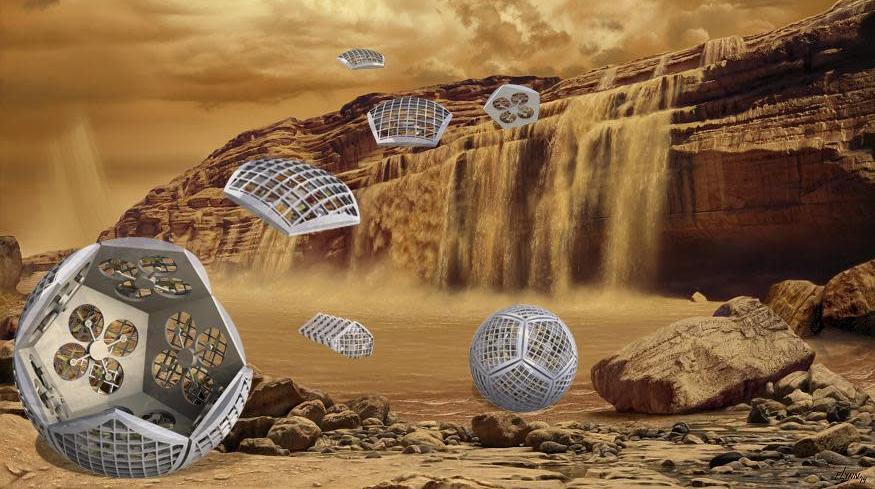
    Image: NASA/JPL-Caltech/Marilynn Flynn
    Artist’s depiction of Shapeshifter and its various components on Saturn’s moon Titan. Image: NASA/JPL-Caltech

    There’s obviously still lots of work to be done, and Shapeshifter is far from ready. Thankfully, we still have NASA’s Dragonfly mission to look forward to. The rotorcraft lander is scheduled to launch in 2026 and arrive at Titan around 2034.
    Titan (Moon)
    Share. Facebook Twitter Pinterest LinkedIn Tumblr Email Copy Link

    Related Posts

    NASA Unleashes the Future of Rocketry with the Rotating Detonation Rocket Engine

    December 25, 2023

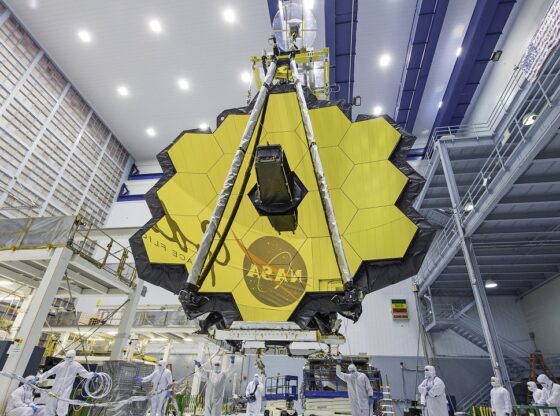
    Follow the Journey of the James Webb Telescope to its Final Destination

    December 27, 2021

    NASA’s InSight Lander Plops Seismometer on Mars to Hunt Marsquakes

    December 24, 2018

    NASA Testing A Small Nuclear Reactor To Power Human Colonies On Mars

    January 25, 2018
    Recent Posts
    • The Day the Alliance Died
    • Evaluating Heart Disease: How Cumulative Diet Choices Compound Your Risk
    • What Would Happen If China Attacked Taiwan?
    • Geopoliticisation as a Structural Tailwind for Commodity Prices
    • America’s Economic Remodel: Who’s Really Paying the Bill?
    • Why Inflation May Be Preparing for a Second Act
    • How the End of Bretton Woods Reshaped Our Economies — and Our Politics
    • Can the U.S. Really Handle 250% Debt-to-GDP? Why Jackson Hole’s Daring Paper Is Wrong
    • Japan’s Fiscal Trap: What Happens If Austerity Is No Longer an Option?
    • The Rise of Range Extended Electric Vehicles (REEVs): A New Era of Hybrid Mobility
    © 2025 Illustrated Curiosity

    Type above and press Enter to search. Press Esc to cancel.