Close Menu
Illustrated Curiosity | Economics, History, Science, Space, Technology, Health, Physics, Earth
    Facebook X (Twitter) Instagram YouTube
    Illustrated Curiosity | Economics, History, Science, Space, Technology, Health, Physics, Earth
    • Earth
    • Economics
    • Environment
      • Environmental Tech
      • Pollution
      • Wildlife
    • Health
      • Health Tech
      • Medicine
      • Nutrition
      • Exercise
    • History
      • Prehistory
      • Ancient History
      • Postclassical Era
      • Modern History
    • Humans
      • Human Brain
      • Psychology
    • Life
      • Animals & Plants
      • Genetics
      • Paleontology
      • Evolution
      • Genetic Engineering
    • Physics
    • Space
      • Astrobiology
      • Astronomy
      • Extrasolar Planets
      • Space Tech
      • Spaceflight
    • Technology
      • Artificial Intelligence
      • Energy
      • Engineering
      • Materials
      • Robotics
      • Vehicles
    Illustrated Curiosity | Economics, History, Science, Space, Technology, Health, Physics, Earth
    Home » Waning Martian Dust Storm Could Herald the Return of NASA’s Opportunity Rover
    Space Tech

    Waning Martian Dust Storm Could Herald the Return of NASA’s Opportunity Rover

    September 4, 20183 Mins Read
    Image: NASA, Public Domain
    Share
    Facebook Twitter LinkedIn Pinterest Email

    One of the biggest Martian dust storms on record is clearing up after nearly three months, raising hope that NASA’s stranded, solar-powered robotic vehicle, Opportunity, will soon come back to life.

    Three times a week, every week since June 10, NASA has been sending out a signal and hoping for a response beep from the little rover. So far they have only been met with silence. As the storm begins to wane and the Martian skies are starting to clear, engineers at NASA’s Jet Propulsion Laboratory (JPL) are now hoping that contact can, at last, be made.

    “The Sun is breaking through the haze over Perseverance Valley, and soon there will be enough sunlight present that Opportunity should be able to recharge its batteries,”

    NASA
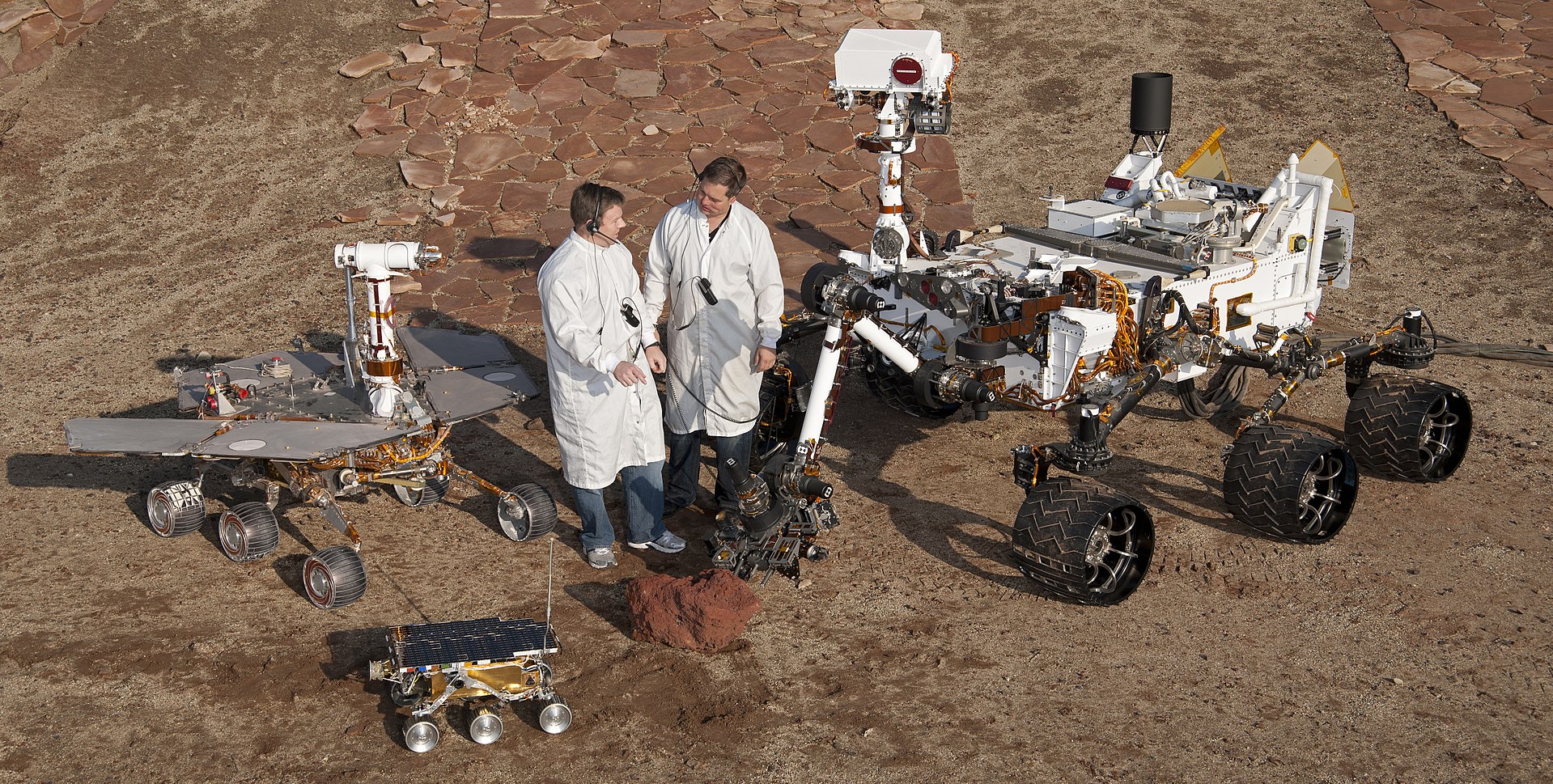
    Two spacecraft engineers stand with a group of vehicles providing a comparison of three generations of Mars rovers developed at NASA’s Jet Propulsion Laboratory, Pasadena, Calif. The setting is JPL’s Mars Yard testing area. Front and center is the flight spare for the first Mars rover, Sojourner, which landed on Mars in 1997 as part of the Mars Pathfinder Project. On the left is a Mars Exploration Rover Project test rover that is a working sibling to Spirit and Opportunity, which landed on Mars in 2004. On the right is a Mars Science Laboratory test rover the size of that project’s Mars rover, Curiosity, which landed on Mars in 2012. Image: NASA, Public Domain

    “When the tau level [a measure of the amount of particulate matter in the Martian sky] dips below 1.5, we will begin a period of actively attempting to communicate with the rover by sending it commands via the antennas of NASA’s Deep Space Network. Assuming that we hear back from Opportunity, we will begin the process of discerning its status and bringing it back online.”

    – John Callas, Opportunity project manager at JPL, said in a statement.

    NASA is using the Mars Colour Imager (MARCI) aboard NASA’s Mars Reconnaissance Orbiter (MRO) to estimate the tau near Opportunity. The latest MARCI data shows no active dust storms within 1,900 miles (3,000 kilometres) of Opportunity’s location.

    Hey, Oppy, we’re still listening and actively working for your recovery. Please phone home. All of us @NASA are pulling for you! https://t.co/vdHfwy0eDe @marsrovers #OppyPhoneHome pic.twitter.com/8H8Co61f8D

    — Thomas Zurbuchen (@Dr_ThomasZ) 1 september 2018

    Opportunity and its twin rover, Spirit, are a pair of unmanned robotic vehicles designed by NASA to tool around on the Martian surface and transmit data about conditions there back to Earth. They landed on Mars in 2003 on a mission meant to last 90 days and span 1,000 meters.

    Spirit lasted 20 times longer than that. It became stuck in soft soil in 2009, and its mission was formally declared over in 2011. Opportunity is going on 60 times its planned mission life, has traveled 45 kilometers (28 miles), and found evidence of water on Mars and conditions that may have been suitable for sustaining microbial life.
    Opportunity Rover
    Share. Facebook Twitter Pinterest LinkedIn Tumblr Email Copy Link

    Related Posts

    NASA Unleashes the Future of Rocketry with the Rotating Detonation Rocket Engine

    December 25, 2023

    Follow the Journey of the James Webb Telescope to its Final Destination

    December 27, 2021

    NASA Designing Advanced Shapeshifting Robots for Saturn’s Moons

    October 21, 2019

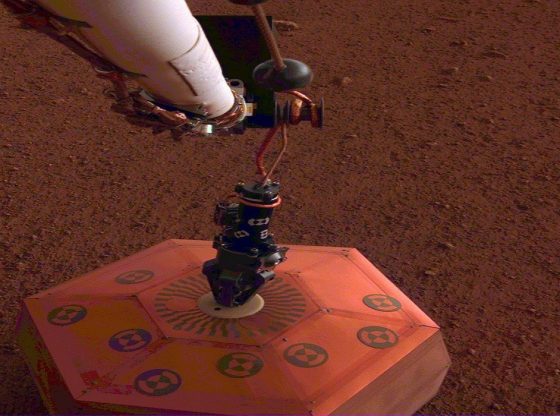
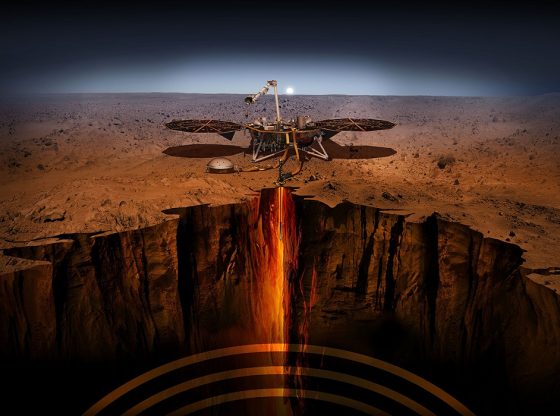
    NASA’s InSight Lander Plops Seismometer on Mars to Hunt Marsquakes

    December 24, 2018

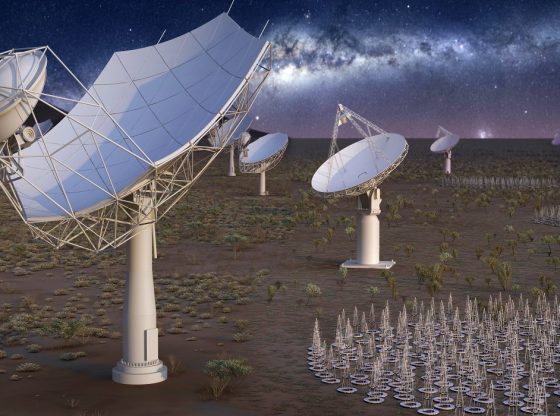
    Prototype Dish Assembled for the World’s Biggest Radio Telescope

    February 8, 2018

    Falcon Heavy Successfully Launched into Space

    February 7, 2018
    Recent Posts
    • Oil Shocks, Policy Mistakes, and the Risk of a Second Inflation Wave (Part II)
    • Oil Shocks, Policy Mistakes, and the Risk of a Second Inflation Wave (Part I)
    • Microsoft Stored a Movie on Glass — And It Could Last Centuries
    • AI, Automatic Stabilizers & Inflation
    • Largest Battles in History: Cannae — Rome’s Darkest Day
    • The Day the Alliance Died
    • Evaluating Heart Disease: How Cumulative Diet Choices Compound Your Risk
    • What Would Happen If China Attacked Taiwan?
    • Geopoliticisation as a Structural Tailwind for Commodity Prices
    • America’s Economic Remodel: Who’s Really Paying the Bill?
    © 2025 Illustrated Curiosity

    Type above and press Enter to search. Press Esc to cancel.