Close Menu
Illustrated Curiosity | Economics, History, Science, Space, Technology, Health, Physics, Earth
    Facebook X (Twitter) Instagram YouTube
    Illustrated Curiosity | Economics, History, Science, Space, Technology, Health, Physics, Earth
    • Earth
    • Economics
    • Environment
      • Environmental Tech
      • Pollution
      • Wildlife
    • Health
      • Health Tech
      • Medicine
      • Nutrition
      • Exercise
    • History
      • Prehistory
      • Ancient History
      • Postclassical Era
      • Modern History
    • Humans
      • Human Brain
      • Psychology
    • Life
      • Animals & Plants
      • Genetics
      • Paleontology
      • Evolution
      • Genetic Engineering
    • Physics
    • Space
      • Astrobiology
      • Astronomy
      • Extrasolar Planets
      • Space Tech
      • Spaceflight
    • Technology
      • Artificial Intelligence
      • Energy
      • Engineering
      • Materials
      • Robotics
      • Vehicles
    Illustrated Curiosity | Economics, History, Science, Space, Technology, Health, Physics, Earth
    Home » New Horizons Has Ultima Thule in View
    Spaceflight

    New Horizons Has Ultima Thule in View

    September 5, 20182 Mins Read
    Image: Illustrated Curiosity
    Share
    Facebook Twitter LinkedIn Pinterest Email

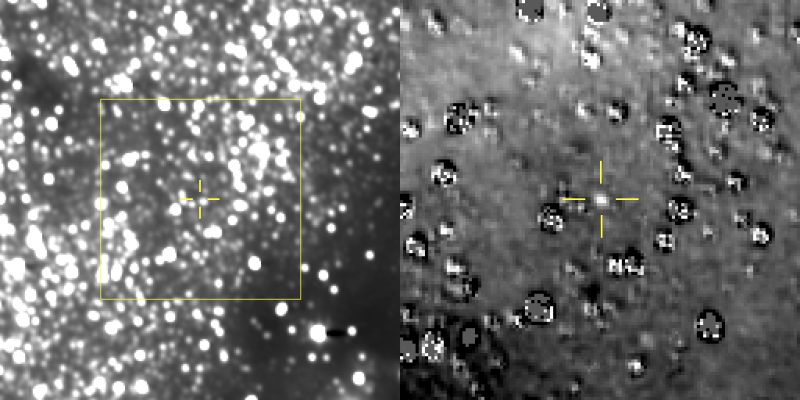
    From more than 100 million miles away, New Horizon’s next target barely looks like anything at all. The object, known as Ultima Thule, has only just now come into view for that NASA spacecraft’s sensitive cameras, allowing the probe — which brought us never-before-seen, close-up photos of Pluto in July 2015 — to take its first-ever images of the distant world.

    The New Horizons spacecraft will remain forever in our hearts as the craft that provided our first glimpses of tiny Pluto and its system of moons in 2015. Now New Horizons is headed toward its next target, a Kuiper Belt Object (KBO) called 2014 MU69, nicknamed Ultima Thule.

    Earlier this month (on August 16th), the New Horizons spacecraft managed to capture an image of Ultima Thule for the first time using its Long Range Reconnaissance Imager (LORRI).

    Ultima Thule in view! We’ve made our first detection of our next flyby target, more than 100 million miles out from our New Year’s 2019 close-up encounter in the Kuiper Belt. LEARN MORE >> https://t.co/DHNzillUDB pic.twitter.com/Rmz0EW4RWA

    — NASA New Horizons (@NASANewHorizons) 28 augusti 2018

    The object is still 172 million kilometers (107 million miles) away and at its current speed, the New Horizons will rendezvous with the object on New Year’s Day, 2019.

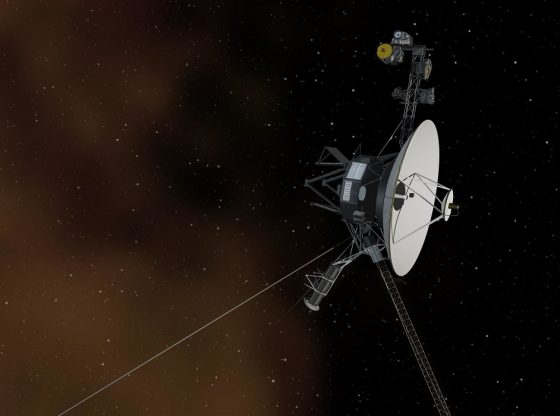
    The photos serve as the farthest images from the Sun ever captured. It took the record from Voyager 1 that captured the photographs of the Earth and other neighboring planets from almost the same distance 28 years ago.

    Furthermore, the Ultima flyby will be the farthest exploration of any part in space. This will eventually break the old record of New Horizons at Pluto in 2015.

    According to scientists, finding out more about the Ultima Thule will help them build stronger theories about how the solar system was formed. What is known about this part of space has the potential to change the view of how the solar system functions.
    Share. Facebook Twitter Pinterest LinkedIn Tumblr Email Copy Link

    Related Posts

    Europa Clipper: NASA’s Mission to Unlock the Secrets of Jupiter’s Icy Moon

    October 20, 2024

    Spinlaunch Hurls Satellites into Orbit With a Giant Centrifuge

    December 6, 2021

    SpaceX Capsule and NASA Crew Make Historic Splashdown

    August 3, 2020

    NASA and SpaceX are Making History Launching Astronauts to Space! | NASA Live

    May 27, 2020

    Red Space Salad Given Green Light

    May 26, 2020

    NASA Will Launch a Lunar VIPER to Hunt Moon Water in 2022

    November 12, 2019
    Recent Posts
    • Oil Shocks, Policy Mistakes, and the Risk of a Second Inflation Wave (Part II)
    • Oil Shocks, Policy Mistakes, and the Risk of a Second Inflation Wave (Part I)
    • Microsoft Stored a Movie on Glass — And It Could Last Centuries
    • AI, Automatic Stabilizers & Inflation
    • Largest Battles in History: Cannae — Rome’s Darkest Day
    • The Day the Alliance Died
    • Evaluating Heart Disease: How Cumulative Diet Choices Compound Your Risk
    • What Would Happen If China Attacked Taiwan?
    • Geopoliticisation as a Structural Tailwind for Commodity Prices
    • America’s Economic Remodel: Who’s Really Paying the Bill?
    © 2025 Illustrated Curiosity

    Type above and press Enter to search. Press Esc to cancel.